Community-Based PHC: So What’s New??

Trying to keep up with the flow of ideas
Participants Trying to keep up with the flow of ideas

By Janine Schooley

Sometimes I get the question, “So what’s new and innovative in CBPHC?”  The answer is that there isn’t anything new, and that’s the point!  We already know what we need to do.  We have the bullets, as someone said, but the gun seems to be elsewhere or malfunctioning.  I think it isn’t that we don’t have the gun.  I just think we have misplaced it, or it needs some tinkering to get to work, or we need to remind ourselves how to pull the trigger.  I really dislike this analogy for it’s militaristic and violent connotations, but I couldn’t come up with anything better….So, to continue this horrible analogy, we have several bullets and they are inexpensive, tried and true.  We know the power of exclusive breastfeeding, good antenatal care, immunizations, long lasting insecticidal nets, good nutrition, and other low cost, low tech interventions in terms of saving lives and improving quality of life.  We’ve been talking about this for decades, not just amongst ourselves, the practitioners in the field, but at the highest policy levels.  As the September 13-19, 2008 Lancet reminds us, a major milestone, the Alma-Ata Declaration, was issued 30 years ago.  So what’s new isn’t the need for what the Alma-Ata Declaration so eloquently calls for, but perhaps it’s the realization that we still haven’t gotten there.  In other words, we don’t need innovation.  What we need is inspiration and, as Nike so aptly puts it “Just do it!”.  Continue reading “Community-Based PHC: So What’s New??” →

APHA San Diego: A passion for Primary Health Care

By Monica Dyer

WHO World Health Report 2008

Attending the Community-Based Primary Health Care workshop yesterday was one of the most invigorating experiences I have had in quite a long time. It was so fantastic to meet people carrying out work that I have been constantly thinking and talking about the need for. As my colleagues and I struggle to establish a comprehensive community health center in Gatineau, Haiti we are constantly trying to figure out whether or not we are actually implementing best practices. While we all value the importance of making decisions based on evidence and learning from others’ mistakes, it is incredibly challenging to find detailed information. Through this process and past research, I have been made especially aware of the need for more accessible and thorough documentation of both effective and ineffective practices and implementation experiences in global health.

This is not to be unexpected as organizations carrying out this work are usually so over-extended and resource constrained that documenting their processes and practices often becomes low-priority unless it is to meet the requirements of funders. However, when this is the purpose of such documentation the tone changes from factual reporting of successes and failures to trying to demonstrate efficacy so that a donors will keep sending money, so financial survival is not the best motivating factor for the objective documentation needed. In my own experience so far, although we have said that documenting and sharing the entire process of establishing a community health center would be a very useful activity that we would like to do, we have thus far been unable to follow through while dealing with all of the day-to-day logistics of running a clinic, seeking/maintaining funding and the planning of future programs and community organizing. If we had a volunteer historian or could work with students to take the documentation process on as a project for course credit, it might be much more feasible. However, with limited time to coordinate such efforts and so many critical activities competing for our resources, this honestly falls relatively low on our hierarchy of needs. 

I was encouraged when I recently heard about the Global Health Delivery Online www.ghdonline.org but somewhat disappointed that it thus far only includes HIV, TB and Technology discussion communities. Understandably, these are in the scope of the founding collaborators’ chief interests but I hope they will continue to expand this venue into other important realms in need of increased attention. Continue reading “APHA San Diego: A passion for Primary Health Care” →

APHA San Diego: notes from a CBPHC workshop

By Corinne Cohen

TB can be fatal. It is a worldwide epidemic that knows no borders.

I am a resident in Family and Preventive Medicine, concurrently working towards getting my MPH.  I attended the Community Based Primary Health Care (CBPHC) workshop at the American Public Health Association National Conference, which was organized by APHA’s International Health Section on October 25, 2008. Project Concern International (PCI) facilitated the workshop. 

We opened by discussing the principles of the 1978 Alma-Ata Conference, which include health as a fundamental human right, equity, and the emphasis on community participation. 

We engaged in several spirited group discussions about the role of CBPHC in our own work and ideas for effective behavior change.  A highlight was a presentation on the use of TB-Photovoice (http://tbphotovoice.org/tbpv2/index.php?option=com_frontpage&Itemid=1), a powerful means for creating effective messages of change from those who are most affected by the disease.  At the end of the workshop we broke into groups to discuss either the documentation and dissemination of work, how to increase funding, and how to advance knowledge of CBPHC.  My group was comprised of documenters and disseminatorsand we discussed starting a new journal that is a forum for talking about projects that are in the works or have been completed — this would allow newcomers to avoid reinventing the wheel, would serve as a forum for old hats to bounce ideas off each other around what did and didn’t work in their projects, and would also provide powerful individual stories, photos, videos, etc. that would assist with funding.  The forum would be online, open access and free.  Start up funding for such a new journal  is actively pursued and hopefully we can capitalize on that.  Wikipedia sounded like an option as well.  Also, we want to try to connect students and young professionals with project managers so that we can recruit writers!  Community-Campus listserv may be the way to go for that connection.
 
Overall, the workshop was stimulating and exciting – an opportunity to gather a collection of dedicated and passionate professionals to share ideas and projects that serve a common goal.

Stories from the Field: Realities of field work at 14,000 feet.

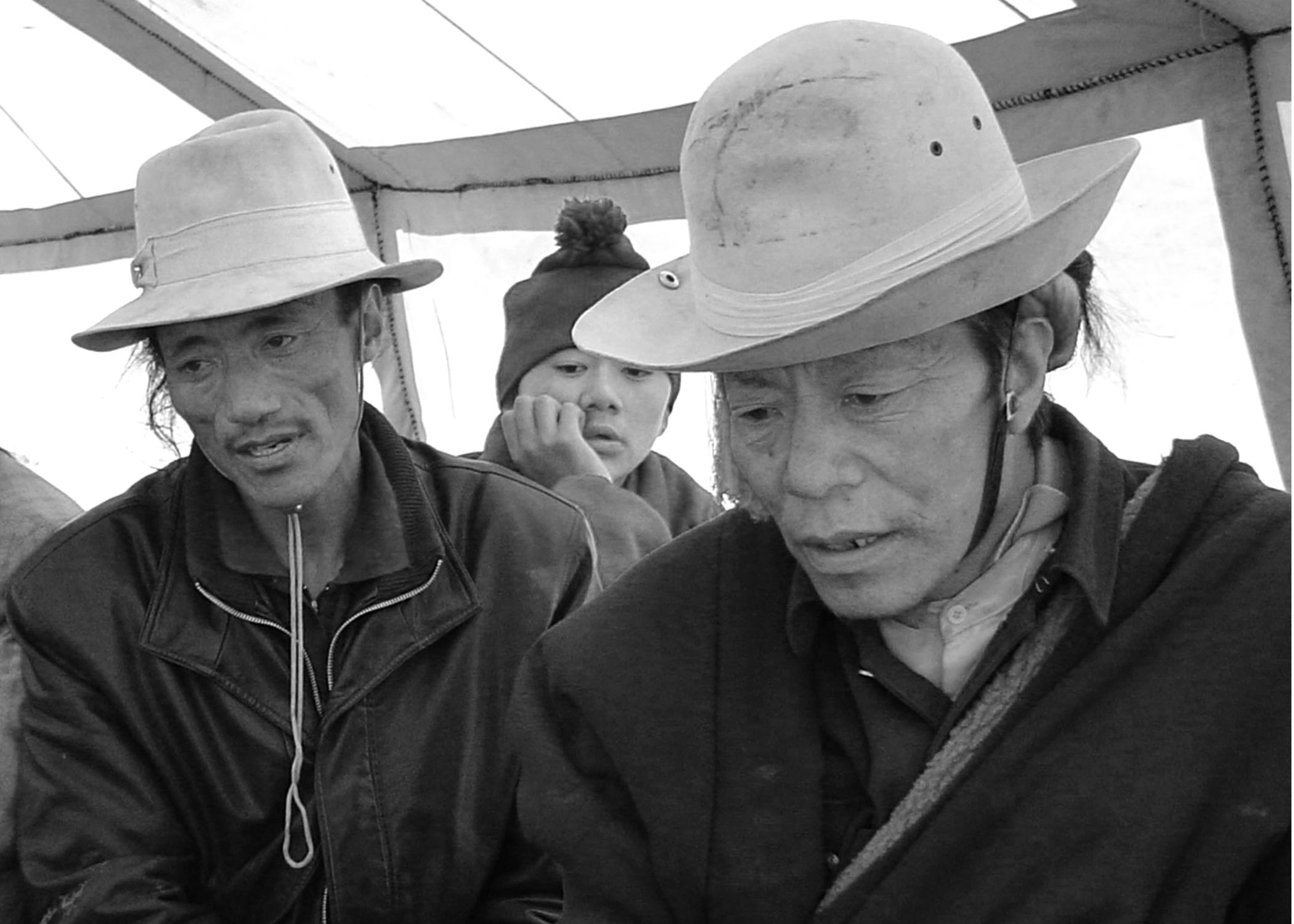
High in China’s western Qinghai province is a small village where project DROLMA is based. The population consists of 2,800 nomadic people who move twice a year, to and from their summer encampments which reach 15,420 feet into the sky. The conditions are harsh with short growing seasons; their traditional diet consists of roasted barley flour mixed with yak butter and salted tea. A centrally located monastery with 52 monks in residence provides the spiritual guidance for this community. It was the wisdom of one of their spiritual leaders that made the project a reality. He reached out for assistance, seeking new ideas for problems that have challenged his people for decades. Continue reading “Stories from the Field: Realities of field work at 14,000 feet.” →

Stories from the Field: Blowing whistles for change.

According to the UN, 2.6 billion people around the world do not have access to what we take for granted, a clean and safe latrine. The UN General Assembly declared the year 2008 the International Year of Sanitation, the goal is to raise awareness and to accelerate progress towards the Millennium Development Goal (MDG) target to reduce by half the proportion of the 2.6 billion people without access to basic sanitation by 2015.

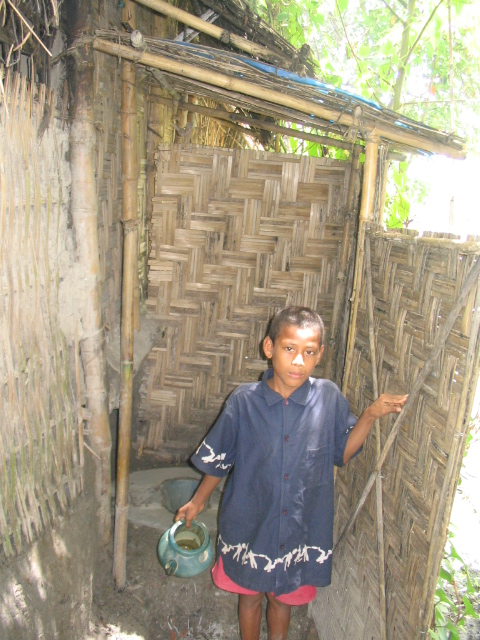
According to the WHO, about 2 million people die every year due to diarrheal diseases caused by poor sanitation and hygiene; most of them are children less than 5 years of age.To help combat this, Plan is pioneering new approach in Asia and East and Southern Africa – Community-Led Total Sanitation (CLTS), which educates communities about the importance of sanitation and helps them to construct and maintain their own latrines. Dr. Selina Amin brought to our attention the work of the Jaldhaka Program Unit of Plan Bangladesh.

The Jaldhaka Program Unit is situated at the northern part of Bangladesh. Their target population included 100,000 children and adults in rural communities where lack of appropriate facilities led to open defecation. CLTS was introduced, and a creative approach was added – active involvement of children. They call it the Child-to-Child (CtC) approach, where children became active participants in changing community behaviors. Armed with knowledge, flags and a whistle, children were empowered to participate by alerting the community with whistles when someone was caught not using a latrine. Continue reading “Stories from the Field: Blowing whistles for change.” →