
Guest Blog: Sepsis – A Neglected Global Killer (CUGH)

Guest Blogger: Amanda Hirsch


Sepsis can be caused by any serious infection that leads to multi-organ dysfunction. Diseases that most commonly lead to sepsis infection are pneumonia, TB, HIV/AIDS, dengue, diarrheal diseases, etc. Multi organ dysfunction can lead to death if not recognized and treated early.

Every year, approximately 30 million cases of sepsis are documented. However, it is speculated that the 30 million known cases only comprise a portion of the actual incidence of sepsis each year. Recognition and documentation of sepsis cases is lacking and the exact global burden of sepsis remains unknown.

Many deaths that occur due to sepsis are attributed to the original disease. For example, if a patient succumbs to sepsis after contracting pneumonia, their cause of death will likely be recorded as pneumonia. Secondly, late mortality from sepsis contributes to its underreporting. Many sepsis infections occur after a patient is discharged from the hospital. Yet, very few patients return to seek help for their rapidly advanced infection, resulting in a mortality due to sepsis.

The highest burden of sepsis infections occurs especially in low income countries. The lack of resilient health systems, little public education and awareness, costs of healthcare, long distances to healthcare facilities, and poor transportation all make it difficult for individuals to seek and receive care for sepsis. Also in poor countries, low immunization rates, low coverage for citizens, high levels of disease co-morbidity, unprepared or undertrained healthcare workers, a low emphasis on preventative services, few new drugs for tropical diseases circling through the market, and the export of healthcare staff make sepsis significantly more of a threat.

This underrepresentation of sepsis and lacking preparedness and recognition in the healthcare world has pushed members of organizations such as the Global Sepsis Alliance to call for help- bringing public awareness to the unacceptably high current incidence of morbidity and mortality from sepsis, asserting that something must be done.

To curb the incidence of sepsis, a multi-faceted approach is needed. This approach, according to Dr. Ron Daniels includes the following:

  • Vaccinations
  • Strict hygiene
  • Early recognition
  • Aggressive treatment
  • Rational us of antimicrobials
  • Innovations in care
  • Knowledge translation
  • Capacity building
  • Advocacy

On the topic of advocacy, Dr. Daniels spoke of turning sepsis into a political movement of sorts, putting a face and a name to the infection and what it includes. The public must be educated on the signs and symptoms, the media must spread the word, and governments must allow for more data to be collected, support more funding for sepsis research and treatment, and use their power and platform to make sepsis a priority on both the national and international political arenas.


twitter photoAmanda Hirsch is a summer Global Health intern for APHA. She is starting her final undergraduate year at the GWU Milken Institute School of Public Health. Her passion for global health began in rural Honduras, and she is particularly interested in disparities in healthcare systems that affect the Latino community. She intends to pursue an MPH degree with a dual concentration in Community-Oriented Primary Care and Global Health. You can follow her on Twitter at @amandahirsch12.
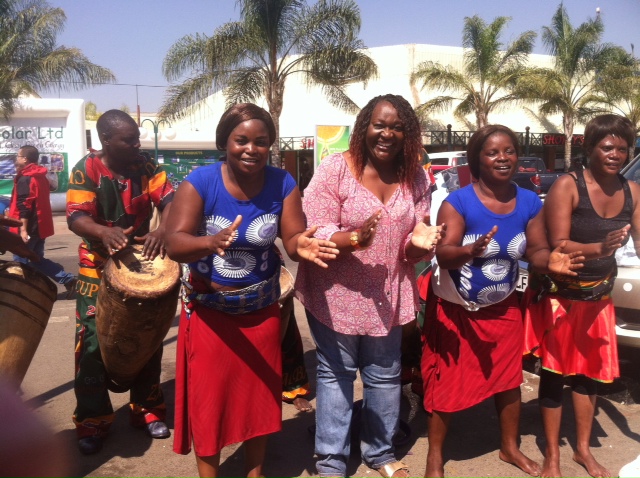
Cultural Challenge of Female Genital Circumcision by M.L. Tatum

photo

A very basic definition of culture is the cumulative deposit of knowledge, experience, beliefs, values, attitudes, meanings, hierarchies, religion, notions of time, roles, spatial relations, concepts of the universe, and material objects and possessions acquired by a group of people in the course of generations through individual and group striving (Hofstede, 1997).

Undoubtedly, most humanitarians, community workers, and public health specialists would be able to supply a sufficient definition for culture. The words may vary somewhat, but the basic concept would be the same. However, how many of them truly grasp the vitality of this definition? Moreover, truly value why various practices or beliefs came to be and have continued for generations even in today’s fast-paced and shrinking world with advances in technology, increased availability of education, increases in family income, et cetera.

One cultural practice common in parts Africa and a part of the Middle East is the practice of female genital circumcision (FGC). FGC is believed to have been initiated in the fifth century B.C and continues today, affecting an estimated 2 million girls annually (Shah, Luay, & Furcroy, 2009).

FGC is a coming-of-age tradition for females which takes a variety of forms. It includes the partial or total removal of the external female genital, near complete sewing-up the vagina with only a small opening for urination and menstruation, introduction of corrosive substances into the vagina, and other injury for non-therapeutic reasons (WHO, 1997). Some of the biomedical consequences include infection or hemorrhaging which can lead to loss of life, bowel and bladder incontinence, painful intercourse, and complications with childbirth.

Many persons would consider this to be an atrocity and defilement of girls; as a result, there has been a great deal of global support to implement programs and various interventions to support the cessation of this act. However, termination of FGC continues to be an uphill battle.

I believe us, as professionals, sometimes, do not grasp how deeply ingrained FGC is believed to be necessary in the preparation of a young girl for womanhood. The roots of this practice are so deeply psychologically and emotionally based that families have risked breaking judicial law to continue preparing their child for womanhood. For example, Kenya’s Children’s Act of 2001 made it illegal to subject girls to any form of FGC; consequently, it is believed that practicing tribes are now performing the act secretly, to decrease the risk of being imprisoned. This theory has been supported by people being caught in the act or dealing with girls who are infected or bleeding after going through the procedure (Library of Congress, 2011). What’s more, families who have migrated to Europe and the United States bring their daughters back to their country of origin when they come of age to have this procedure performed.

The complexity of cultural beliefs and their unseen components are sometimes difficult to conceptualize, thus, making it challenging to influence health behavior change. FGC is not just a physical alteration to the body; it is a celebration among friends, mothers, grandmothers, aunts, cousins, and neighbors. It means the individual has now graduated to the next level. She is now of age and ready to progress to the next stage in life. Yes, female genital mutilation is a procedure with unfortunate consequences and it should be addressed by community workers, public health professionals, and humanitarians. Nevertheless, we have to proceed respectfully and view cultural practice in a holistic manner to be effective in implementing sustainable behavioral changes.

The Severity of Racial Health Inequities

Guest Blogger: Tiffany Gilliam


African American women are more likely to succumb to negative health outcomes than any other race or ethnicity. Health inequities are classified as the differences in health status between one disadvantaged population and a group of advantaged. Numerous social determinants of health are related to health inequities, such as:

  • Socioeconomic status
  • Education
  • Age
  • Sex
  • Race and ethnicity
  • Lack of access to quality healthcare

These factors also increase the risk of cardiovascular disease, high blood pressure, diabetes, strokes and healthcare inequity. Nearly 50,000 African American women die each year from cardiovascular diseases. There is a significant gap in life expectancy for African American women compared to white women.

Research has shown that larger populations, like those found in metropolises, correlate to wider gaps in life expectancy. The county of Philadelphia is one of the most racially diverse counties in the United States. That same county contains one of the most racially segregated cities in terms of access to quality healthcare and positive health outcomes. The Philadelphia population is estimated at 1,560,006 residents: 44.2 per cent of which are African American. A recent study conducted by the University of Pennsylvania examined the patient ratio to primary care physician (PCP) in low socioeconomic neighborhoods. The study revealed a PCP ratio of 3,000:1  in underserved areas of Philadelphia. Given this PCP a question is raised regarding the level of care provided to patients. The patient to primary care physician ratio is high due to several reasons such as shortage of primary care physicians, increased amount of Affordable Care Act-covered patients, and the high density of elderly and chronically ill in underserved areas.

In a recent conversation with Sheila, my esthetician, she stated a previous diagnosis of ovarian cancer. The physician immediately advised a treatment of chemotherapy, without any willingness to answer questions or provide additional information.

Before that treatment occurred, however, Sheila received a second opinion from another physician, which revealed that she suffered from endometriosis, not ovarian cancer. After this conversation, numerous questions were raised.  How many other African American women were misdiagnosed and treated for illnesses they did not have? Why was it so difficult for the doctor to make an accurate diagnosis? How often are doctors encouraging participatory medicine when interacting with patients?

How can public health clinicians improve negative health outcomes amongst underserved African American women populations? It is crucial that health polices are created to enforce the overall well-being of African American women of disadvantaged populations. Health policies that promote affordable education, employment opportunities, and adequate accessible health promotion programs are needed in order to improve fair and equal treatment, along with disease prevention and detection.


 Tiffany Gilliam is a first year masters student in Public Health at La Salle University, with a focus in Maternal and Child Health, Social and Behavior Sciences and Health Equity. Her academic interest includes Global Health, Reproductive and Sexual Health and Public Health Policy. For the past three years, Tiffany has worked as a Behavioral Health Worker at Northeast Treatment Center, providing coping strategies, social skills, methods to reduce impulsive behavior at school to children with Attention Hyperactivity Deficit Disorder (ADHD), Oppositional Defiant Disorder (ODD)/Conduct Disorder and Mood Disorder.

Guest Blog: Second Annual Global Social Service Workforce Alliance Symposium at the US Institute of Peace

Guest Blogger: Amanda Hirsch


The SSW symposium provided a forum for practitioners, government representatives, academics, and other experts from around the world to discuss current efforts (3) being undertaken internationally to expand the social service systems for the health and safety of children and families. The presentation was broken into three parts, each part discussing one component of the stride to strengthen the social service workforce.

  1. Planning: Dr. Jini Roby, a professor in the Department of Social Work of Brigham Young University along with Ms. Joyce Nakuta, Deputy Director of the Namibia Ministry of Gender Equality and Child Welfare spoke on the topic of planning the social service workforce. Planning the workforce, they agreed, “takes a system”- a calculated outline of each potential worker and their respective responsibility. To be most effective, social service must work on a network basis from workers on the ground (ie child health workers who raise and mentor orphaned children) to policy makers that have the capacity to encourage funding of child health worker training programs- all positions are necessary for the job to effectively get done.
  2. Robin Sakina Mama, Dean of Monmouth University School of Social Work and Ms. Zenuella Sagantha Thumbadoo, Deputy Director of National Association of Child Care Workers, South Africa discussed developing the social work force. This component of the process deals with educating and training social service workers. Dr. Robin Sakina Mamma spoke about the issue of certification and degrees. Today, many countries in need of social service work are left at a disadvantage because they lack existing institutions that provide proper degrees for social work or do not yet have a place in  the workforce for professional social workers. With that, many do not receive enough of an education in social work to be effective and many do not have a chance to practice and/or use their degrees in their home countries of need.
  3. Natia Partskhaladze of UNICEF and the Georgian Association of Social Works discussed the issue of supporting the workforce. Dr Partskhaladze spoke about worrisome recruitment and retention rates that are particularly high in developing countries, such as her home country of Georgia. The social work profession was non-existent in Georgia as of fifteen years ago. After establishing a study program and professional network for social work in the year 2000, an organization of social workers has since been formed. Centered on retention and development, the organization strives to keep social workers in the workforce while encouraging Georgians to get involved in the field of social work through the development of academic and professional programs and support groups. This organization of social workers now boasts 600 members, making Georgia an example of what committed recruitment and retention efforts can do to create or revive a supply of social workers within a country in need.

In her opening remarks Deputy of the Child Protection Section of UNICEF, Dr. Karin Heissler, noted that social work uses data and lessons learned in order to make decisions about the social service workforce and influence policy- a concept that is very familiar in public health.

Public health is entirely driven by data and “lessons learned”- both are at the base of nearly all interventions and both are necessary when public health professionals must have a voice at the community or policy levels.

The process of “planning the workforce” described is similar to the process of planning an intervention in public health. Both require assessing an issue; anticipating the immediate, medium, and long-term needs to be addressed; and creating a system with which to achieve a goal at all anticipated levels.


twitter photoAmanda Hirsch is a summer Global Health intern for APHA. She is starting her final undergraduate year at the GWU Milken Institute School of Public Health. Her passion for global health began in rural Honduras, and she is particularly interested in disparities in healthcare systems that affect the Latino community. She intends to pursue an MPH degree with a dual concentration in Community-Oriented Primary Care and Global Health. You can follow her on Twitter at @amandahirsch12.