With the holidays approaching, I can’t help but notice one of my favorite sweets making an appearance in almost every store I visit. Chocolate is an indulgence most of us in America can’t consider living without. However, after joining the team at the international non-profit, United Aid for Africa, I was motivated to take a second look at how and at what cost, we get our chocolate.
Author: internationalhealthstudents
Students: The Importance of Making Meaningful Connections
As Dale Carnegie once said, “You can make more friends in two months by becoming interested in other people than you can in two years by trying to get other people interested in you.” The importance of making meaningful connections, or networking, cannot be emphasized enough. However, many people mistakenly think that networking is simply to attend various meetings and hand out business cards. Networking is more than that; it is an art form. In his book How to Win Friends and Influence People, Carnegie highlights several important networking skills we often tend to ignore, such as smiling, listening, asking questions, and saying a person’s name. These are the “soft” or interpersonal skills that need to be practiced and often reinforced. Knowing how to and being able to network can be the single most powerful way to develop one’s professional network, make connections with people who share similar interests, and build long-last friendship.
Continue reading “Students: The Importance of Making Meaningful Connections”
Students, Practice Your Networking Skills at APHA’s 2014 Annual Meeting: Here is How…
Networking can be a daunting task for the young professional, but speaking from experience, it is worth it and a superlative time to perfect this skill-yes, “networking” is a skill- one that you acquire while you are finishing your career as a student.
In today’s professional world, it is becoming less and less about what your resume says and more about who you know. Of course, what you know matters too, but only if you get the interview in the first place. There are many opinions about whether this is a good or a bad thing; regardless it is the reality. In order to make my point I would like to share my personal experiences.
Students, Find Your Tools to Address Global and Environmental Health Issues!
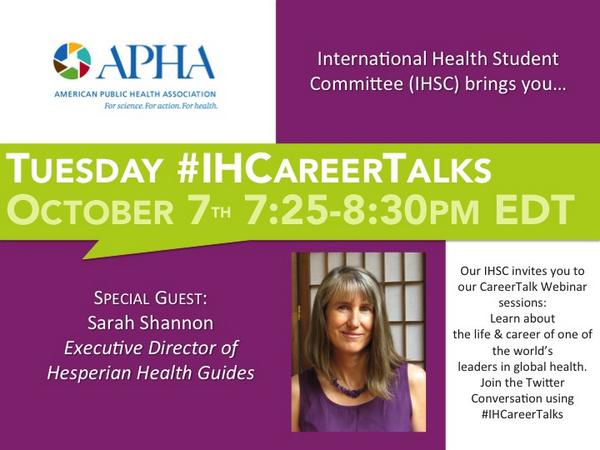
Environmental health issues are present in our everyday lives, and I am committed to improving the environment in which we live, globally. Most recently, I realized that in order to make a difference on environmental issues, all I need are simple tools. This realization inspired me to become involved with APHA’s International Health Student Committee (IHSC). In this committee, I can promote and increase awareness about important international health issues including, environmental health, among students interested in the field. To accomplish these goals, I use tools such as advertising and blog-writing. I help design flyers to advertise IHSC’s initiatives, some of which include educating students on how to address environmental health issues through our CareerTalk series. I am writing this blog to encourage you to attend our upcoming webinar! Continue reading “Students, Find Your Tools to Address Global and Environmental Health Issues!”
Students, You Should Go Abroad Too!
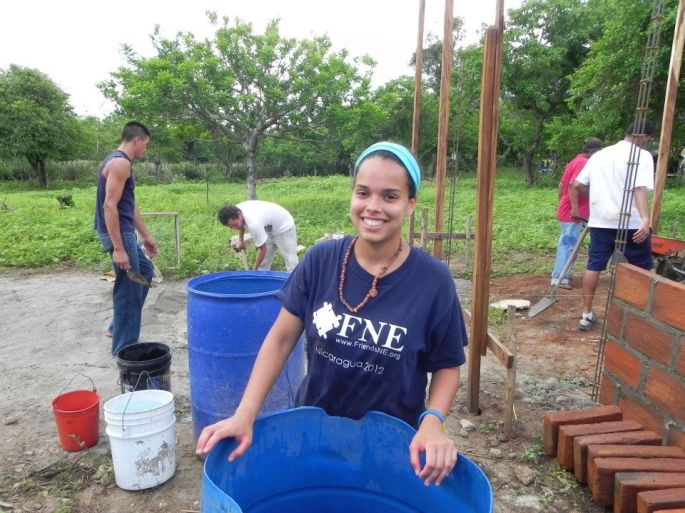
Leaving your comfort zone is one of the hardest, yet most rewarding experiences you can have. It was for me. During my undergraduate years, I spent three consecutive semesters studying abroad in Spain and Chile fulfilling my Spanish & Latin American Literature and Culture major. I realized the importance of expanding my horizons, gaining a multicultural perspective of the world and becoming more culturally competent. As a public health graduate student, my travels to Latin America took a global health perspective. My mind was once again exposed to another side of the world that we often miss while secluded in our comfort zones. In Central and South America, I volunteered on heath initiatives and sustainable development projects, and conducted research. I witnessed numerous global health disparities including lack of sanitation, children living in homes made with plastic walls and dirt floors, and physicians striving to provide quality reproductive care to low-income, immigrant women at a family planning clinic with scarce resources.
My ultimate goal is to become a primary care physician to help reduce health disparities globally. Going abroad was one step towards that goal.