Featured Global Health Sessions at the Annual Meeting

Attention, APHA Annual Meeting Attendees! Vina HuLamm, APHA’s Global Health Manager, has asked us to highlight several sessions and invite you all to attend. The global health diplomacy and women leaders in global health sessions will be of particular interest. You can view the entire Global Health program for the meeting here.


Monday, November 2, 2015
8:30 a.m.-10:00 a.m.

3014.0 U.S. – Mexico Border Health: Challenges and Opportunities

10:30 a.m.-12:00 p.m.
3129.0 Public Health Associations: a voice for global public health

12:30 p.m.-2:00 p.m.
3232.0 Applied Global Health Diplomacy – Linking communities with government for better health policy and population health

2:30 p.m.-4:00 p.m.
3334.0 Alliance of Public Health Associations in the Americas: A new vehicle for improving population health and health equity in our hemisphere

Tuesday, November 3, 2015
8:30 a.m.-10:00 a.m.
4013.0 Non-communicable Diseases and Mental Health: A challenge for health systems

10:30 a.m.-12:00 p.m.
4108.0 Sustainable Development Goals and Health in All Policies

2:30 p.m.-4:00 p.m.
4294.0 Raising Stories and Voices in Health & Development
4294.1 Who runs the world? The role of women leadership in the new global Sustainable Development Goals

4:30 p.m.-6:00 p.m.
4397.2 Building Health Systems through the Faith-Based and Public Sectors to Advance Universal Health Coverage in Low-Resource and Post-Conflict Settings

Wednesday, November 4, 2015
8:30 a.m.-10:00 a.m.
5031.0 Diabetes Prevention Treatment and Care in Cuba – implications for US Public Health

IH Section Activities at the APHA Annual Meeting – Please join us!

Attention, APHA Annual Meeting Attendees! The IH Section leaders and members are looking forward to next week’s meeting and invite registered Section members (as well as those interested in becoming Section members) to attend the our meetings and networking events. Below please find a short summary of our activities, including several specifically geared toward students and early career professionals who want to get involved and learn more about careers in global health. We look forward to seeing you in Chicago next week!


IH Section Business Meeting 1 will give new and renewed members a chance to meet colleagues and learn about how to get involved in the many committees and activities.  Session 235.0
When: Sunday, November 1, 2-3:30 pm
Where: W190a McCormick Place CC

Visit the IH Section Booth in the Exhibit Hall, Booth #1429-7B

All are welcome to attend the following IH Section Committee meetings:

Global Health Students Committee. Session 281.0
A great opportunity for students to meet and get the most out of APHA membership.
When: Sunday November 1, 4–5:30 pm
Where: W184bc McCormick Place CC
Contact: Neil Patel/ Hannah Elsevier <apha.ihsc@gmail.com>

International Maternal Child Health Working GroupSession 282.0
When: Sunday November 1, 4–5:30 pm
Where:  W196a McCormick Place CC
Contact: Laura Altobelli <laura@future.edu>

Community-Based Primary Health Care Working GroupSession 355.0
When: Monday November 2, 6:30–8 pm
Where: W185a McCormick Place CC
Contact: Laura Parajon <lauraparajon@amoshealth.org>

International Health Advocacy and Policy Committee. Session 356.0
When: Monday November 2, 6:30–8 pm
Where: W470a McCormick Place CC
Contact: Kevin Sykes <kjsykes13@gmail.com>

Global Health Connections Working Group
Join our group of young international health professionals.
When: Wednesday November 4, 6:30–8 am
Where: W470a McCormick Place CC
Contact: Theresa Majeski <theresa.majeski@gmail.com>

Don’t miss the IH Section Reception and Awards Ceremony.  Session: 425.0
There will be a student networking activity, opportunities to talk with fellow section members, and much more.
When: Tuesday November 3, 6–9 pm
Where: W185d McCormick Place CC

For the complete listing of IH Section Sessions please see:  https://apha.confex.com/apha/143am/webprogram/IH.html

Sign up on APHA Connect to receive regular information about IH Section activities during the year.  Go to http://connect.apha.org to create an account and set up your profile.

Modern Day Slavery: A Public Health Concern?

Guest Blogger: Carli Richie-Zavaleta

Social Justice in Public Health

Dan Beauchamp’s professional and academic works have established a legacy of connecting public health with social justice. It was during my first year of a graduate program at Drexel University School of Public Health when I was introduced to the framework of Social Justice in Public Health. Through Beauchamp’s social justice framework, we—public health students, practitioners, and researchers—are challenged to rethink our approaches to public health practice. He challenges us to dismantle the social structures of society and examine health disparities. His framework is to analyze health disparities as consequences of a lack of an ethical approach to the protection of the health of those who have limited or no social, political and economic power in society. Recognizing these social structures that benefit those in power and create disproportionate health disparities among vulnerable subgroups of the population is the first step. Secondly, it is not enough for Beauchamp to merely illuminate the health disparities in society. For him, being a public health doer is a collective movement that struggles politically to restructure fundamental systems of justice.

As I have experienced graduate school here in Philadelphia, Pennsylvania, Beauchamp’s framework has resonated with me more and more. It has pushed me to rethink my public health doing in terms of finding approaches that continue to create collective definitions of public health that prevent health disparities. More importantly, it has challenged me to begin seeking a greater understanding of policy creation—one that would be effective at protecting those who are vulnerable due to health disparities.

Modern Day Slavery and Public Health – The Connection

It was twelve years ago when I first learned about Modern Day Slavery (MDS). It was through reading “Disposable People New Slavery in the Global Economy” by Kevin Bales (1998). MDS, commonly known as Human Trafficking or Trafficking in Persons, is a global issue that is found in most corners of the world—most likely in your own locality. Research of MDS victims’ vulnerabilities (qualities that put victims at higher risk prior to their experiences), speaks loudly of the inequalities and health disparities these people are burdened with, prior to their victimization (See Supplementary Reference List[i]). Here lies the call for concern for public health doers: to create a collective concern for MDS in our field, as a preventable social peril, especially for those who are most vulnerable. In addition, in our attempts to narrow the gap of health disparities, it raises the need to prioritize the creation of policies and accountability of said policies to protect the lives of those who are disenfranchised in our communities, including the United States of America.

No easy solutions exist to address social perils; yet, the history of mankind demonstrates that when collective forces unite their voices, talents, and resources, change happens. Examples of achieved social change in the context of the US are the African American man’s right to vote, a woman’s rights to vote, and more recently, the unconstitutionality of DOMA (Defense of Marriage Act). In the international context, the creation of the Universal Declaration of Human Rights, the Millennium Development Goals, and now the working of the Sustainable Development Goals are also great examples of collective movements that have forged new paths of justice and protection of human rights.

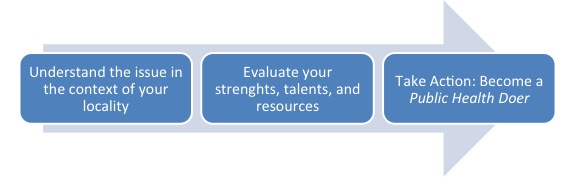
When I first learned about the social peril of MDS, I was hopeless and overwhelmed to say the least, but I have come to develop new perspective. I have seen through my professional and academic background that beginning with our locality, we can move forward to create change. California was the first state in the US to define MDS at a state level. This was a collective effort of local committed citizens, MDS survivors, non-for-profit organizations, and governmental agencies that came together to create a state-level definition of Human Trafficking. The goals were to be able to prosecute the Human Traffickers, but also to increase the protection of victims, to provide more financial resources to victims, and to create programs that focus on assisting and providing victims autonomy once more. The latter resulted in the creation and the passing of CASE (Californians Against Sexual Exploitation) with over 10 million votes! As I witnessed and participated in the process as part of this movement in my locality at the time, San Diego, California, I developed an approach to engage in social change:

CRZ graphic

The above model is not a simple one. It requires at the very least a commitment to the cause, time, and resources; nonetheless, that is what we are being challenged to do when we want to be doers of Public Health.

My hope is that you join me in the collective construction of MDS as a concern in the Public Health field in our localities. As we join together, we can propagate a culture of social justice that translates into the narrowing of human right violations and health disparities. As a MDS survivor put it, “…in the fight to abolish [MDS] we all stand in Unity! There is no big I’s and little U’s”.[1]

[1] Supplementary Reference List

  1. Bean, L. J. (2013, June 26). LGBTQ Youth at High Risk of Becoming Human Trafficking Victims. Retrieved June 14, 2014, from Administration for Children & Families: http://www.acf.hhs.gov/blog/2013/06/lgbtq-youth-at-high-risk-of-becoming-human-trafficking-victims
  2. Greenbaum, V. J., and Crawford-Jakubiak, J. E. (2015, March). Child Sex Trafficking and Commercial Sexual Exploitation: Health Care Needs of Victims. Pediatrics , 566-574.
  3. Greenbaum, V. J. (2014). Commercial sexual exploitation and sex trafficking of children in the United States. Current problems in pediatric and adolescent health care , 44 (9), 245-269.
  4. Hodge, D. (2008). Sexual trafficking in the United States: a domestic problem with transnational dimensions. Social Work , 53 (2), 143-52.
  5. Oram S, S. ̈. (2012). Prevalence and Risk of Violence and the Physical, Mental, and Sexual Health Problems Associated with Human Trafficking: Systematic Review. PLoS Med , 9 (5), online.
  6. Polaris Project. (2014). Human Trafficking The Victims. Retrieved May 10, 2014, from Polaris Project: http://www.polarisproject.org/human-trafficking/overview/the-victims
  7. U.S. Department of Health & Human Services. (2013, June 26). LGBTQ Youth at High Risk of Becoming Human Trafficking Victims. Retrieved June 14, 2014, from Administration for Children and Families: http://www.acf.hhs.gov/blog/2013/06/lgbtq-youth-at-high-risk-of-becoming-human-trafficking-victims
  8. Walk Free Foundation. (2015, April 17). Findings. Retrieved May 20, 2015, from Global Slavery Index: http://www.globalslaveryindex.org/findings/

[2] Miller, D. (2013). I have a dream. In A. C. Richie-Zavaleta (Ed.), Unheard Voices of Redemption Transforming Oppression to Hope (p 125). San Diego: Justice Press. (Original work published 2013). http://justicepress.net/home.html


carli pic

 Arduizur Carli Richie-Zavaleta, MASP, MAIPS, DrPH(c)

Carli grew up in Mexico City and immigrated to the US at age sixteen. She has worked as a professor of Sociology, medical interpreter, program director, field researcher, and mediator with diverse populations in the United States and abroad—from children to adults with a range of socioeconomic, cultural, and racially diverse backgrounds. Since 2010, Carli has focused her energy on conducting social research on human trafficking in San Diego, California, as well as volunteering for non-for-profit organizations that reach out to victims trapped in sexual exploitation. Her research and advocacy work in San Diego, California culminated in the publication Unheard Voices of Redemption Transforming Oppression to Hope (2013)—an anthology of creative writing and essays from victims and those who advocate in ending Modern Day Slavery (MDS). Carli is currently a doctoral candidate in the School of Public Health at Drexel University under the department of Community Health and Prevention. Her doctoral dissertation focuses on understanding the experiences of MDS survivors in the health care settings with the aim to create feasible and viable intervention programs to identify and assist potential victims.
Water is Life by Mary Louise Tatum

WP_20140522_013[2]

Water is the essence of life. Your body is mostly composed of water, approximately 60% (water.usgs.gov/edu/propertyyou.html).  As a result, without water you would cease to exist. Yet, 1.1 billion people lack access to safe drinking water (World Health Organization). The World Health Organization (WHO) and United Nation’s Children Fund (UNICEF) Joint Monitoring Programme (JMP) for water and sanitation defines drinking water as: water with microbial, chemical, and physical characteristics that meet WHO guidelines and are used for drinking, cooking, and personal hygiene. The collaboration further defines access to safe drinking water as a source that is less than 1 kilometer away from place of use and reliably supplies 20 liters per household member daily (http://www.who.int/water_sanitation_health/mdg1/en/).

One of the natural wonders of the world, Victoria Falls, located in Zambia, has approximately 625 million liters of water flowing over its edge per minute (www.victoriafalls-guide.net/facts-on-victoria-falls.html). During the peak flood season, the Falls create a thunderous roar and drench all that is near. Nevertheless, UNICEF reports 4.8 million—approximately one third of the population— Zambians are without access to clean water. Moreover, insufficient drinking water and poor sanitation in the country have contributed to over 800,000 deaths related to diarrhea alone (not including other illnesses related to water issues) (World Health Organization).

In another part of the world, in the mega-city of São Paulo, Brazil, residents go days at a time without water. How did this happen to a country with access to the Amazon River, industry, a bustling tourist industry and sandy beaches? The Amazon River, the world’s largest river by volume, supplies  Brazil its fresh water, yet due to urban growth, poor city planning, leaking water reservoirs, destruction of forest and wetlands, and pollution, there is a lack of safe water for drinking, cooking, and personal hygiene (Nations, 2015) . As a result, water is now being rationed and some residents may be allowed access to water only biweekly.

Unfortunately, the extent of water issues is not limited to merely a few, but is increasingly becoming a global issue impacting many—including the developed nations. Case in point, the western region of the United States of America, specifically California, has been experiencing increasing drought issues for years. In fact, it has gotten to the point that policy and regulations are being considered and implemented to limit use of water with fines for noncompliance.  It will be interesting to observe how the United States, who manages numerous water programs in developing nations, resolve this issue.  This is a nation of people who, for the most part, are used to having free access to water for not only basic needs, but also luxuries. And now many Americans may have to face not only regulations restricting their use of water for swimming pools, lush green lawns, washing cars, skiing, and other recreational activities, but they may also have to deal with the more serious issue of having affordable foods as the water shortage impacts the agriculture sector. It has already been estimated that California will lose $2.7 billion this year due to the current drought issues (U.C. Davis Research Project). In addition, they may have to deal with the possible increase of disease, such as West Nile Virus, and the difficulty of dealing with wildfires due to water shortages.

Of course there is much discourse regarding who or what is to blame for the impending water shortage in the US.  Is it the pollution distributed into the air from numerous factories, vehicles, and farms or is it just a natural occurrence which would occur regardless of human action? Is it archaic water regulations that have not kept up with the diminishing supply of water, or is it our disregard and misuse of what we think is a never-ending supply? Regardless, we are no longer hypothesizing about the lack of water. At least 40 million Americans are actually experiencing the reduced availability of water.

Now that the problem is no longer afar, but at our front door, what do we do?  This issue is not just an issue out west in the US. It is a global issue that will continue to worsen as the population of the earth increases. So now is the time for everyone, whether directly affected or not, to wake up and to encourage not just policy makers, but each of us to make behavioral changes and be more conscientious on our use and waste of this precious resource.

Cultural Challenge of Female Genital Circumcision by M.L. Tatum

photo

A very basic definition of culture is the cumulative deposit of knowledge, experience, beliefs, values, attitudes, meanings, hierarchies, religion, notions of time, roles, spatial relations, concepts of the universe, and material objects and possessions acquired by a group of people in the course of generations through individual and group striving (Hofstede, 1997).

Undoubtedly, most humanitarians, community workers, and public health specialists would be able to supply a sufficient definition for culture. The words may vary somewhat, but the basic concept would be the same. However, how many of them truly grasp the vitality of this definition? Moreover, truly value why various practices or beliefs came to be and have continued for generations even in today’s fast-paced and shrinking world with advances in technology, increased availability of education, increases in family income, et cetera.

One cultural practice common in parts Africa and a part of the Middle East is the practice of female genital circumcision (FGC). FGC is believed to have been initiated in the fifth century B.C and continues today, affecting an estimated 2 million girls annually (Shah, Luay, & Furcroy, 2009).

FGC is a coming-of-age tradition for females which takes a variety of forms. It includes the partial or total removal of the external female genital, near complete sewing-up the vagina with only a small opening for urination and menstruation, introduction of corrosive substances into the vagina, and other injury for non-therapeutic reasons (WHO, 1997). Some of the biomedical consequences include infection or hemorrhaging which can lead to loss of life, bowel and bladder incontinence, painful intercourse, and complications with childbirth.

Many persons would consider this to be an atrocity and defilement of girls; as a result, there has been a great deal of global support to implement programs and various interventions to support the cessation of this act. However, termination of FGC continues to be an uphill battle.

I believe us, as professionals, sometimes, do not grasp how deeply ingrained FGC is believed to be necessary in the preparation of a young girl for womanhood. The roots of this practice are so deeply psychologically and emotionally based that families have risked breaking judicial law to continue preparing their child for womanhood. For example, Kenya’s Children’s Act of 2001 made it illegal to subject girls to any form of FGC; consequently, it is believed that practicing tribes are now performing the act secretly, to decrease the risk of being imprisoned. This theory has been supported by people being caught in the act or dealing with girls who are infected or bleeding after going through the procedure (Library of Congress, 2011). What’s more, families who have migrated to Europe and the United States bring their daughters back to their country of origin when they come of age to have this procedure performed.

The complexity of cultural beliefs and their unseen components are sometimes difficult to conceptualize, thus, making it challenging to influence health behavior change. FGC is not just a physical alteration to the body; it is a celebration among friends, mothers, grandmothers, aunts, cousins, and neighbors. It means the individual has now graduated to the next level. She is now of age and ready to progress to the next stage in life. Yes, female genital mutilation is a procedure with unfortunate consequences and it should be addressed by community workers, public health professionals, and humanitarians. Nevertheless, we have to proceed respectfully and view cultural practice in a holistic manner to be effective in implementing sustainable behavioral changes.