Occupational Health – The Need to Go Global

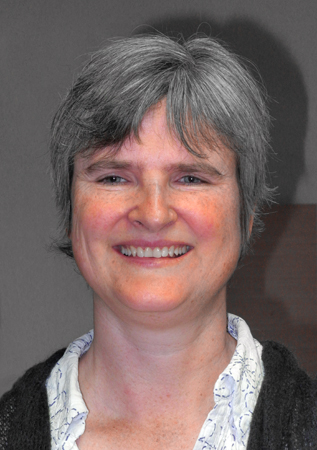
Guest blogger: Dr. Isobel Hoskins

I never come away from the APHA meeting without being inspired.

This year, the inspiring speech for me came right at the end. I attended the closing session almost by chance when I realised I had a little time. The theme was occupational health so as someone keen on global health I didn’t think it would be all that relevant. When the second speaker took the stand I realised how wrong I was.

Leo Gerard from the United Steelworkers Union showed how health and safety is a global issue and exactly why we need to address occupational health worldwide to match the globalisation of trade. Have you ever thought about who made the clothing you wear, the conditions they work under and the impact that has on their health?

He showed a short video about the Triangle fire – a fire that happened in 1911 in New York at a garment factory. Fire broke out in the factory and panicked workers rushed to the two exits only to find them blocked by fire or locked. The workers couldn’t get out and in desperation some even threw themselves from the upper floors to escape the fire. 146 of them died. This event was one of the drivers of health and safety regulation in theUSA. Those workers were low paid and not allowed to unionise and so negotiate their conditions.

Fast forward to 2010. Gerard described a fire at a garment factory in Bangladesh and guess what? The exits were locked. 29 people died trying to get out, some threw themselves from the upper floors. No regulations prevented this accident in Bangladesh and there was no union to help protect the low paid workers.

Nothing has changed except the geography.

In the rush of globalization, developed country companies are getting round regulation at home by exploiting places where there is none. What does this mean for regulation at home? It means it is under pressure. We could lose all that has been gained since the Triangle fire. In the race to the bottom and the lowest prices, people’s health is being put on the line.

Trade regulations preventing import into the US of goods made in sweatshops or by children, for example, could be a way of forcing global companies to adopt safe working conditions, said Gerard. Having stronger more global unions is another way. Leo’s union the United Steelworkers Union has just gone global – forging partnerships and mergers with other unions worldwide.

Individually I think we can make a difference as well- reading the label and knowing the reputation of companies you buy from could help prevent exploitation. Consumers have power….

Triangle fire: http://en.wikipedia.org/wiki/Triangle_Shirtwaist_Factory_fire
Bangladesh fire: http://www.guardian.co.uk/world/2010/dec/14/bangladesh-clothes-factory-workers-jump-to-death

Dr Isobel Hoskins manages the Global Health database at CABI.
Annual Meeting, Day 3: Governing Council Action and Section Goals

Apologies for the delay in posting this, but it has taken us all a little while to regroup after the Annual Meeting.

The major event every year on Tuesday of the Annual Meeting is the Governing Council session.  The IH section was, as always, active and vocal in this year’s session.  Nominations Committee Chair and Governing Councilor Amy Hagopian provides a great summary of this year’s session:


The governing council meetings this year were the usual mix of deadly dull and rivetingly interesting. On Saturday we had a lively candidates’ forum, hearing from the six candidates for executive board and the two candidates for chair-elect. The governing council is the electoral body for these positions (although we did vote on a proposal this year to allow the full APHA membership to vote for chair-elect….um, that failed). The candidates for these positions were very high quality this year, and it was hard to choose! Our section was very happy with the results of the election, which took place on Tuesday: Adewale Troutman for chair-elect; and 3 winners for executive board, Lisa Carlson, Durrell Fox and Paul Meissner.

Tuesday’s full-day governing council meeting opened with a riveting (not) discussion of detailed bylaws changes. We did vote on changes to the membership categories, which will favor members who join during their student years and transition into “new professionals.” We voted on the theme for the 2013 conference, and chose (by 54%): “Think Global, Act Local: Best Practices Around the World.”

We adopted 23 resolutions on a variety of policy matters, including six sponsored by the International Health Section:
B1: Improving Access to Higher Education Opportunities and Legal Immigration Status for Undocumented Immigrant Youth and Young Adults
B2: Improving Housing for Farmworkers in the U.S. is a public health Imperative
C1: Prioritizing non communicable disease prevention and treatment in global health
C3: Call to Action to Reduce Global Maternal, Neonatal & Child Morbidity and Mortality
C7: Highlighting the health of men who have sex with men in the global HIV/AIDS response
D1: APHA Endorses the World Health Organization’s Global Code of Practice on the International Recruitment of Health Personnel

We also approved two policies supported by the IH section:
B6: Reducing PVC in Facilities with Vulnerable Populations (sponsored by our friends in the Occupational Health Section)
LB2: Opposing the DHS-ICE “Secure Communities” Program (in support of immigrant rights)

The governing board also made some changes to the policy submission process. Some highlights:
1) Late-breakers now must be submitted 10 days before the conference
2) There are no longer two categories of policy submissions (short resolutions vs. policy statements); now all policies should be about 10 pages with plenty of evidence and background

Further, we accepted the report of the ad hoc “Policy Working Group,” which worked for two years to discuss how to manage policy resolutions that can be characterized as largely based on qualitative data or are values-based.

And, finally, there was a fun “wild card” vote on a statement to support the Occupy movement. It passed, 76% to 24%:
“The Occupy Wall Street movement is now active in more than 1,000 cities in the US and has related protests around the world. APHA supports its call for greater social equality, social justice, reducing income inequality, and its demand that corporate crime be investigated and prosecuted. We ask members to identify opportunities to build on the energy and enthusiasm of the nationwide Occupy movement and its synergies with public health.”

The governing council meetings are always open to the general membership at the annual conference. Next year, stop in and watch for a while–it’s always interesting! Even during the bylaws conversations!


The section also held its third and final business meeting, during which members discussed the section goals that emerged from the most recent Strategic Plan and ways to implement those in a concrete way.  The leadership will continue this discussion in more detail during the next conference call, which (as always) is open to any member who wishes to call in.

How much education does it take to learn to wash people’s feet?

By Barbara Waldorf RN, MPH (candidate)
Boston University School of Public Health
Recently, in a health policy class at BUSPH, I listened to Dr. Jim O’Connell describe how, as a hot-shot young doctor fresh from being the chief resident at MGH, he was told that to start his new job at the Pine Street Inn, he would be washing the feet of the homeless clients at the nursing clinic. The struggle with his (and the medical profession’s) ego was palpable. To his credit and the benefit of thousands of homeless people over the next 20 years, he chose, in that moment, to not know, to trust the nurses and to learn a in new way.

Ruth Stark, in her training manual for working abroad, speaks of the critical importance of learning to listen when in a another country or culture. Her advice to everyone who ventures beyond their boundaries, who wishes to have an impact in a different cultural context, is to spend significant time asking questions rather than assuming prior knowledge, and to cultivate humility.

There is no doubt that facts and figures, economic theory and the scientific process are important. These can be taught. Graduate education in public health gives us the tools for financial analysis, the application of management principles and the rigor of epidemiology and biostatistics. These are the building blocks of the profession.

Yet, without the more intangible skills of listening, humility, curiosity about the unknown and a profound respect for the deep threads of humanity that bind us together, we will not be able to make the right decisions. Paradoxically, the depth of respect for, and willingness to learn from, other people’s wisdom and knowledge is based in the confidence and knowledge of one’s own culture, experience and education. Without grounding in self-respect, how can we access that which needs to be given? In order to become an advocate for real change and have the discernment to make important decisions, we need to know ourselves.

I washed the feet of homeless women at the Pine Street Inn the same year as Jim O’Connell. As a student nurse at UMass/Boston, it was my community health placement. I was young, suburban, and middle class with noe xperience of inner city, drug addicted, alcoholic or mentally ill homeless folks. I was scared and felt I had nothing to give. But as I sat with them, day after day, soaking their feet, listening, being with them as a human being, something happened.

Something was touched that opened my eyes, both inner and outer, to a very different way of being. It changed me in a fundamental way and shifted both the trajectory and context of my professional life. I owe the homeless women who allowed me to wash their feet for an education I have utilized all my life. It has taken me throughout the world, and allowed me to be with people I could not speak with; to work in situations I did not understand and to take risks and move into arenas I did not know.

That thread has led me to now pursue a Masters degree in public health, where new vistas are opening up. Understanding how economic theory explains the provision of care, finding a new perspective on health care systems and gaining the building blocks to decide when and where to intervene in complex emergencies. Something has come together here, which is the place where my education from the university meets my education from the women of Pine Street, from the Tibetan refugees I cared for in the mountains of Nepal and from my schizophrenic clients in Boston.

To answer the question, it takes a lot of education to wash people’s feet, to be present for them, to be a true advocate and to understand when to speak and when to listen.

Barbara Waldorf is an RN and working on her MPH at Boston University School of Public Health with a concentration in International Health. Having lived and worked in Asia, Europe and Australia, her current interest is in the emerging field of Global Health nursing and learning from other nurses who are active in this field.

Global HIV Prevention—Check!

by Kate McQuestion E-mail
In 2006, an article in the New England Journal of Medicine cited the substantial success of the implementation of a routine checklist on reducing catheter-related infections in the Intensive Care Unit of a Michigan Hospital. This story was shortly followed by media uptake the WHO Patient Safety Checklist, which, when utilized, reduced surgery-related mortality by almost 50%. The clinical use of checklists has become a hot topic for clinical quality improvement advocates, and as such, they been generally embraced in some areas of clinical practice.

Could this kind of tool be effective in public health?

The concept of a checklist is, intentionally, simple. The checklist serves as a mechanism to combat human failures of attention or memory—particularly in high stress or repetitive environments. The overall goal of a checklist is not only to ensure that each item is checked-off as prescribed, but to ensure an environment that promotes teamwork and professional discipline. Due to the ability of checklists to make complex systems approachable, they have already been widely used in industries such as aviation and construction, and now are advancing in medicine as well.

HIV prevention efforts, too, involve complex systems consisting of dynamic target populations, multiple programmatic efforts, and a lack of measurable quality indicators—all in all, making sustainable quality improvement challenging.

Checklists might provide a standardized method to ensure basic quality improvement and program management practices in an environment where pressing need may often lead to deficits in consistent and quality programming. Furthermore, they can be used as a tool to increase quality by improving communication, both internally within an organization, but also with the members of the target population being served.

It is a common complaint that too little emphasis falls of clinical delivery sciences, but it is fair to say that even less falls of preventative services delivery. NGOs working in HIV prevention need to keep better track of both the outcomes and impact of their programs. With out measuring results, it is hard to identify best practices and improve quality standards. HIV Quality Improvement Checklist tools could serve as a constant reminder for NGOs to monitor and evaluate results, thus improving health of communities world-wide.

Sources:

  • Pronovost P, Needham D, Berenholtz S, et al. An intervention to decrease catheter-related bloodstream infections in the ICU. N Eng J Med 2006; 355: 2725–32.
  • Gawande A. The Checklist Manifesto: How to Get Things Right. Henry Holt and Co: New York, 2009.
  • Haynes AB, Weiser TG, Berry WR, et al; Safe Surgery Saves Lives Study Group. A surgical safety checklist to reduce morbidity and mortality in a global population [published online ahead of print January 14, 2009]. N Engl J Med. 2009; 360(5):491-499.

Kate McQueston is a Master of Public Health Student at The Dartmouth Institute for Health Policy and Clinical Practice and Intern at the WHO Regional Office for Europe Division for Communicable Diseases.

Waiting for Handouts

by Ibrahim Kargbo E-mail LinkedIn Twitter

On a recent trip to Haiti to conduct program monitoring and evaluation, I was taken aback by the statement of a woman who was forced to relocate due to the 2010 earthquake. When asked why she continues to attend HIV/AIDS education programs, her response was “…because I was promised a house and money”. Upon further interaction with the woman, I learned that she was told by a responding aid organization that she would be given a house and money to help her recover. Hearing her comment, I was left to question whether or not the responsibility of post-disaster recovery is made clear and rightly shared.

I very much support the massive global response to environmental disasters such as the 2004 Indian Ocean tsunami, the 2010 Haiti earthquake, and the recent 2011 Japan earthquake and tsunami. As a global community, we share the tremendous responsibility of assisting each other with disaster recovery efforts. Regardless of the disaster, we donate money, time, technical assistance, and other resources to countries in need, either because we are expected to do so or because we are emotionally impelled to assist; whichever is the case, we manage to step up to the plate to provide recovery assistance.

But at what point should disaster recovery become more of the effected country’s responsibility than that of assisting countries? As we overwhelmingly respond to disasters, we forget to remind countries that emergency assistance they receive is only temporary and as citizens, it is they and their governments who are ultimately responsible for recovery efforts and long-term reconstruction. Donors and disaster response agencies should refrain from promising and or providing long-term resources for disaster recovery, doing so may potentially create an environment which citizens and country governments do not take initiative and responsibility for long-term recovery efforts, further handicapping the people’s ability to recover from future disasters.

In a perfect world, country citizens and their governments do not wait for handouts from donors and other countries, but instead, respond to disasters with pride for their country and support of one another. We all should work towards a perfect world.

Ibrahim Kargbo is a Master of Public Health student at George Mason University.