Global News Round Up

Politics & Policies

A new study that examines some major health care proposals from presidential candidates finds that Donald Trump would cause about 20 million to lose coverage while Hillary Clinton would provide coverage for an additional 9 million people.

The government isn’t regulating how highly dangerous viruses and bacteria are rendered safe for shipment, posing risks to the public, auditors say.

At this year’s United Nations General Assembly, policymakers and elected officials should increase their political commitment for breast- feeding as they work to tackle issues of critical importance related to the health, wellbeing and economic success of their 193 states. It’s directly related to our collective goals.

The United States unveiled plans on Thursday to ramp up efforts to end female genital mutilation (FGM) after figures showed more than half of million women and girls were living at risk.

On September 21st in New York all 193 UN member states agreed to tackle the growing resistance of microbes to antibiotics.  Drug-resistant infections now kill more than 700,000 people a year. On current trends, that number may reach 10 million by 2050.

Senate Republicans on Thursday released the latest draft of a $1.1 billion funding package to fight the Zika virus, and it contains some of the controversial funding offsets that Democrats have long opposed.

The World Health Organization (WHO) is preparing to select a new director general.  It needs someone dynamic and politically astute to drive strategic reforms, say global health experts.

A study funded by the Bill and Melinda Gates Foundation, measured how countries, including Australia, China, India, the US and UK, performed over the last 15 years with Iceland taking the top spot for its health related Sustainable Development Goal (SDG) performance.

New Zealand falls way behind our neighbours across the Tasman as a healthy country to live in, a major global study has found.

Programs, Grants & Awards

The Center for Global Health in the Perelman School of Medicine at the University of Pennsylvania is pleased to honor Ernest Madu, MD, chairman and CEO of the Heart Institute of the Caribbean with its first annual Global Health Champion Award. Madu was presented with the award on Thursday, Sept. 15 as part of a celebration for Penn’s newly launched Center for Global Health.

Bill Gates, Bono among big names at Montreal conference to replenish fund to fight HIV/AIDS, TB and malaria.

Glaxo-Smith Kline (GSK) has plans to address emerging global health issues, the company said in a Sept. 19, 2016 press release. The company put forth a series of steps it will take in order to combat several global health challenges, including access to vaccines, antimicrobial resistance, and preparation for future pandemics.

University of Iowa students now will be able to expand their knowledge of health around the world, thanks to a new major in Global Health Studies.

Research

Since December 2013, an armed conflict in South Sudan has resulted in the displacement of over 2.2 million people, more than 270,000 of whom are presently in refugee settlements located throughout Uganda. Existing literature suggests that refugees are at increased risk for a range of mental health and psychosocial problems.

Molecular surveillance identifies multiple transmissions of typhoid in West Africa.

Experimental treatment of Ebola virus disease with brincidofovir.

During 2004–2013 in Mozambique, 455,600 HIV-positive adults (≥15 years old) initiated antiretroviral therapy (ART). We evaluated trends in patient characteristics and outcomes during 2004–2013, outcomes of universal treatment for pregnant women (Option B+) implemented since 2013, and effect on outcomes of distributing ART to stable patients through Community ART Support Groups (CASG) since 2010.

Informed risk assessment and decision making for an emerging infectious disease in the Asia-Pacific Region.

For the first time, abnormal brain development following a Zika infection during pregnancy has been documented experimentally in the offspring of a non-human primate.

By 2050, 75% of the world’s population is expected to live in cities, making city planning key for addressing disease prevention and global health challenges, according to a series published in The Lancet.

Diseases & Disasters

Hookworm is a parasite that is behind millions of infections worldwide. This intestinal parasite can cause a host of complications in people of all ages.

More than a third of the burden of disease experienced by Indigenous Australians could be prevented, with tobacco and alcohol use, high body mass, physical inactivity, high blood pressure and diet contributing to their illnesses, data released by the Australian Institute and Health and Welfare shows.

Miami district which saw the first locally transmitted Zika cases in the US has been declared free of the virus.

Health organizations have all the right weapons to eradicate polio, but can’t deploy them because of wartime conflict in Nigeria, Pakistan and Afghanistan – the last three countries affected by the disease.

The World Health Organization (WHO) has recently initiated a global health strategy, which will run between 2016 and 2021, to eliminate hepatitis C as a global health threat by 2030.

With all four strains of the dengue virus now circulating in Pakistan and outbreaks of the viral disease being reported in new areas, this South Asian country now faces a serious health problem from the mosquito-borne pestilence, researchers say.

In the five years since the civil war between President Bashar Assad’s government and rebel groups began, more than 250,000 Syrians have died in the conflict. But thanks to the White Helmets, over 60,000 lives have been saved.

Traditional strategies for delivering health services to refugees and migrants will not meet the needs of today’s 65 million displaced people, according to refugee, development and global health experts who met Thursday at a UN General Assembly side event.

Technology

A new technique may democratise vaccine production.  James Collins of the Massachusetts Institute of Technology (MIT) thinks that he may have developed one.

Healthcare, the USD 18-billion healthcare technology unit of GE, has announced USD 59-million funding aimed at improving services of healthcare startups in developing countries.

Facebook founder Mark Zuckerberg and his wife Priscilla Chan have pledged $3 billion (£2.3bn) to fund medical research over the next decade. At a press conference in San Francisco, they said their ultimate goal was to “cure, prevent or manage all diseases by the end of the century.”

Environmental Health

Volkswagen (VW) emissions cheat may lead to 50 premature deaths, $423 million in economic costs, study shows.

Australia’s offshore petroleum industry regulator is set to rule next week whether to grant oil giant BP’s application to drill in the Great Australian Bight.

While July was busy becoming the hottest month in 136 years of record-keeping, Donald Trump made no reference at all to climate change in his nomination-acceptance speech, and Hillary Clinton made only two passing references in hers.

A week before Russia’s Daldykan river was turned red by a leak from a metals plant, the UN issued a warning as chilling as it was overlooked: 323 million people are at risk from life-threatening diseases caused by the pollution of rivers and lakes.

Equity & Disparities

Gender equality remains the greatest human rights challenge of our time, and one way to achieve the goal is by empowering women to have greater choices economically and control over their lives, United Nations Secretary-General Ban Ki-moon declared today, urging the international community to spearhead efforts that provide opportunities for women and girls.

A new analysis shows that the life expectancy of people living with HIV is very different between Europe, North America and African countries.  The analysis pools the results of eight previously published studies on life expectancy, with over 150,000 people included.

Increasing evidence from scientists the world over indicates that many health outcomes — everything from life expectancy to infant mortality and obesity — can be linked to the level of economic inequality within a given population. Greater economic inequality appears to lead to worse health outcomes.

The global news round up was prepared by the communications team.

@MSF Video: Patents and the fight for #generics

Intellectual property protects those items that we can’t live without – think Netflix and the iPhone 7 – and those that we would surely die without, including life saving and extending medications.  Today’s video covers the latter and the barriers much of the developed world faces courtesy of patent laws that protect pharmaceutical companies.  This issue has come to recent attention as the UN’s Panel on Access to Medicines published its recommendations to Big Pharma’s chagrin.

At the crux of the UN Recommendations is a struggle that pits profits against people.  Enacted in 1995 by the World Trade Organization, the agreement on Trade-Related Aspects of Intellectual Property Rights (TRIPS) introduced minimum standards for protecting intellectual property, including patents on medicine.  TRIPS proved a boon for international trade, but set a 20-year patent on novel medication.  Only after the patent lapses can generic alternatives hit the marketplace.  It is at this point when many lifesaving and extending drugs are first available to the developing world.  The price tag of a medication to treat HIV/AIDS can drop from $10,000 per year to $200 due to generics.

Under TRIPS, each country has the right to a grant compulsory license, as stated in this excerpt:

Where the law of a Member allows for other use of the subject matter of a patent without the authorization of the right holder, including use by the government or third parties authorized by the government, the following provisions shall be respected:

(b)   such use may only be permitted if, prior to such use, the proposed user has made efforts to obtain authorization from the right holder on reasonable commercial terms and conditions and that such efforts have not been successful within a reasonable period of time. This requirement may be waived by a Member in the case of national emergency or other circumstances of extreme urgency or in cases of public non-commercial use. In situations of national emergency or other circumstances of extreme urgency, the right holder shall, nevertheless, be notified as soon as reasonably practicable. In the case of public non-commercial use, where the government or contractor, without making a patent search, knows or has demonstrable grounds to know that a valid patent is or will be used by or for the government, the right holder shall be informed promptly;

In layman’s terms, if it is in the public’s best interest, generic drugs can be pursued without the patent holder’s consent.

A few years after TRIPS, South Africa attempted to pass an act that would grant a compulsory license for antiretroviral therapy in response to a staggering HIV/AIDS epidemic. The act was met with a lawsuit by 40 multinational companies and the United States, citing South Africa in violation of the TRIPS agreement, though executed in the midst a public health crisis.  Despite controversy, President Nelson Mandela signed the act into law and the lawsuit was eventually dropped.  In response, the World Trade Organization signed the Doha Declaration in 2001 to further clarify the right to grant compulsory licenses.

Nearly 20 years after TRIPS and Doha, the developing world continues to suffer from catastrophic levels of health inequality.  Africa, among the hardest hit, is home to nearly half of all tuberculosis cases and 91% of HIV-positive children. Countries that attempt to circumvent TRIPS, even in the direst of public health crises, are subject to retaliation by termination of trade agreements that help keep their economies afloat.

Earlier this year, Colombian Health Minister Alejandro Gaviria, warned a large pharmaceutical company, Novartis, that a compulsory license to pursue a generic form of a popular cancer drug was imminent if Novartis didn’t lower its prices.  In a letter from the Colombian Embassy in Washington, Colombia’s government was threatened by the United States with withdrawal of support to join the Trans-Pacific Partnership trade zone and funding to facilitate a peace deal with a longstanding rebel group.

The exorbitant cost of pharmaceuticals can also threaten consumers in developed countries.  Recent outcry over the soaring price of the anaphylaxis drug, EpiPen, has many in the United States worried. The price of EpiPen has gone from $60 to over $600 in recent years and are now exclusively sold in two-packs, further increasing the cost for consumers.  A similar product, Adrenaclick, is not considered equally therapeutic to EpiPen and pharmacies are unable to fill prescriptions.  Another pharmaceutical company applied to make a generic version, but the application was rejected by the FDA.

This has led to repercussions such as children carrying expired EpiPens and EMTs dispensing epinephrine by syringe, which makes it much harder to administer the correct dose.  A recent article in the American Journal of Medicine suggests that EpiPens be added to a list of preventive medicines, effectively lowering the copay without lowering the overall price of the drug by the pharmaceutical company, Mylan Specialty.  The cost would likely be shifted to consumers in higher deductibles.

In light of the UN recommendations, what is the next step to guarantee medications are available to those who need them?  Dr. Bernard Pecoul of Drugs for Neglected Diseases Initiative urges action, not apathy:

“Governments mustn’t allow the report to become yet another exercise that describes the current failures of the medical innovation system without contributing concrete steps to address those failures. Responsibility now clearly falls on them at the highest political levels to act by putting in place innovative and practical solutions.”


Global News Round Up

Politics & Policies

Our mission to end extreme poverty by 2030 will only be realized if the international community comes together to strengthen health systems and provide lifesaving vaccinations. Both the public and private sectors play undeniably critical roles to invest in the research, development and distribution of vaccinations.

In 2015, 773 organizations received $6.65 billion to implement global health programs in 90 countries.

Joe Biden has called on the Congress to allow an up-or-down vote on funding to combat the Zika virus. Congress failed to approve the President’s asking of $1.9 billion before it went on recess.

Last week in a Washington Post op-ed, Centers for Disease Control and Prevention Director Tom Frieden and National Institute of Allergy and Infectious Diseases Director Anthony Fauci shed light on the ramifications of federal Zika funding shortfalls, including more than $670 million that have been directed away from other pressing public health priorities. Those dollars will run out by September 30 and Zika response will grind to a halt without additional funding.

There is growing concerns regarding the potential consequences of Bill Clinton’s departure (if Hillary Clinton gets elected) on global health programs such as the Clinton Health Access Initiative run by the Clinton Foundation.

Next week, the Dutch parliament will discuss its policy contributions in the strengthening of health systems  via development cooperation programmes. Specific attention will be paid to the containment of transnational epidemics, such as the Ebola outbreak, ongoing HIV/AIDS epidemics in several parts of the world and the Zika viral disease that has spread to large parts of the Americas and some countries in Southeast Asia.

A symposium was held to honor the contributions of Prince Mahidol Adulyadej of Songkla to public health and medicine in Thailand and the progress the country has made over the past century.

Programs

The 2016 Triangle Global Health Conference will be held on September 30 in Chapel Hill, NC. You will get to “explore health solutions that not only transcend borders but cross traditional institutional and disciplinary boundaries.”

Planetary health — the Earth’s ability to regenerate and sustain life — is under increasing pressure. Human population growth and activity increases as the climate changes and the environment bears the impact, resulting in reduced species diversity, emerging disease and diminishing supplies of available food and potable water.

Research

We describe a role for Hsp70 in circarial invasion behavior. To date, only generic stimulation with skin lipid, linoleic acid or L-arginine are known to induce cercarial invasion behavior; thus, we can begin an initial investigation of molecular requirements for host invasion and environment transition for schistosomes and possibly other parasitic organisms.

Non-communicable diseases (NCD) are the leading cause of premature death and disability in the Pacific. The purpose of this paper is to describe a regional, collaborative framework for coordination, innovation and application of NCD monitoring activities at scale, and to show how they can strengthen accountability for action on NCDs in the Pacific.

We report three autochthonous cases of scrub typhus caused by O. tsutsugamushi acquired on Chiloé Island in southern Chile, which suggests the existence of an endemic focus in South America.

A drug that treats malaria could help ease the burden on overwhelmed health-care facilities during Ebola outbreaks, according to a study published last week in the journal PLOS ONE.

Dengue is a major mosquito-borne viral disease and an important public health problem. Identifying which factors are important determinants in the risk of dengue infection is critical in supporting and guiding preventive measures.

Antiretroviral therapy (ART) regimens for HIV could improve clinical outcomes for patients. To inform global guidelines, we aimed to assess the comparative effectiveness of recommended ART regimens for HIV in ART-naive patients.

Toxoplasma gondii oocysts are an important form of contamination with a high dispersion in the environment, but their detection is still a challenge. This study evaluated the recovery of oocysts from strawberries and crisphead lettuce.

Doctors around the world are over diagnosing the most common thyroid cancer, creating an artificial epidemic that costs billions of dollars each year in unnecessary medical costs, suggests new research.

Diseases & Disasters

A huge fire has ripped through a favela in Brazil’s most populous city, Sao Paulo, destroying hundreds of homes.

Dr. Attaran dire pre-Olympic predictions about worldwide Zika virus transmission was completely wrong, but the alarm likely aided global health.

Every year more than 800,000 people take their own life and there are many more people who attempt suicide. Every suicide is a tragedy that affects families, communities and entire countries and has long-lasting effects on the people left behind.

Loneliness, which Emily Dickinson described as “the Horror not to be surveyed,” is a quiet devastation. But in Britain, it is increasingly being viewed as something more: a serious public health issue deserving of public funds and national attention.

Mosquitoes carrying the Zika virus have been found in the Miami area, according to the Florida Department of Agriculture and Consumer Services, marking the first time that the virus has been found in mosquitoes in the continental United States.

The World Health Organization (WHO) has officially declared Sri Lanka a malaria-free country, in what they’ve called a “remarkable public health achievement.”

Uganda is edging closer to eliminating river blindness from the country.  The government announced this week that it eliminated the disease in four areas of focus in the country, leaving only two more areas with active transmission of the parasite.

Researchers have found that the Zika virus can live in eyes, and research in mice may help explain why some Zika patients develop eye disease, including a condition that can lead to permanent vision loss.

Dr. Louise Ivers, with the nonprofit Partners in Health, which runs the largest teaching hospital in Haiti, is concerned that Zika is spreading as a silent epidemic.
As Zika infects large numbers of immunologically naïve populations in the Americas, significant concern has been raised about the possibility that Culex mosquitoes could be responsible for transmitting the virus.

Health authorities in Madrid are taking steps to contain an outbreak of Crimean-Congo haemorrhagic fever (CCHF) that has killed one man and infected a nurse who treated him.

Technology

Attitudes about vaccines are primarily positive around the world, according to a new survey, but confidence in vaccines varies widely across different countries —with a surprising show of skepticism in Europe, for example.

In the ongoing fight against three of the world’s deadliest diseases — AIDS, malaria and tuberculosis — Microsoft founder and billionaire philanthropist Bill Gates says instability in Africa’s war-torn regions has made it difficult to deliver “the basics of health.”

Scientists say they have found a new compound that stops malaria in animal studies with a single, low dose.

Sisu Global Health, the company that makes a low-cost blood transfusion device, received the first investment from a new fund focused on Maryland startups and is closing in on $1M seed round.

Environmental Health

An increase in water temperatures is having a profound effect that, with hidden stores of frozen methane thawing out, will soon start to feed on itself.

Analyses of data from the KORA study that included 3000 participants who live in the city of Augsburg and two adjacent rural counties in Germany revealed that the risk of developing insulin resistance as a pre-diabetic state increased with exposure to air pollution. The authors found that the association between elevated blood marker (in pre-diabetic individuals) and air pollutant levels was significant.

With its large shale gas and shale oil reserves, Argentina has been attracting several oil companies. The indigenous communities in Argentina say that fracking has polluted their land and water and have now united to stop fracking.

Daldykan River near the Russian city of Norilsk mysteriously turned blood red in color. The city is among the worst polluted cities in the world and the residents feels that the color might be due to mixing of waste water and mineral oil leak from Hope Metals Plant.

Water lilies thrive not just in stagnant waters, but in warming ones. And this summer, the hottest on record, they bloomed with abandon.

Equity & Disparities

His experiences as a young immigrant proved pivotal for Pérez-Stable, who grew up to become a physician and scientist, whose research has documented the impact of language barriers and other issues on the health of Latinos. At 64, he leads the National Institutes of Health’s division for funding and guiding minority health research.

With nearly 80% of medical equipment in LMICs donated, the problem of non-functional equipment is huge. A study that looked at inventory of medical equipment from 16 countries showed that about about 40% of donated equipment are nonfunctional, compared to the 1% of equipment that are out of service in high-income countries.

The global news round up was prepared by the communications team.

Global News Round Up

Politics & Policies

Humanitarians across the world risk their lives in the line of duty every day. They negotiate access with militias to deliver food into besieged cities, they vaccinate children in war zones, and they perform surgeries in bombed out hospitals. With over 65 million people displaced across the world, never more have we needed committed humanitarians to respond to so many complex crises. Yet, however skilled or brave humanitarians may be, their efforts are wasted without the real political leadership to resolve conflicts and share the global responsibility for hosting people fleeing conflict.

A non-profit organization is proving that new drugs don’t have to cost a fortune. Can its model work more broadly?

Mike Bloomberg appointed by WHO as a global health ambassador to help countries tackle NCDs. The former NYC mayor has a strong proven track record in using data to drive policies.

Programs

The University of California Global Health Institute announce funding for two multicampus Centers of Expertise.  The system wide institute will create a new Center of Expertise on Planetary Health and has renewed funding for the Center of Expertise on Women’s Health, Gender & Empowerment.

Kenya has pledged approximately Sh500 million ($5 million) donation to the Global Fund to fight HIV, TB, and Malaria.  President Uhuru Kenyatta disclosed the contribution at a side event at the Sixth Tokyo International Conference on African Development (TICAD) in Nairobi. He said it was time for all global health partners to work together to fight diseases and to accelerate the attainment of universal health coverage in Africa.

Donald Ainslie Henderson, the charismatic public health official who led the World Health Organization’s successful effort to eradicate smallpox and later turned his attention to bioterrorism, died Friday at Gilchrist Hospice in Towson of complications after a hip fracture. He was 87.

Cultural barriers gave way to goals and slide-tackles in Uganda this summer as part of a public health immersion camp led by USC students and alumni.

Every day, humanitarian aid workers stand on the front lines of war and disaster, braving tremendous dangers and difficulties to deliver assistance to those who need it most. World Humanitarian Day (WHD), which takes place every year on August 19, recognizes the aid workers who risk their lives in humanitarian service, and mobilizes people to advocate for humanitarian action.

Research

Fluoridation with sodium fluoride could be a contributing factor to diabetes rates in the US, as the chemical is a known preservative of blood glucose.

The US  Army Medical Research Institute of Infectious Diseases has found a mosquito virus that’s broken up into pieces. And the mosquito needs to catch several of the pieces to get an infection.

In recent years, researchers in China pay more attention to the negative impacts of smoking on working memory.  A longitudinal study for eight long-term smokers found the decline of their memory, cognitive function, and attention ability was closely related to smoking.

Variation in crytococcal antigenemia prevalence found in Nigeria should be taken into consideration as plans are made to integrate routine screening into clinical care for HIV-infected patients.

Diseases & Disasters

Italy on Tuesday held a poignantly symbolic funeral for victims of last week’s earthquake amid the ruins of Amatrice, the small town that bore the brunt of the disaster.

A devastating 6.2 earthquake in central Italy on August 24 that killed more than 290 people was the country’s largest since a magnitude-6.3 earthquake in 2009 that hit the town of L’Aquila, about 40 kilometres away. That event killed 308 people, destroyed tens of thousands of homes and a university. Controversially, it also caused six scientists to be put on trial for manslaughter.  Of the 292 people known to have died in last Wednesday’s earthquake, 242 were from Amatrice or nearby Accumoli.

So far, it’s looking like predictions from computer models were pretty much spot on: Zika wasn’t a big threat in Rio de Janeiro during the Olympic Games.

The ongoing violence in Syria has taken a physical and mental toll on many, including one 9-year-old boy, who began to look up “ways to commit suicide” online, according to Dr. Hussam Jefee-Bahloul, who assisted with his care.

India may have  a million more tuberculosis (TB) patients than previously estimated.  A million more tuberculosis patients than previously estimated.  A new study indicated that there are 2.2 million tuberculosis patients being treated in the private sector alone.

Wars and uprisings in the Middle East have wiped five years off local life expectancy due to high casualties and drops in healthcare standards, a study warns.

The United Nations World Health Organization (WHO) is ramping up its response in north-eastern Nigeria, where initial assessments have revealed urgent health problems among populations in areas formerly held by Boko Haram insurgents. “Protracted conflict situations, such as seen in northern Nigeria – and the surrounding Lake Chad basin countries of Cameroon, Chad and Niger – are among the greatest threats to health, globally,” Peter Salama, Executive Director of WHO’s Health Emergencies Programme said in a news release today.

A shortage of HIV testing could undermine global efforts to diagnose and treat people with the infection,  warn experts from the World Health Organization.

The Zika virus can be transmitted by a female mosquito to her eggs, eventually infecting her adult daughters, researchers reported on Monday.

Mosquitoes have begun spreading the Zika virus in a second part of Miami — the popular tourist destination of Miami Beach — Florida officials announced Friday.

A shocked Syrian boy pictured Ssitting in an ambulance covered in blood and dust after an airstrike has become a symbol of civilian suffering in Aleppo, drawing worldwide attention.

Although diseases of the heart and blood vessels (cardiovascular disease, CVD) kill more people worldwide than anything else, with 17.3 million deaths globally, cancer has now overtaken CVD as the main cause of death in 12 European countries.

Health is an integral part of India’s growth and it is hence, imperative for the central and state governments to to prioritise non communicable diseases (NCDs) and work in a more coordinated manner,” said V Selvaraju, secretary, Indian Health Economics and Policy Association (IHEPA) on Wednesday.

The world has watched the dramatic economic growth and industrialization of China unfold in awe. But, according to a new Harvard study, these changes are also fueling the rise of China’s deadliest killer:  cardiovascular disease.  

For years following the events of September 11, 2001 in lower Manhattan, the disaster and its aftermath may have affected women and their babies who were not even conceived yet, according to a new study.

Technology

It’s been just over a year since 9-year-old Zion Harvey received a double-hand transplant, and he said Tuesday what he really wants to do is play football.

Penicillin, the world’s first antibiotic, works by targeting certain proteins—appropriately named penicillin-binding proteins (PBPs)—that play a critical role in building and maintaining the bacterial cell wall. Now, scientists at Harvard Medical School have identified another class of proteins which play a similar role and could be a target for the next generation of antibiotics.

Environmental Health

The Kathmandu Valley (Nepal) holds the dubious distinction of being the third most air-polluted city in the world. Seven years after the government had stopped monitoring the air quality in the capital city, a measuring station is now monitoring air quality.

South Jakarta District Court found National Sago Prima guilty of burning the forests in Riau in 2014. This subsidiary group of Sampoerna Agro has been fined Rp2 billion.

Cheap paper surgical masks do well in blocking dust particles, almost as well as the N95 masks that the researchers used for comparison in this study.

Native American Tribes are taking on Washington State’s controversial plan that includes new water quality standards. This new plan threatens the traditional fishing practices that have helped reestablish the tribe.

Equity & Disparities

USC scientists have been tracking 73 low income teens in a five year study to understand how culture, family, exposure to violence and other factors shape the human mind. Their preliminary results based on MRI scans show that children who grow up with higher levels of  violence have weaker real time neural connections in areas of the brain involved in awareness, ethical and emotional processing.

A recent study in JAMA shows that US spending on prescription drugs far exceeds that in other countries. In 2013, US spent $858 per capita on prescription medication while the average per capita spending in 19 countries was $400. Interestingly, the authors suggest that there is no evidence of association between research, drug development and high prices. But instead it seems to be based on what the market will bear.

Consumption of fruits and vegetables is low worldwide. Low affordability of fruits and vegetables, particularly in low income countries, is associated with poor consumption of fresh fruits and vegetables.

The global news round up was prepared by the communications team.

Global News Round Up

Politics & Policies

The Obama administration on Friday declared a public health emergency in the US territory of Puerto Rico, saying the rapid and widespread transmission of the Zika virus threatens the health of infected pregnant women and their babies.

Programs

The World Health Organization (WHO) on Wednesday appointed the philanthropist and former mayor of New York Michael Bloomberg as a global health ambassador to help governments tackle chronic diseases such as diabetes, stroke, cancer and heart disease.

The Conrad N. Hilton Foundation announced today that a distinguished panel of independent international jurors has selected The Task Force for Global Health, an Atlanta-based international organization dedicated to addressing large scale health problems primarily affecting people living in extreme poverty, as this year’s recipient of the Hilton Humanitarian Prize—the world’s largest humanitarian prize.

Research

In this paper, the authors present a mathematical model for studying RBC dynamics in circulating blood during a malarial infection. This blood-stage model has been developed to analyze data from rhesus Macaques infected with P. coatneyi.

In this study, the authors found that about 140 million were affected by climate-related natural disasters and that about 7 million surgical procedures were needed to care for this population. The authors also predict that the “countries with the least surgical capacity will have the greatest need for surgical care for persons affected by climate-related natural disasters.”

The Chilean Ministry of Health developed labels for food packages that would help make consumers quick healthy decisions at the supermarket. The labels were a part of a three pronged approach to combat obesity.

A new study reveals a large disparity between the number of reported and projected Zika cases. The researchers, responding to a ‘call to arms’ to model the spread of the virus, say that while a major US outbreak is not projected, a certain set of countries in the Americas have the right conditions for “major outbreaks.”

United States could soon become the first country to approve the commercial use of a common bacterium to fight the spread of mosquitoes that can transmit viruses such as Zika, dengue and Chikungunya.

Diseases & Disasters

The scale of the Syrian crisis is nearly beyond comprehension: 4.9 million refugees, 6.6 million people displaced inside Syria’s borders. But the numbers don’t tell the whole story. CDC’s Emergency Response and Recovery Branch (ERRB) has been on the scene since 2012, working to protect the health of those affected by the crisis. We have conducted more than 85 humanitarian public health missions related to the crisis, making this our second largest humanitarian response to date, surpassed only by ERRB’s work following the 2010 Haiti earthquake.

Three more people in Florida have tested positive for Zika caused by local mosquitoes, including another person who does not live in the one-square-mile (2.6-square-km) area believed to be the hub of local transmission, state officials said on Friday.

The Zika virus has been found in the sperm of an Italian man six months after his first symptoms, twice as long as in previously reported cases.

A baby born in a Harris County hospital has become the first infant to die from Zika in the US and the first Zika-related death in Texas.

Zika virus seems to affect babies late into pregnancy and its symptoms do not become apparent until months after birth.

About 120 million people worldwide are at risk for river blindness (onchocerciasis), 99 percent of them in Africa, where 31 countries are affected. “The biggest challenge is the sheer scale of what we’re looking at in Africa,” says Darin Evans, senior medical and technical adviser of Neglected Tropical Diseases (NTDs), at USAID.

In Peru’s third major oil spill this year, an estimated 600 barrels of crude oil gushed out near the Marañon River, in Datem del Marañón on June 24. The spills proved devastating to local Indigenous communities, but the health response fell far short—with little international attention to the long-term health and social consequences.

On June 7, the World Health Organization congratulated Thailand on eliminating mother-to-child transmission of HIV and syphilis, guaranteeing an HIV-free generation. Thailand is the first country in the Asia-Pacific region to successfully transform an HIV-ravaged society into a model for how to address the global HIV/AIDS epidemic.

After being polio-free for the over 2 years, the Nigerian Government has reported that two children in the state of Borna have been paralyzed by polio virus.The Government is collaborating with partners of the Global Polio Eradication Initiative, including the WHO to respond urgently by conducting large scale immunizations and strengthening surveillance systems.

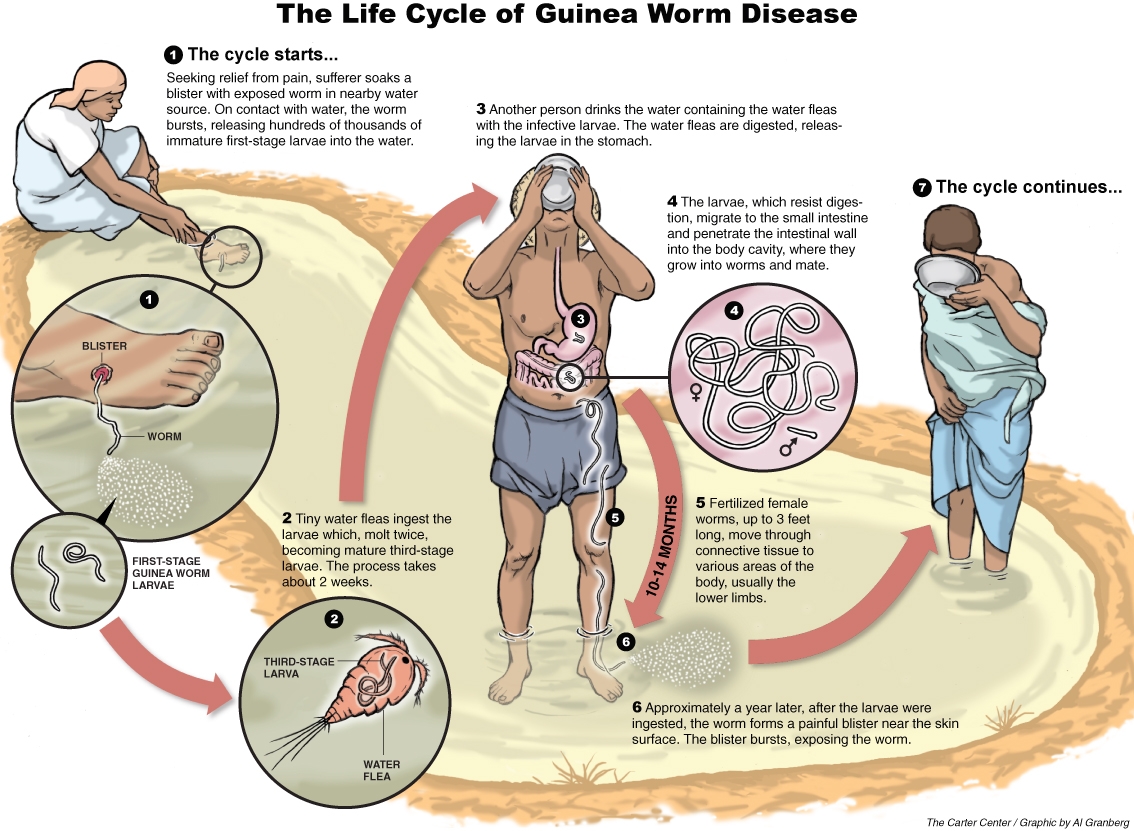
In the early ’80s, there were 3.2 million cases of Guinea worm — a 2-foot-long worm that emerges slowly — and excruciatingly — from a blister on the skin.  Now, the worm has been linked to dogs and Dr. Donald Hopkins at the Carter Center is leading the effort to eradicate Guinea worm. “I’m confident we’re going to do it. We’ve have already seen 17 of 21 countries get rid of Guinea worm, and it’s stayed away there.”  That confidence comes with some serious credentials: Hopkins was key in helping to eradicate smallpox — the only human disease to be wiped out, so far.

Despite having higher rates of diabetes and other conditions, Hispanics live longer than other ethnic groups. Now, a new study may help explain why: their blood has a slower aging rate. While Hispanic Americans have a longer lifespan than individuals of other ethnicities, they have higher rates of disease; for example, the rate of diagnosed diabetes among Hispanics is 12.8 percent, compared with 7.6 percent among non-Hispanic whites.  This has long baffled researchers, who often refer to the longer lifespan of Hispanics as the “Hispanic paradox.”

Technology

Pham Sy Long, 28, has volunteered to become the first person in Vietnam to undergo a full head transplant.

A new type of mosquito trap running on solar electricity and using human odor as bait has cut mosquito populations by 70 percent in a test on a malaria-ridden island in Kenya, according to a new study.

Tuberculosis (TB) remains a major global public health challenge, causing substantial morbidity and mortality. One of the most important risk factors for the increasing TB burden is HIV/AIDS, which contributes to the difficulty in diagnosing TB in co-infected patient.  The introduction of the Xpert MTB/RIF represents the first “game-changer” in the field of TB diagnostics in decades due to improved sensitivity, ease of use, and rapid turn-around-time of results made possible by the molecular platform, and in 2010, the World Health Organization endorsed the use of the Xpert device.

Environmental Health

Humans are acclimating to higher temperatures on Earth, according to a study co-led by Kristie Ebi, a University of Washington professor in the School of Public Health.The findings suggest that people can adapt to gradual increases in average temperatures, though whether that adaptability can be sustained with the advance of climate change is yet unanswered.

Recent climate talks have prompted many countries to reevaluate their energy policies and initiatives.  As a result, the landscape of India could soon be changing (and getting a bit brighter) with a new focus on solar power.

We have to recycle water on a massive scale.  The world is running out of drinkable water, and putting a price on the stuff won’t work. But we are well on the way to building a circular water economy.  Between rising population, megacities, pollution and climate change, the next few decades will see water stresses on a vast scale. The grave difficulties already apparent in the western US and Australia will afflict many more areas of the world. Ethiopia is gripped by the worst drought in decades; with it comes the spectre of famine.

Japan and New Zealand will formally approve the Paris climate agreement this year, officials in Tokyo and Wellington confirmed on Wednesday.

Equity & Disparities

New research published in the American Journal of Public Health shows increase in mental health problems among racial minorities who experienced multiple incidents of racial discrimination. Interestingly, the study also found that “it was the fear of avoiding spaces and feeling unsafe due to racial discrimination that had the biggest cumulative effect on the mental health of ethnic minorities.

An Indonesian central government minister’s comment about banning LGBT people from college campuses led to an immediate backlash and hostility toward the LGBT community. In response to the Human Rights Watch groups criticization, Indonesia has said that there is no room for the LGBT movement in their country. These events unfolded in a country where homosexulaity is not illegal and has had a largely tolerant attitude towards the LGBT group.

Analysis of data from the Global Disease Burden Study shows that Indian women have some of the highest suicide rates in the world.

Former assistant director general of the World Health Organisation told Australian policy makers that poverty is a critical health issue.

Doctors Without Borders (MSF) has decried the high cost humanitarian organizations pay for vaccines – up to 20 times the normal prices – for vulnerable children in refugee settings. MSF and Save the Children are calling on drug companies to lower vaccine prices.

The global news round up was prepared by the communications team.