The Year of the Girl

The United Nations declared October 11th the International Day of the Girl Child.  Everywhere I looked for this post’s inspiration, I saw story after story of the daily violence perpetrated against girls worldwide. I had to ask myself, why just a day?  Aren’t girls – roughly half of the world’s population – deserving of much more consideration? I say that we declare 2017 the YEAR of the Girl and devote our efforts to address the following issues.

Female Genital Mutilation

Female genital mutilation, or FGM, is a global concern. Some 200 million girls and women in 30 countries have undergone FGM, usually between infancy and 15 years of age. In many countries, FGM is a deeply entrenched cultural practice that has seen little decrease in the decades since foreign aid workers have been campaigning for is abolition. The risks might be high – infection, infertility, and complications of childbirth – but the perceived social benefits outweigh the physical costs. Bettina Shell-Duncan, an anthropology professor working as part of a five-year research project by the Population Council, has witnessed this conflict firsthand among the Rendille people of Northern Kenya:

One of the things that is important to understand about it is that people see the costs and benefits. It is certainly a cost, but the benefits are immediate. For a Rendille woman, are you going to be able to give legitimate birth? Or elsewhere, are you going to be a proper Muslim? Are you going to have your sexual desire attenuated and be a virgin until marriage? These are huge considerations, and so when you tip the balance and think about that, the benefits outweigh the costs.

Despite cultural ties, FGM is decreasing in some African countries as evidenced by rates from the prior generation.  However, with prevalence as high as 81% (Egypt), 79% (Sierra Leone), and 62% (Ethiopia), there is still much work to be done.

prevalence

For example, with prevalence at 60-70%, FGM in Iraqi Kurdistan is a “hidden” epidemic.  Prevalence of this practice elsewhere in Iraq is 8%.  Outlawed in 2011 by the Kurdistan Regional Government under the Family Violence Law, FGM has continued largely unabated due to poor implementation and push-back from religious leaders.  You can read the Human Rights Watch harrowing report about FGM in Iraqi Kurdistan here.

Rape and Child Marriage

Last Friday, the BBC reported on a bill under consideration by the Turkish Parliament that would clear a man of statutory rape if he married his victim.  This bill is evidence of increasing violence against Turkish women.  Between 2003 and 2010, the murder rate of women increased by 1,400%.  Of course, the bill isn’t couched in terms of legalizing rape, but as a loophole for those offenders who know not the errors of their ways:

The aim, says the government, is not to excuse rape but to rehabilitate those who may not have realised their sexual relations were unlawful – or to prevent girls who have sex under the age of 18 from feeling ostracised by their community.

If passed, the bill would release 3,000 men from prison as well as legitimize child rape and marriage. Per Girls Not Brides, Turkey has one of the highest child marriage rates in Europe with 15% of girls married before the age of 18. Globally 34% of women are married before the age of 18 and every day 39,000 girls join their ranks. According to a study recently published in the International Journal of Epidemiology, child marriage comes with health and social consequences. Along with unintended pregnancies, infant and maternal mortality, and HIV, girls who are married suffer from social isolation, power imbalance, and experience higher lifetime rates of physical and sexual intimate partner violence.

Coming-of-age “Cleansing” Rituals

Practiced in parts of Africa, girls as young as 12 are forced to have sex as part of a sexual cleansing ritual.  The men, known as “hyenas,” are paid by parents to usher girls through the transition between girlhood and womanhood.  Girls are coerced into this practice through familial and societal pressure.  It is believed that great tragedy will befall the family and community should she not comply.  The use of a condom is prohibited.

A BBC radio broadcast found that communities believe the spread of HIV to be a minimal risk since they can pick men they know are not infected. One Malawian hyena, Eric Aniva, has been charged with exposing hundreds of girls and women to HIV. Aniva knew of his HIV status but did not disclose to his customers.

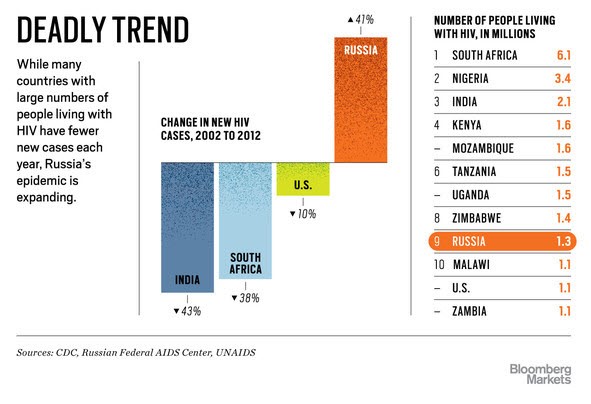
Forty percent of the global burden of HIV infections are in Southern Africa. Thirty percent of new infections in this area are in girls and women aged 15-24. Young women contract HIV at rates four times greater than male peers and 5-7 years earlier, linked to sexual debut or sexual cleansing rituals.

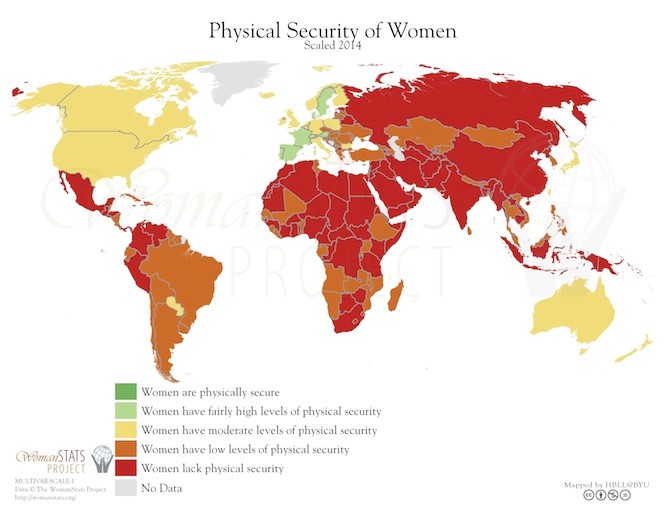
Let’s face it: Girls around the globe are being short-changed. Though progress has been made, there is still much work to be done. The Sustainable Development Goals have promised to “end all forms of discrimination against all women and girls everywhere” by 2030. Others attest that it will take at least another century for women to reach wage equity in the United States.  However it happens, rest assured it will take more than a day.

Video @UNICEF: 2016 world’s warmest?

Per a video from BBC News 2016 is set to be the warmest year on record.  With an observed global temperature rise of 1.2 degrees Celsius, we are rapidly nearing the threshold of 1.5-degree change considered most advantageous to stave off considerable threat.  This figure was agreed upon by representatives of 195 countries at the Paris climate conference in December 2015.  It stands as the first -ever universal, legally binding global climate deal.

Such a deal has come too late for those who live in regions of the world devastated by drought, such as Ethiopia.

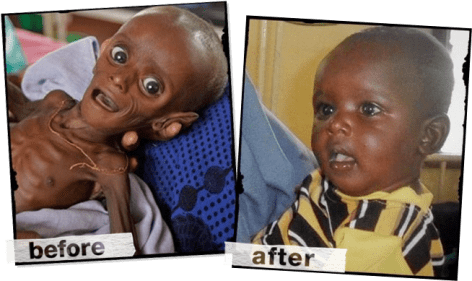
Ethiopia is no stranger to the devastation wreaked by drought.  Drought in the early-to-mid 1980s sparked a famine that killed a million people.  Even if, like me, you weren’t alive at the time, you are probably familiar with widely publicized images of skeletal babies, such as in this BBC newscast (Warning: Graphic images).  The disturbing images spurred the first Live Aid concert in 1985.

The present drought in Ethiopia is linked to a super El Niño, exacerbated by rising ocean temperatures.

According to the World Meteorological Organization, the current El Niño is one of the strongest events recorded, which is pushing people already suffering from the effects of climate change deeper into poverty and making them more vulnerable.

Since the drought began in earnest in 2014, Ethiopia’s economy has tanked.  Eighty percent of Ethiopia’s agricultural produce relies on a rainy season that remains elusive.  This is devastating for a country where 85% of people rely on agriculture to make a living.  Ten million Ethiopians will need international aid to survive this drought – on top of 8 million already receiving aid from safety net programs – to the tune of 1.4 billion dollars.

The United States under the Obama administration has been the single largest donor to this cause, totaling $774 million along with $381 million from the Ethiopian government itself.  This type of aid isn’t guaranteed to continue as President-elect Trump’s comments about climate change are scientifically unsound at best.

Besides calling man-made climate warming a hoax invented by China (which China refutes), in the above video, Trump says he is a “huge believer in clean water…crystal, clean water.”  This begs the question water for who?  And where?

An Op-ed piece published in the New York times connects one of Trump’s least talked about points (climate change) with one of his most (immigration):

When you visit the Pentagon, ask the generals about climate change. Here’s what they’ll tell you: A majority of immigrants flooding Europe today are not coming from Syria or Iraq. Three-quarters are from arid zones in central Africa, where the combination of climate change and runaway population growth are making small-scale farming unsustainable.

Will Trump withdraw the US from the Paris climate deal?  If we take him by his word, it’s a possibility:

Any regulation that’s outdated, unnecessary, bad for workers or contrary to the national interest will be scrapped and scrapped completely.  We’re going to do all this while taking proper regard for rational environmental concerns.

As we hover mere tenths of a degree away from potential catastrophe, I ask that Mr. Trump and all present and future leaders consider the global interest ahead of job growth.


Should private enterprise be guided by development effectiveness principles?

Overview of CAPE Conference – Conference Note 3 – Investing in Private Enterprises

Since the private sector has been highlighted as having a significant role to play in reaching the Sustainable Development Goals (SDGs), there have been growing efforts to integrate it into international development financing activities. In my last post, an overview of DE principles used to guide key players in official development assistance (ODA) was provided. This post will focus on development finance institutions (DFIs)  and similar entities that invest public funds into private enterprises.

Public international development agencies make up the majority of donors. Now that donors are able to contribute to DFIs through ODA routes, the claim can be made that DFIs should also be required to follow DE principles as they invest in private enterprises.  Although DFIs are able to operate similarly to ODA, the overall goals and methods of these streams of funding are not perfectly aligned. One reason for this is that DFIs are focused on creating jobs and receiving a return on investment, while ODA focuses on poverty-alleviation. Additionally, each DFI has individual operating guidelines and procedures. The chart below includes items that were discussed at the 2016 CAPE Conference as DE supporters considered whether DFIs should be required to adhere to DE principles:

oda-vs-dfiAs a result of this discussion, the recommendations below were compiled and will be presented at the Second High-level Meeting of the GPEDC on November 28th:

  • DFIs and other donor-backed investment vehicles should commit to supporting national development strategies. The GPEDC should track whether donors incorporate country preferences into their investment strategies. Attempts to achieve wider ownership of investment decisions would be impractical.
  • Countries and donors should commit to harmonising the relevant elements of country results frameworks with those used by DFIs and other donor-backed investment vehicles. No indicator is necessary.
  • Donors should commit to putting in place rigorous procedures for identifying groups at risk, consulting affected communities and handling grievances. Monitoring could be based on an independent rating of these.
  • Donors should commit to a process that will establish shared transparency requirements when investing public money in private enterprise (PPP). Indicators could include the percentage of PPPs that conform to Open Contracting Partnership data standards, and the percentage of investments where: full beneficial ownership information is available; the upfront investment case is public; some indication of the degree of concessionality is stated.
  • Partnership and accountability should apply when formulating investment strategies and monitoring their execution, and in ensuring that those making day-to day investments take full account of the consequences of their decisions on local communities.

The right to die

The results of the recent U.S. elections have thrown many Americans for a loop.  While we work to unpack a lot of feelings about a Trump presidency, I thought it might be better to talk about another result from last Tuesday.  Colorado became the sixth state to pass a bill that allows terminally ill patients to seek life-ending medication.  Supported by 65% of the constituency, the measure applies to individuals with 6 months to live or less who can self-administer the lethal dose.

The measure requires that people “make two oral requests, separated by at least fifteen days, and a valid written request to his or her attending physician.” It also requires that people be capable of taking the medication unassisted, and stipulates that patients can rescind a request for life-ending medication at any time during the process.

Oregon – along with Washington, Vermont, Montana, California, and most recently Colorado – has had an aid-in-dying measure since 1997.  Winner of a Grand Jury Prize at the 2011 Sundance Film Festival, How to Die in Oregon, an HBO documentary tells the stories of people impacted by this law.  To date, 1,327 prescriptions have been filled with 859 deaths.  The most commonly cited reasons for requesting the prescription include loss of autonomy, decreasing ability to participate in activities that made life enjoyable, and loss of dignity.

So-called aid-in-dying and Death with Dignity measures are highly controversial, perhaps due in part to Dr. Jack Kevorkian’s unabashed commitment to “physician-assisted suicide.”

Forms of assisted suicide are legal in the Netherlands, France, Germany, Switzerland, and Belgium.  While the laws in France, Germany, and Switzerland are more passive, the Netherlands and Belgium are anything but.  Passed in 2002, Belgium law allows doctors to prescribe life-ending drugs to individuals suffering “intractable and unbearable pain.”  This includes pain caused by mental illness.  The Economist produced a documentary about a 24-year-old Belgian woman on her journey to euthanasia due to severe and chronic depression.  In February 2014, Belgium became the first country to allow minors to request euthanasia with parental consent.  To qualify, children must give informed consent, be terminally ill, and beyond all hope of medical intervention.  The first case of physician-assisted suicide of a minor occurred earlier this year.

Of course, euthanasia is fraught with controversy.  The act alone conflicts with the ethical and professional codes of the medical profession:

A physician’s assistance in suicide can indeed be construed as helping the patient: helping in the sense of being an ally in the patient’s quest to fulfill personal goals, or helping by buttressing individual autonomy. However, there are also features of such action that can be qualified as harmful: harmful by sowing confusion in trainees about the conceptual core of traditional clinical methods, or harmful by eroding respect for absolute moral values such as “do not kill.”

Others argue that the Hippocratic Oath is irrelevant including its oft misquoted tenet: “First do no harm.”  In the case of physician-assisted suicide, isn’t harm avoided by allowing patients autonomy and freedom from painful, protracted deaths?  Patients with Amyotrophic lateral sclerosis (ALS), called Lou Gehrig’s disease, remain cognizant while the rest of their body shuts down.  Though progression differs from person-to-person, an individual with ALS can expect to lose mobility, use of hands and arms, the ability to chew and swallow, and finally the ability to breathe without assistance.

The vast majority of deaths in ALS are the result of respiratory failure, a process that progresses slowly over months. Medications can relieve discomfort, anxiety and fear caused by respiratory insufficiency.

Given this prognosis, it is plain to see why an increasing number of ALS patients in Oregon are seeking a death with dignity.  Do you think physician-assisted suicide has a place in public health discourse?

Global News Round Up

Politics & Policies

Donald Trump has been elected as the 45th President of the United States of America. There is concern that climate change regulations and commitments would be watered down and would take a back seat under his presidency.

Margaret Chan isn’t backing down in her last few months in office. Early this week, she engaged member states in her fourth — and last — financing dialogue in hopes of convincing them to increase their contributions to the World Health Organization.

In this election season science and health have taken a backseat. Worse, presidential candidate Donald Trump dismissed climate change as a Chinese hoax. His opponent, Hillary Clinton, vowed to dig up what the government knows about UFOs. Science is hardly getting its due.

In an effort to prevent surgical infections, the WHO has released the “Global Guidelines for the Prevention of Surgical Site Infection” that includes a list of 29 recommendations to combat the growing burden of healthcare associated infections.

Nigeria calls for urgent action on sustainable urban development.

The World Medical Association has released a statement in support of the taxes on junk foods and sugary drinks and bans on advertising to children to prevent and curb the rising burden of obesity.

Children with disabilities in rural areas have been especially hit by cuts to Medicaid that the Texas Legislature approved last year.

Programs, Grants & Awards

The 2016 Food Governance Conference was held between Nov 1 and Nov 3 in the University of Sydney, Australia.

Research

Trends in racial and ethnic disparities in antiretroviral therapy prescription and viral Suppression in the United States, from 2009–2013.

Snakebite is a major public health problem in agricultural communities in the tropics leading to acute local and systemic impairments with resultant disabilities. Snakebite related long-term musculoskeletal disabilities have been a neglected area of research. We conducted a population-based, cross-sectional study in an agricultural community to describe the chronic musculoskeletal disabilities of snake envenoming.

Historically, implementing nutrition policy has confronted persistent obstacles, with many of these obstacles arising from political economy sources. While there has been increased global policy attention to improving nutrition in recent years, the difficulty of translating this policy momentum into results remains.

A new study by Pettifor et al in Lancet Global Health showed that while cash transfers have impact on HIV risk reduction, the conditionality of the cash transfers does not advance the cause considerably.

A study published in Science shows a direct link between number of cigarettes smoked in a lifetime and the number of DNA mutations in tumors. The authors find that smoking one pack a day can lead to up to 150 damaging alterations to a smoker’s lung.

Diseases & Disasters

The Ebola epidemic that tore through West Africa in 2014 claimed 11,310 lives, far more than any previous outbreak. A combination of factors contributed to its savagery, among them a mobile population, crumbling public health systems, official neglect and hazardous burial practices.

The U.S. Department of Health and Human Services said on Thursday it added seven new agents, including the HIV virus and an industrial solvent to its list of carcinogens.

Cholera can kill a person in a matter of hours. It’s a severe gastro-intestinal disease, and it can trigger so much diarrhea and vomiting that patients can rapidly become dehydrated. The water-borne disease has been around for centuries, and it remains a global health risk. According to the World Health Organization there are roughly 3 million cases a year and 90,000 deaths.

A boiling pot of global conditions, like ubiquitous travel and the growing populations of developing cities, have led to an outbreak of pandemics like Ebola, Zika, SARs, and even the flu over the past decade.

Providing increased access to contraception to women in Puerto Rico during the Zika outbreak would be a cost-saving measure, including avoiding $62.3 million in costs related to Zika-linked microcephaly, researchers from the US Centers for Disease Control and Prevention (CDC) and Puerto Rico reported today.

After confirmation of the first Zika Virus case in Myanmar’s largest city, the Ministry of Health is going to release a statement advising women in the Yangon region to avoid getting pregnant in the next six months.

Technology

Genetic testing could help identify breast cancer patients at high risk for venous thromboembolism (VTE), according to a study published online Nov. 1 in Clinical Cancer Research.

Environmental Health

For about 3 billion of the world’s poorest people, the simple act of cooking dinner is fraught with risk. They burn wood, charcoal, dung or crop waste, often on open fires, fouling the air they breathe. It’s no small matter: Household air pollution from cooking fire is thought to be the world’s leading environmental cause of death and disability.

A new UNICEF report estimates that nearly 300 million children breathe extremely toxic air. Overall 2 billion children are estimated to breathe air that has been deemed “long term hazard.”

According to the new Global Lead Paint Report, many paints sold in 46 low and middle income countries contain dangerous levels of lead, including nearly 70% of paints tested in Philippines.

Equity & Disparities

Investing in human resources via education is essential to improving access to surgical and anesthetic care across the globe.

Basic cancer-fighting measures—for as little as $1.72 per person—could save hundreds of thousands of lives in poor countries, according to research published yesterday in The Lancet.

A clinical trial for an injectable male contraceptives was halted due to side effects that included mood changes, depression, pain at injection site and decrease in libido.

Maternal, Neonatal & Children’s Health

Women should see a doctor, nurse or trained midwife at least eight times during each pregnancy, with five of those visits in the last trimester, the World Health Organization said Monday as it issued 49 recommendations to prevent deaths in childbirth.

Eight of nine children exhibiting symptoms of a mysterious illness have been confirmed to be suffering from acute flaccid myelitis, a highly infectious polio-like disease that primarily strikes children, the Washington State Department of Health announced Friday.

A therapy that successfully treats two-thirds of children with chronic fatigue syndrome is being trialled for NHS use.

Diarrheal diseases are a major causes of child mortality and one of the main causes of medical consultation for children in sub-Saharan countries. This paper attempts to determine the risk factors and neighborhood inequalities of diarrheal morbidity among under-5 children in selected countries in sub-Saharan Africa over the period 1990–2013.

Stunting affects one-third of children under 5 years old in developing countries, and 14% of childhood deaths are attributable to it. A large number of risk factors for stunting have been identified in epidemiological studies. However, the relative contribution of these risk factors to stunting has not been examined across countries.

The number of preterm births in the United States has risen for the first time in the last 8 years from 9.57 to 9.63 in 2015.

A new study has ranked poor fetal growth in the womb as among the greatest risk factors associated with stunting among children. This study emphasizes the need to improve women’s health before and during a pregnancy.

The global news round up was prepared by the communications team.