Global Health News This Week

November 22 was Public Health Thank-You Day, and November 25 marked the International Day for the Elimination of Violence against Women.

UNAIDS released a report that said that we are finally making significant progress against the global HIV/AIDS epidemic. In related news, an international trial published in the New England Journal of Medicine showed that daily prophylaxis can prevent HIV infection in MSM.

The Bread for the World Institute released its 2011 Hunger Report, which says that global hunger is increasing as the global food crisis gets worse.

A study published in the Lancet found that the malaria death toll in India may be as much as 13 times higher than WHO estimates.

Another study published in the journal Vaccine estimated that global polio eradication could save the world $50 billion.

The strain responsible for the cholera outbreak in Haiti has been identified as one originating from southeast Asia, which has led many Haitians to blame the Nepalese UN peacekeepers and has sparked riots against the UN.

International Health: A One-Way Trip?

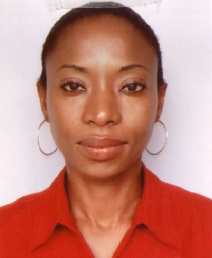
Guest blogger: Dr. Teresa Nwachukwu

This is my first blog ever, thanks to a hard-bargaining Jessica.  I knew that the International Health section of APHA was the right place for me when I saw that one of the burning issues for the section is the challenge of recruiting hard-earned health workers from poorer countries by richer nations. Having registered for the IH section, I raced around that colossal conference centre in Denver, trying to locate meeting rooms.  As the meetings progressed, I was dismayed to find that “international health” basically meant America sending health, aid, services, materials, people, or whatever to Africa and other resource-poor continents. It seemed to me that poorer countries had nothing to offer the richer nations.  International health seemed like a one-way trip to these nations with no return visits. The question I asked myself was, does Africa have anything to offer, or has Africa ever given anything, to Europe or America? If so, have these gifts been widely acknowledged? 

I can think of a lot of things we are doing right. For instance, Nigeria still has an amazing maternal social support system. A nursing mother hardly ever has to go it alone. Rich or poor, there is a neighbour, friend, mother or mother–in-law, or sister who is delegated, or who takes it upon herself, to mother and pamper the new mama for months. Might a practice like this contribute to mothers’ mental health shortly after delivery in richer nations like the United States?

In a country with so many challenges, getting through a pregnancy, while highly desirable, is an alarmingly risky business. Can you begin to imagine what the infant and maternal mortality rates would have been like without a powerful communal support system for every new mother? Fully-paid maternity leave for four months has improved what would have been a colossal disaster if working mothers had to return to work a month after delivery, or lose their jobs.

 I live and work in Nigeria and have been in the United States for four whole months. The question I ask myself is, “What can I offer in terms of ‘international health’ to America?” Quite a lot, I have discovered. One of them has been sharing hands-on experiences about the public health practice in Africa from a different angle.  Believe me, it is better than reading it in the books. Also, I have found a community centre in my neighbourhood where I volunteer once a week to set tables and help feed the homeless.  (And yes, people, there are homeless folks in America.)  Really, the greatest gift these ‘poor’ countries can give the United States is to look within themselves and solve their problems so that America can redirect some of the outgoing resources inwards. In my opinion, international health should mean the practice of sharing health information and services by all peoples with all peoples and not a one way trip by the rich to the poor.  After all, what is a relationship, if one partner only gives and the other only receives?

Dr. Teresa Nwachukwu is a Humphrey Fellow at Tulane School of Public Health and Tropical Medicine. Her area of research is Health Systems Strengthening with special focus on the human resource component system.

In the news this week: Global Health News

World Toilet Day was on November 19.

Pope Benedict XVI made waves with a comment from an interview over the summer that condom use could be “morally justified” in certain cases.

The first Global Symposium on Health System Research was held this week in Montreux, Switzerland, and has been covered by NYU’s Karen Grepin and CGD’s Nandini Oomman.

Haiti’s cholera epidemic has reached the Dominican Republic.

The largest study yet on malaria treatment for children, published in the Lancet, proves that artesunate is a much more effective drug than quinine, which prompts the Guardian’s Sarah Boseley to ask why more doctors aren’t prescribing it.

One Step Forward, Two Steps Back: Court Decision in China Upholds HIV Employment Discrimination

China always seems to find its way into human rights headlines these days. Now that the sound and fury of Liu Xiaobo’s Nobel Peace Prize has died down, the People’s Republic is in the news again: this time for a landmark court decision in which a man lost a discrimination case for being denied a teaching job based on his HIV status. Wu Xiao (an alias that means “Little Wu”), a 22-year-old college grad, passed a series of written tests and an interview for the position, so he should have been perfectly qualified for the post. However, when his mandatory blood test revealed his HIV status, the local education bureau in Anqing rejected his application. The court ruled that the criteria for hiring civil servants (which disqualifies HIV-positive individuals from being hired) overrules a 2006 law that prohibits discrimination against persons with HIV and their families. The verdict is highly discouraging to Chinese AIDS advocates.

Discrimination against persons with HIV is nothing new. The history of the disease is littered with horror stories of stigma, persecution, and invasion of privacy, and discrimination continues all over the world in various forms, including cultural norms and, in some cases, even laws. In Chile, HIV-positive women are frequently pressured to get sterilized, and some are even sterilized without consent. Twenty-two countries, including Russia, Egypt, and South Korea, will deport foreign nationals based solely on HIV status, and other countries (such as Malaysia and Syria) will not allow students with HIV to apply for study. Gugu Dlamini, a SouthAfrican woman, was beaten to death after speaking openly about her HIV status at an AIDS awareness gathering on World AIDS Day in 1998.

China is certainly no stranger to HIV/AIDS discrimination. From the government’s frantic cover-up of the “Bloodhead Scandal” (in which 30,000-50,000 people were infected through blood transfusion programs in the 90s) to present-day violations of patient privacy laws, Chinese HIV patients face harsh stigma from healthcare providers, government officials, and their friends and neighbors. On the surface, the country has been somewhat proactive in mitigating this: it passed its first laws regarding HIV patient privacy in 1988, and it is illegal to disclose personal information of HIV-positive individuals. Chinese President Hu Jintao and Prime Minister Wen Jiabao make visible appearances with people with AIDS every year on World AIDS Day, and ARVs are available to AIDS patients for free. However, privacy laws are routinely violated, and people with HIV are ostracized from their families and communities. The government routinely harasses and often imprisons AIDS activists (Hu Jia, for example, was held under house in 2006 and has been in jail since 2008). Fear, ignorance and the threat of discrimination discourage individuals from getting tested and deter many who already know their status from seeking treatment. Chinese AIDS patients are encouraged by their providers to use fake names and IDs when seeking treatment and picking up medicines.

Wu’s lawyers plan to appeal the decision, but advocates are frustrated. “The entire H.I.V. community had high hopes, but now the door appears to be shutting for people who want to use the courts to fight against discrimination,” said Yu Fangqiang, whose organization represented Wu in his case. Others, however, urge patience, and point out that the fact that the case was even heard demonstrates progress. Either way, it is crucial to end the institutionalization of discrimination against HIV. Cultural norms will not change until the official government position changes, and, along with it, its laws. People will not seek treatment until they are no longer afraid to come out of hiding.