Global News Round-Up

Politics & Policies

On May 27, after months of advocacy and days of intense meetings, the G7 committed to promote Universal Health Coverage (UHC), calling it a “comprehensive framework that underpins all of the targets” in the Sustainable Development Goals.

This past week, Canada participated in international health meetings in Geneva focused on strengthening health systems and improving countries’ capacities to prevent, detect and respond to public health threats.

Programs

A new unified system to facilitate sharing of genomic and clinical data among cancer researchers called Genomic Data Commons was launched on June 6, the US National Cancer Institute (NCI) said.

On May 31, the Harvard Global Health Institute hosted a symposium entitled “Preparing Health Systems for An Aging Global Population.”

World Health Organization member states agreed on Wednesday to more than double the group’s emergency fund to $494 million for the next year, as it works to address major gaps in its ability to respond to global health emergencies.

May 31 is World No Tobacco Day.  The World Health Organization (WHO) and the Secretariat of the WHO Framework Convention on Tobacco Control are calling on countries to get ready for plain (standardized) packaging of tobacco products.

University of Wisconsin-Madison investigators will address flood forecasting and health implications, protecting natural fisheries, tracing the safety of wild-caught fish and improving diabetes care with four new Seed Grants from the UW-Madison Global Health Institute.

Research

The National Institutes of Health hopes to have an early safety study of a Zika virus vaccine by September 2016.

A large fraction of Plasmodium infections do not cause clinical signs and symptoms of disease and persist at densities in blood that are not detectable by microscopy or rapid diagnostics tests.

The United Nations Children’s Emergency Fund (UNICEF) conducted a research in the southern Osh province in Kyrgyzstan to understand the barriers girls face at school with regards to menstrual hygiene and puberty-related attitudes and practices among young people, parents, and teachers. Because they are having their period for the first time, many young girls in Kyrgyzstan are not aware of menstruation, nobody talks to them about this and they are left alone with their fear, with some even committing suicide.

Diseases & Disasters

On June 8-10, the United Nations General Assembly High-Level Meeting on Ending AIDS will bring people together around a common objective: ending AIDS by 2030 within the framework of the Sustainable Development Goals.

The pandemic of non-communicable diseases (NCD) is expected to claim 28 million lives annually in low- and middle-income countries until 2030.

The World Health Organization says there is “no public health justification” for postponing or canceling the Rio de Janeiro Olympics because of the Zika outbreak.

Doctors and scientists are bracing for the possibility of a wave of rare disorders triggered by Zika in Haiti, an impoverished country that has faced one public health crisis after another and is fertile ground for mosquito-borne scourges.

In Mozambique, almost 7 million people are at risk of losing their sight from trachoma, an eye infection that is the world’s leading cause of blindness.

So far, there have been 51 cases, including 10 deaths from an unknown disease in the northern part of South Sudan. The main symptoms of the disease are similar to those seen with Ebola: unexplained bleeding, fever, fatigue, headache and vomiting.

Technology

The Washington State University student startup company Engage earned $10,000 and a top prize at the University of Washington Business Plan Competition last week.  They are developing a simple needle decontamination solution that could save millions of lives in developing countries.

The Global Fund to Fight AIDS, Tuberculosis and Malaria and the Government of Canada announced a new online marketplace today that is projected to save at least $250 million in the coming four years by offering health implementers competitive prices for medicines and health commodities.

Environmental Health

A comprehensive global study from the National Academy of Sciences has revealed that genetically modified (GMO) crops do not pose an adverse effect on the environment or human health.

Industrial agriculture is a key contributor to the rampant biodiversity losses now threatening the 35 percent of global crops dependent on pollination, the degradation of some 20 percent of global land, the 30 percent of global greenhouse gas emissions arising from food and farming, and many other negative outcomes in food systems.

Equity & Disparities

It is now over a year into a conflict in Yemen for which there is no imminent end in sight. Aid agencies are rightly focusing on immediate relief for the time being, but there is an urgent need to start thinking now about reconstruction once the conflict comes to an end. And nowhere is this need greater than in health.

Myanmar has some of the worst health indicators in Asia, as a result of its tumultuous recent history and the second lowest spending on healthcare in the world. Life expectancy is just over 64 years for men and approximately 68 years for women,  compared with the average life expectancy of 82 years for women and 77 for men in the OECD countries.

A new study in The Lancet “estimates that the recent economic crisis was associated with over 260,000 additional cancer deaths in countries within the Organisation for Economic Development (OECD) by 2010, of which 160,000 were in the European Union.”

The clearest link between poverty and the rise of antimicrobial resistance is that poor people may not see a qualified health care provider or complete a course of quality antibiotics. Instead, they might turn to unregulated markets for substandard drugs.

(The global news round-up is prepared by the Communications Team)

A tale of resistance

Antibiotic resistance poses a serious threat to the gains we have made in curbing infectious diseases caused due to bacteria.Simply put, it is the bacteria’s way of putting up a fight to survive and persist.

To understand what antibiotic resistance is, let’s delve a little into the biology of these famed, overused drugs and into the history of how we got here.

Antibiotics are drugs that are effective in treating and preventing bacterial infections. Barring a few antibiotics with anti-protozoan activity, antibiotics are largely anti-bacterial and are ineffective against viruses.

The word antibiotics might elicit an image of Sir Alexander Fleming, and the famous story of the serendipitous discovery of penicillin in 1928, for which he shared a Nobel Prize with Howard Florey and Ernst Boris Chain. Some studies have even revealed traces of tetracycline in human skeletal remains from ancient Sudanese Nubia (350–550 CE) and femoral midshafts of the late Roman period skeletons from the Dakhleh Oasis, Egypt.

http://nfs.unipv.it/nfs/minf/dispense/immunology/lectures/files/images/fleming_penicillin.jpg  Source:Fleming’s Nobel Lecture

There are about 12 classes of antibiotics and the last class of antibiotics, lipopeptides, was discovered in 1987. No new classes of antibiotics have been discovered since then!

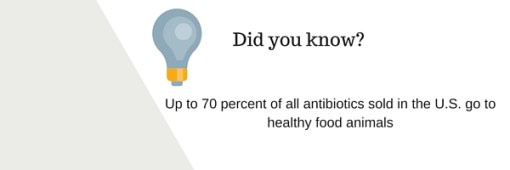
Unfortunately, the success of antibiotics as a chemotherapy agent, has also led to the misuse and overuse of these agents. We have moved away from using them judiciously and today, antibiotics are being used rampantly not just to treat infections in humans but to fatten animals that we intend to eat.

RestoReview-1Source: Antibiotic resistance, PEW Charitable Trusts

In an interview shortly after winning the Nobel Prize in 1945, Alexander Fleming said:

“The thoughtless person playing with penicillin treatment is morally responsible for the death of the man who succumbs to infection with the penicillin-resistant organism.”

While the molecular mechanisms of antibiotic resistance have been studied extensively, we know that misuse and overuse of antibiotics have played a key role in the creation of “superbugs”.  Antimicrobial resistance is prevalent world wide and new mechanisms of resistance emerge and spread.

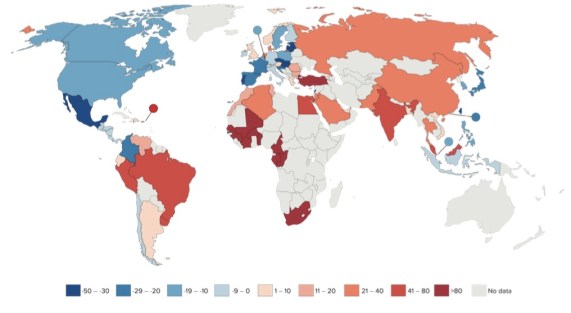
Map

Percentage change in antibiotic consumption per capita 2000–2010*, by country

Source: Center for Disease Dynamics, Economics & Policy. State of the World’s Antibiotics, 2015.

The State of World’s Antibiotics released in 2015 identified the different kinds of antibiotic resistant bacterial strains including Methicillin-resistant Staphylococcus aureus (MRSA) and Carbapenem-resistant Enterobacteriaceae. According to the WHO, in 2013, there were about 480 000 new cases of multidrug-resistant tuberculosis (MDR-TB) and extensively drug-resistant tuberculosis (XDR-TB) has been identified in about 100 countries. The treatment courses for MDR-TB is long and usually less effective, posing a greater threat to the progress that has been to curb TB.

The SWA report describes six strategies (listed below from the report) that nations can take to:

  1. Reduce the need for antibiotics through improved water, sanitation, and immunization.
  2. Improve hospital infection control and antibiotic stewardship.
  3. Change incentives that encourage antibiotic overuse and misuse to incentives that encourage antibiotic stewardship.
  4. Reduce and eventually phase out antibiotic use in agriculture.
  5. Educate and inform health professionals, policymakers, and the public on sustainable antibiotic use.
  6. Ensure political commitment to meet the threat of antibiotic resistance.

Resistance Map: A useful resource from CDDEP that you could use to explore antibiotic resistance trends, rates and antibiotic use by country, pathogens and much more.

We have to take smart, swift action to reduce unnecessary use or misuse of antibiotics and use them with caution.

This post is cross-posted to my blog.

Global News Round Up

Politics & Policies

The White House request for $1.9 billion to fight the Zika virus has been met with a $1.1 billion plan by the Senate and a $622 million bill by the House.

A French diplomat who wants to be the world’s top health official says an international tax could help fill the World Health Organization’s coffers, a proposal aimed at bringing order to the UN agency’s fragmented budget.

A recent report released by the Safeguarding Health in Conflict Coalition reviewed the attacks on healthcare services and service providers between January 2015 and March 2016. The report suggests that urgent actions are needed to prevent such attacks. The recommendations include “prosecuting those who bomb healthcare facilities, creating a system for reporting acts of violence, and implementing an international body to investigate attacks”.

Programs

The Women Deliver Conference will be held in Copenhagen, Denmark on May 16-19.  As a leading, global advocate for girls’ and women’s health, rights, and wellbeing, Women Deliver brings together diverse voices and interests to drive investments and progress, particularly in maternal, sexual, and reproductive health and rights. The focus of the 2016 Conference will be on how to make development matter most for girls and women, with a specific focus on health, rights, gender equality, education, and economic empowerment.

The 69th World Health Assembly opened in Geneva, Switzerland on May 23rd. The Health Assembly elected Dr. Ahmed bin Mohammed al-Saidi, Minister of Health of Oman as its new President. While celebrating the recent progresses in global public health, Dr. Margaret Chan also noted that the global community is not prepared to cope with the emerging and re-emerging infectious diseases. She also raised concern over “slow-motion” disasters of climate change, antibiotic resistance and chronic diseases such as diabetes.

Research

Researchers have identified a protein in the Zika virus called NS5 that could potentially be a target for future vaccines. The scientists think it may be possible to develop a vaccine against the Zika virus by changing the protein structure.

New research from the University of Birmingham has shown that flu vaccinations are more effective when administered in the morning.  In some patients, morning administration of the flu vaccine induced a greater antibody response.

A Johns Hopkins University School of Medicine report finds more than 250,000 deaths per year can be attributed to medical errors in the US, making it the third leading cause of death, surpassing respiratory disease.

Diseases & Disasters

According to the CDC, the number of pregnant women in the US reported to have the Zika virus has more than tripled, increasing from 48 to 157.

The head of WHO warns that the world is not prepared to deal with the rapid spread of infectious diseases based on the responses to Zika, Ebola, MERS coronavirus and yellow fever outbreaks.

CDC, WHO, and Vietnamese health authorities work together to detect and respond to locally transmitted Zika cases.  On April 4, 2016 there were locally confirmed cases of Zika virus transmission that was not likely linked to the recent outbreaks in South and Central America.

In order to combat the Zika virus, the Australian Olympic Committee announced today that special anti-viral condoms will be given to athletes in order to curb the spread of the Zika virus in anticipation of the 2016 Summer Olympic Games being held in Rio de Janeiro, Brazil.

According to the World Health Organization, the Zika virus could spread to Europe this summer, although the likelihood of an outbreak is low to moderate.

The World Health Organization will hold an emergency meeting on May 19 because of the the yellow fever outbreak that has hit hardest in Angola but risks spreading further if vaccinations are not ramped up.

The yellow fever epidemic that started in Angola in January could become the next health emergency.  Because of the complexity and frequency of emergency disease threats, a “standing emergency committee” has been recommended that could meet on a regular basis to give recommendations to the UN Director-General.

Technology

A mobile app created by a team at Cornell Tech is aimed at helping Lesotho’s Riders for Health organization digitally track the clinical specimens that the motorcycle-riding health workers collect from many of the hard to reach places in Lesotho.

Environmental Health

The Peruvian government has declared a state of emergency in 11 towns in the Madre de Dios region bordering Brazil after officials found alarmingly high levels of mercury, a harmful heavy metal used in gold mining. Mercury contamination causes chronic renal and neurological disorders, among other things, and is especially harmful for children and pregnant women.

The WHO estimates 12.6 million people died worldwide as a result of unhealthy living and working environments. This number amounts to nearly one in four of total global deaths.

According to the World Health Organization (WHO) and the United Nations Children Education Fund (UNICEF) Joint Monitoring Programme (JMP) update for 2015, over 6 million Kenyans still defecate in the open resulting in the prevalence of diseases such as diarrhea, amoeba, typhoid, and cholera.  Hence, the government has begun to develop environmental and sanitation policies to ensure universal access to improved sanitation and a clean and healthy environment, dignity, social well-being and quality of life for all Kenyans.

Studies suggest even low levels of lead exposure can hurt a fetus’ development in the womb.  For months now, the Michigan state health department has been looking into whether the Flint water crisis caused problems with pregnancies.

Indonesia has one of the worst mercury problems in the world.  Millions of people in 70 countries across Asia, Africa, and South America have been exposed to high levels of mercury as small-scale mining has proliferated over the past decade. The United Nations Environment Programme estimates that at least 10 million miners, including at least four million women and children, are working in small “artisanal” gold mines, which produce as much as 15 percent of the world’s gold.  High doses of mercury, which is a neurological poison, are a well-documented cause of birth defects, including crippling deformities and nervous system disorders.

A new rule called the “Beijing Six” standard will be implemented by January 2017, according to the Beijing Municipal Environmental Protection Bureau.  It will be China’s strictest fuel standard as it tries to reduce pollution in the city caused by vehicle emission.

Equity & Disparities

A new country engagement plan for Cambodia will help communities across Cambodia with better access to healthcare.  A $30 million World Bank funding will build upon two innovative Cambodian health financing mechanisms. First, the Health Equity Funds help cover the costs of health services for the nation’s three million poor people, reducing their out-of-pocket costs and providing reliable financing for health facilities. Second, redesigned Service Delivery Grants will improve quality of health services, including health-facility management, staff attendance and the coverage of health services.

Life expectancy globally increased by 5 years between 2000 and 2015, the fastest increase since the 1960s, according to a new World Health Statistics report by WHO.  The greatest gain was in the African region where life expectancy increased by 9.4 years to 60 years, driven in part by expanded access to antiretrovirals for treatment of HIV.However, the gains have been uneven. Supporting countries to move towards universal health coverage based on strong primary care is the best thing we can do to make sure no one is left behind.

The Department of Health and Human Services (HHS) has issued a final rule to advance health equity and reduce healthcare disparities. Under the rule, individuals are protected from discrimination in healthcare on the basis of race, color, national origin, age, disability and sex, including discrimination based on pregnancy, gender identity and sex stereotyping.

Prepared by the Communications team (Steve & Abbhi)

Global News Round Up

Politics & Policies

The FDA released a new tobacco rule mandating that cigar packages include prominent new warning labels intended to remind smokers of health risks.

Global fund has suspended funds to the Nigeria AIDS agency after a report by the fund’s general inspector revealed that the workers and consultants who worked for the agency stole nearly $3.8 million.

A new report by WHO, UNICEF, and the International Baby Food Action Network (IBFAN) that included analysis of national laws in 194 countries reveals the status of laws to protect and promote breastfeeding. The report shows that only 39 countries have laws to enact all provisions of the International Code of Marketing of Breast Milk Substitutes.

Programs

The new Center for Global Health at the University of Oregon Global Studies Institute will support a wide range of scientific, educational, and service-oriented initiatives designed to understand and ameliorate the world’s most challenging health and social problems.

Research

Researchers at the National Institute Of Allergy and Infectious Diseases (NIAID) created models to test Zika virus transmission in the placenta of female mice.  These models may be useful in assessing drug efficacy and other interventions on the road to finding an effective treatment.

New research suggests herbal remedies are a “global health hazard” and could be putting millions at risk of cancer and other diseases.

An assessment of the annual mass drug administration that has been conducted for a decade for lymphatic filariasis among children under 5-years of age in Burkina Faso reveals that this large scale preventive treatment has been effective in controlling soil-transmitted helminth infections.

Adolescents aged 10-24 years represent over a quarter of the world population (1.8 billion), 89% of whom live in developing countries. Their number is set to rise to about 2 billion by 2032.  Although adolescence is generally thought to be the healthiest time of life, young people have attracted little interest and too few resources in global health research. And, adolescents aged 10-24 years old have the worst health-care coverage of any age group.  According to a Lancet Commission, two-thirds of young people are growing up in countries where preventable and treatable health problems like HIV/AIDS, early pregnancy, unsafe sex, depression, injury, and violence remain a daily threat to their health, wellbeing, and life chances.


Diseases & Disasters

May 3 is World Asthma Day.  About 300 million people worldwide are affected with asthma, including 24 million in the US.  Asthma is caused by inflammation of the airways, leading to recurrent attacks of wheezing, difficulty with breathing, tightness of the chest, and coughing.  Also, asthma seems to be hereditary, which means if someone in your family has asthma, you may develop the disease.  Although asthma may develop at any age, half of the patients develop symptoms before the age of 10 and many children with asthma had their first asthma attack by the age of 6.  The cause of asthma is still being researched.

Mass immunization is the only way to stop yellow fever, but producing more of the vaccine is not easy. Four laboratories in the world produce the vaccine:  The Institut Pasteur de Dakar (Guinea), Russia, France, and Brazil.  Around 80 million doses are produced globally each year.

To date, 35 countries and territories have confirmed local, vector-borne transmission of Zika virus in the Region of the Americas since 2015.  Since the last Pan American Health Organization/ World Health Organization (PAHO/WHO) Zika Epidemiological Update of April 14, 2016, no new countries or territories have confirmed vector-borne transmission of Zika virus in their region.

Technology

The only cancer treatment machine in Uganda has broken down jeopardizing patients’ lives.  This machine was donated by China in 1995 and in 2013 Uganda did purchase a second radiotherapy machine, but it has not been operational due to delay in allocation of funds by the Ugandan government.  According to WPR, this represents a lack of funding for strengthening healthcare systems and creating systems that are resilient and sustainable.

Immunization averts 2 to 3 million deaths annually. However, an additional 1.5 million deaths could be avoided if global vaccination coverage improves.  1 in 5 children (20%) worldwide still do not receive routine vaccinations for preventable diseases.  During World Immunization Week, we can continue to write the history of vaccination as we celebrate the triumphs in vaccine research and development.

Recent technical and scientific innovations have accelerated the ability to fight emerging infectious diseases as they develop.  Examples include five Zika virus vaccines about to be tested, Sanofi’s dengue vaccine, and products being developed to fight Marburg, West Nile, and the Ebola virus.

The UPS Foundation is partnering with Zipline, a California­-based robotics company, and Gavi, the Vaccine Alliance, to explore using drones to transform the way life-saving medicines like blood and vaccines are delivered across the world.  The $800,000 grant will help initiate the project in Rwanda, where drones will be used to deliver life-saving blood.  According to WHO, Africa has the highest rate in the world of maternal death due to postpartum hemorrhaging, which makes access to lifesaving blood transfusions critically important for women across the continent.

Environmental Health

According to the World Bank, the Middle East, North Africa, Central Asia and South Asia will suffer the biggest economic hit from water scarcity as climate change takes hold by 2050.

A leading environmental health expert warns people may be breathing in microplastics or microparticles of plastic.

Equity & Disparities

A new toolkit called the Health Equity Assessment Toolkit (HEAT) has been developed by WHO. The software that uses data from the WHO Health Equity Monitor allows health professionals and researchers to examine health inequalities in their countries and compare inequalities in their country with other countries.

Eight million people are killed or injured every year because they cannot access safe surgery and 5 billion people around the world cannot access safe, affordable, and timely surgery.  The global burden of surgical diseases outstrips that of HIV, malaria, and tuberculosis and has been called the “neglected stepchild of global health.”

                                                                                                                 Prepared by the Communications Team

Environment and health

Env_Health_WHO
Source: Environmental Impacts on Health

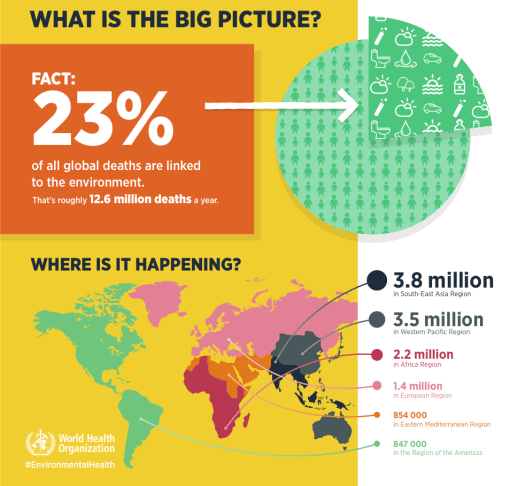
The second edition of the WHO “Preventing disease through healthy environments: a global assessment of the burden of disease from environmental risks” reveals that, in 2012, ~12.6 million people (nearly 1 in 4 people globally) died due to unhealthy environmental conditions in places where they live and work. Of the 12.6 million, about 8.2 million deaths could be attributed to non-communicable diseases, linked primarily to air pollution. A concomitant decrease in deaths due to infectious diseases such as diarrhea and malaria has been observed and is attributed to improved access to clean water and sanitation. The largest burden of mortality due to environmental risks is observed in South East Asia, Africa and Western Pacific regions.

Environmental risks pose a serious threat to children and older adults. Nearly 1.7 million children die each year and the main causes of death among children under 5 are lower respiratory infections such as a pneumonia. However, majority of the 4.9 million deaths among adults 50-79 years of age are due to NCDs linked to environmental hazards.

There is no doubt that unfavorable environmental conditions exist in low-income neighborhoods and disproportionately affects vulnerable populations and communities. Steps taken to prevent deaths due to environmental risk factors must benefit everyone and must  include strong working relations with other sectors. Environmental health interventions could have a broader impact on the well-being and health of people worldwide by preventing diseases before they even occur.

Watch this great video or the infographic created by WHO to learn more about health and environment.