
The Greatest Thing You’ll Ever Learn: Drug-Resistant Tuberculosis on the Rise

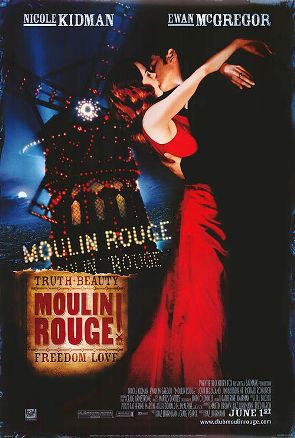
On most days, tuberculosis only crosses the average American’s awareness radar when he or she is watching Moulin Rouge! for the fifth time. Even then, the sight of the courtesan Satine (played by Nicole Kidman) coughing up blood after singing about diamonds gives the impression that TB is the problem of sex workers living in elephants in 19th-century France. All of this changed in 2007, when Georgia lawyer Andrew Speaker snuck back into the U.S. through Canada after honeymooning in Europe – and being diagnosed with extensively-drug-resistant tuberculosis (XDR-TB).

As if regular TB were not bad enough, global health professionals are now grappling with the rising incidence of multi-drug-resistant (MDR-TB) and extensively-drug-resistant (XDR-TB) tuberculosis. MDR-TB is resistant at least to isoniazid and rifampicin, the two most powerful first-line antibiotics used to treat TB. It typically develops when patients being treated for fully sensitive TB stop their treatment course or do not follow it regularly (either because they feel better or forget to take their drugs, or because treatment supplies run out). When the treatment is interrupted before all of the bacteria are killed, the microbes develop resistance to the drugs. XDR-TB has all of this and more: it is also resistant to any fluoroquinolone and at least one of three injectable second-line drugs (capreomycin, kanamycin, and amikacin). If these drugs sound scary, it is because they are: most second-line drugs are less effective than isoniazid and rifampicin and can be moderately to highly toxic.

While the incidence of drug-resistant strains of TB is low for the moment, it is on the rise: a recent report by the WHO found that over two million people will contract some form of drug-resistant TB by 2015. The frequency of these infections is increasing fastest in India, China, and the former USSR. The WHO is asking countries to put their money where their mouths are and step up to fight the disease. “Commitments by some countries are too slow off the mark or simply stalled,” said Rifat Atun, director of strategy, performance and evaluation at the Global Fund. In the meantime, the greatest thing you’ll ever learn…is to finish your antibiotic course.

The Danger in Overlooking Environmental and Occupational Health

A black-and-white photo of a gold mine in the 19th century.
Flickr, U.S. National Archives

I often get quizzical looks from public health professionals when, after explaining that I am interested in international health, I tell them that I got my MPH in Environmental Health. For example, while riding the shuttle from the airport to the Convention Center for the APHA Annual Meeting this past November, I struck up a conversation with an Environmental Health professor. She seemed puzzled when I told her that I was a member of the International Health section and then explained that my MPH focus (and my current job) was in environmental and occupational health. She then (very politely) invited me to the Environmental Health Section’s social hour.

While I certainly appreciated the invitation, I remain puzzled (and slightly frustrated) that there is relatively little discussion of environmental and occupational health issues in international health. The field is dominated by discussion of the Big Three diseases (HIV/AIDS, malaria, and TB), sanitation, tropical worms, MCNH issues, malnourishment, and poverty. While these are all very important issues deserving of attention and funding, EOH should by no means be left out: after all, every human being is affected by the environment around him or her, and nearly all of us hold some kind of occupation to put food on the table.

One story in particular caught my eye a few weeks ago. Nearly 300 children in Zamfara state in northern Nigeria have died from lead poisoning due to mining activity over the last two years; another 742 are currently being treated for high blood lead levels. Lead poisoning fall squarely under environmental health – my cubicle neighbor is a nurse for the Texas Childhood Lead Poisoning Prevention Program – but this story had all of the trappings of a “classic” IH scenario: poor people in small villages in a developing country, Doctors without Borders, and sick African babies.

Mining is a significant issue, and a heated debate, in the field of development. Proponents of mining include the World Bank, which maintains that mining provides jobs, government revenues, and local economic benefits, and that it can provide sustainable development to communities with appropriate regulation. Critics argue that the pollution and environmental damage generated by mining operations outweigh the benefits, that it exploits local communities, and that the revenues are largely kept by local elites and foreign shareholders. And we all know that resources are too often followed by bloody conflict: civil wars in Sierra Leone, Angola, and Liberia, and armed conflict in the DRC, are just a few examples that come to mind. There are a number of health ramifications as well: constant exposure to rock dust makes miners more susceptible to tuberculosis, which they can spread to their families. Artisanal gold mining in particular, which supplies at least one fourth of the world’s total gold supply, is one of the most significant sources of the release of mercury into the environment.

Despite the hazards and health risks, however, the issue gets relatively little attention compared to the traditional global health villains of sanitation and infectious disease. This is unfortunate because all of the same factors play into mining in impoverished communities: residents and farmers take up mining and mineral extraction to improve their livelihoods because it pays better and provides more security than subsistence farming. There are issues of sustainability, ownership, exploitation, and corruption. Somit Varma, director of the Oil, Gas, Mining & Chemicals Department of the World Bank/IFC, has said that “the social and economic characteristics of small-scale mining fully reflect the challenges of the Millennium Development Goals, including: health, environment, gender, education, child labour, and poverty eradication.”

Advocates are becoming more vocal in drawing attention to “non-typical” international health issues, including cancer and mental illness. We should add environmental and occupational health issues to that list as well. While these issues are inevitably more complicated to prevent, screen for, and treat than the Big Three or NTDs – after all, you can’t pass out condoms or implement DOTS for lead poisoning or silicosis – they still impact the world in a major and often devastating way and are still deserving of our attention.

I will not be blogging about AIDS today: World AIDS Day Round-Up

Flickr, Sully Pixel

Today is World AIDS Day, which means that every blog out there that deals with international health, development, and/or humanitarian work has commented on it in some form or fashion. (I have seen great material on Humanosphere in particular.) Since most of these people are well-established professionals that know way more than I do, I will let them all speak for me and just try to collect the highlights of all that I have read today.

The Global Health Delivery Project put together a great round-up of media stories and major research reports.

End the Neglect posted a reading list as well as a great “status report” by blogger Alanna Shaikh.

The Center for Global Development has posted several blog entries on HIV/AIDS leading up to today, including a response to President George W. Bush’s piece on Pepfar in the Washington Post.

And finally, my personal favorite: Sarah Boseley of the Guardian wrote a piece on the importance of keeping AIDS on the agenda all year long.

One Step Forward, Two Steps Back: Court Decision in China Upholds HIV Employment Discrimination

China always seems to find its way into human rights headlines these days. Now that the sound and fury of Liu Xiaobo’s Nobel Peace Prize has died down, the People’s Republic is in the news again: this time for a landmark court decision in which a man lost a discrimination case for being denied a teaching job based on his HIV status. Wu Xiao (an alias that means “Little Wu”), a 22-year-old college grad, passed a series of written tests and an interview for the position, so he should have been perfectly qualified for the post. However, when his mandatory blood test revealed his HIV status, the local education bureau in Anqing rejected his application. The court ruled that the criteria for hiring civil servants (which disqualifies HIV-positive individuals from being hired) overrules a 2006 law that prohibits discrimination against persons with HIV and their families. The verdict is highly discouraging to Chinese AIDS advocates.

Discrimination against persons with HIV is nothing new. The history of the disease is littered with horror stories of stigma, persecution, and invasion of privacy, and discrimination continues all over the world in various forms, including cultural norms and, in some cases, even laws. In Chile, HIV-positive women are frequently pressured to get sterilized, and some are even sterilized without consent. Twenty-two countries, including Russia, Egypt, and South Korea, will deport foreign nationals based solely on HIV status, and other countries (such as Malaysia and Syria) will not allow students with HIV to apply for study. Gugu Dlamini, a SouthAfrican woman, was beaten to death after speaking openly about her HIV status at an AIDS awareness gathering on World AIDS Day in 1998.

China is certainly no stranger to HIV/AIDS discrimination. From the government’s frantic cover-up of the “Bloodhead Scandal” (in which 30,000-50,000 people were infected through blood transfusion programs in the 90s) to present-day violations of patient privacy laws, Chinese HIV patients face harsh stigma from healthcare providers, government officials, and their friends and neighbors. On the surface, the country has been somewhat proactive in mitigating this: it passed its first laws regarding HIV patient privacy in 1988, and it is illegal to disclose personal information of HIV-positive individuals. Chinese President Hu Jintao and Prime Minister Wen Jiabao make visible appearances with people with AIDS every year on World AIDS Day, and ARVs are available to AIDS patients for free. However, privacy laws are routinely violated, and people with HIV are ostracized from their families and communities. The government routinely harasses and often imprisons AIDS activists (Hu Jia, for example, was held under house in 2006 and has been in jail since 2008). Fear, ignorance and the threat of discrimination discourage individuals from getting tested and deter many who already know their status from seeking treatment. Chinese AIDS patients are encouraged by their providers to use fake names and IDs when seeking treatment and picking up medicines.

Wu’s lawyers plan to appeal the decision, but advocates are frustrated. “The entire H.I.V. community had high hopes, but now the door appears to be shutting for people who want to use the courts to fight against discrimination,” said Yu Fangqiang, whose organization represented Wu in his case. Others, however, urge patience, and point out that the fact that the case was even heard demonstrates progress. Either way, it is crucial to end the institutionalization of discrimination against HIV. Cultural norms will not change until the official government position changes, and, along with it, its laws. People will not seek treatment until they are no longer afraid to come out of hiding.

Post-Annual Meeting Reflections

As I scrolled down the #apha10 hashtag feed on Twitter, it seemed like everyone was singing (or tweeting, I suppose) the same tune – it was great to (re)connect with colleagues and friends at the conference, but there’s no place like home (particularly when your spouse picks you up from the airport with a bouquet of flowers and a dinner reservation).

Unfortunately, I was unable to attend either the global health luncheon or the closing general session this year, but I still had a great experience. As I unwind after a bustling and productive four days, I thought I would post some post-conference reflections.

  • Take the bus: I would challenge all public health professionals to at least try to work with the public transportation for these annual meetings. Public transport is a major issue for so many of our domestically-focused colleagues, so even just taking it from the airport to the hotel would provide a lot of much-needed perspective. Plus, I had a lovely conversation with a researcher from Milwaukee about environmental health and the built environment on the way downtown – you never know who you will meet on the bus.
  • Bring a smart phone: Okay, so this is really more of a personal note for myself. While the Mix and Mingle Lounge was great, I rarely got any signal inside the meeting rooms and so I could only tweet between sessions. And when I have the choice between Twitter and coffee, the latte is the clear winner (despite being shamefully over-priced).
  • Learn: Go to a session that focuses on an area that you do not know much about. I went to just one child health and survival session, but I learned quite a bit and added a lot of detail to my own “mental map” of the global health field.
  • Bring a pen: If you are looking for opportunities to break into the field, go to as many sessions as you can and as wide a variety of sessions as you can. While the expo is worth exploring and there are opportunities there, you can learn about opportunities by paying attention to the programs that presenters worked with and their sources of funding. Both years that I have attended the annual meeting, I have picked up the names of multiple fellowship and research programs.
  • Clone yourself: Both Dr. Gonzalo Bacigalupe and I lamented at not being able to attend the mHealth Summit that took place in DC this year – because it happened at the same time as the APHA Annual Meeting, and I am sure we are not the only ones. Luckily for everyone, next year’s mHealth Summit is taking place during the first week in December, which does not conflict with APHA (which happens during the first week of November). Plus, they will both be in DC – so all of your DCites will have everything right in your backyard.
  • Network: Get involved in your section! Attend the business meetings and social events, and don’t be shy. More than half the time, getting a job is all about who you know, so networking is absolutely crucial – your section are a perfect way to do it. I jumped right into the IH section at last year’s meeting and was welcomed with open arms; my friend experienced the same kind of welcome in the Cancer Caucus. Established section members love to take on mentees and will be more than happy to help you.
  • Write for us: During the “Careers in Global Health” session, I offered to provide my list of fellowships and global health resources to anyone who would write an entry for this blog. That offer still stands, whether you were there or not. I have a “Practical Resources for Students and Green Professionals” sheet, which includes paid entry-level fellowships in the field (for both US citizens and foreign nationals), domestic opportunities, and valuable sources of knowledge tailored specifically to those wanting to break into international health and development. If you are interested, pitch me your idea (to make sure we do not post duplicates) via e-mail: jmkeralis [at] gmail [dot] com.