
#AMR and vaccine hesitancy

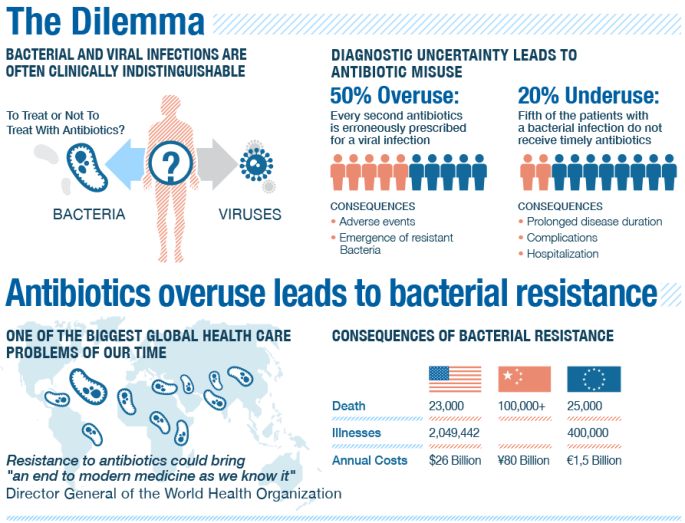
You would have to live under the proverbial public health rock to have missed news of the UN’s landmark proclamation to combat antimicrobial resistance (AMR).  “Superbugs” or antimicrobial resistant bacteria, fungi, viruses, and parasites are a global health concern poised to claim many more lives.  How does AMR happen?
info-2
Source: WHO

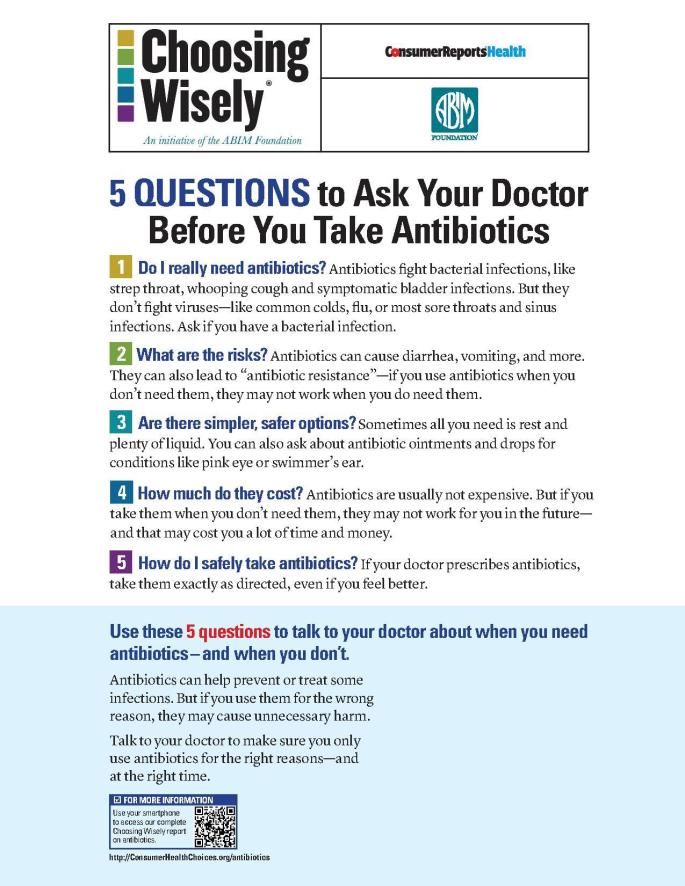
Among the most prescribed drugs in medicine, antibiotics are not appropriate to treat many illnesses and infections including the common cold, influenza, most sore throats, and ear infections.  According to the Centers for Disease Control and Prevention, up to half of all illnesses for which antibiotics are prescribed are not bacterial in nature and thus unresponsive to antibiotics.
choosing_wisely_antibiotics_poster_small_english-pdf

Over-prescription of antibiotics is one cause for AMR, as is our food system’s use of antibiotics for livestock to promote growth and prevent infection.  The cost associated with developing new antibiotics is prohibitive.  Unlike medication to manage chronic diseases, antibiotics are meant to be used sparingly which does not recoup the estimated $1 billion spent to develop a new drug.  As a result, the majority of leading pharmaceutical companies no longer develop new antibiotics.

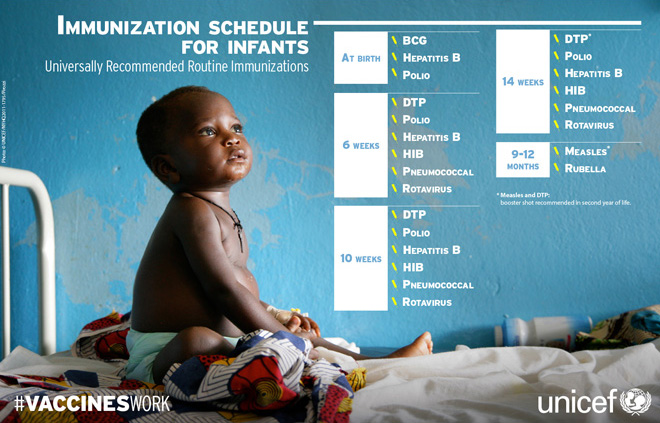
Regular and timely vaccinations are integral to reducing dependency on antibiotics and thus antimicrobial resistance.  The use of vaccines has significantly decreased the prevalence of the world’s deadliest and most preventable diseases, including diphtheria and pertussis.  Even with the increased availability of vaccines, UNICEF reports that 24 million children – roughly 20% of children born each year – do not receive all vaccines recommended in the first year of life.
660x423_iw2014_vacctable_large

Europe and the United States have seen a resurgence of vaccine-preventable diseases including pertussis, better known as whooping cough.   Why are diseases we associate with our grandparents’ generation, reappearing in countries with the means to eradicate them?

After publication of a famously fraudulent report that linked routine childhood vaccinations to autism, vaccination rates plummeted in some developed countries.  Vaccine hesitancy, or delay or refusal of available vaccines, led to non-medical exemptions (NMEs) which allow parents to opt out of immunizations for religious, philosophical, or personal reasons.  Children with and without current immunizations then mingle at all the usual spots: daycare, school, and public facilities.

One of the most amazing attributes of vaccines is their ability to protect us regardless of whether we’ve been immunized.  Herd immunity, or the benefit to the community if most citizens are properly immunized, protects children too young to be immunized and those with compromised immune systems.  If the ratio of immunized individuals drops below 95%, the risk to those groups increases.

Vaccine compliance is just one way to reduce reliance on antibiotics and halt antimicrobial resistance.  Sadly, lack of access to vaccines in the developing world is the number one issue impacting compliance.  By comparison, vaccine hesitancy and NMEs fall squarely into the “First World Problems” category.

What can the United States and Europe do to increase vaccinations among constituents?  An article in the New England Journal of Medicine found that while NMEs have increased in the US, states with stricter exemption criteria had fewer NMEs.  WHO’s Europe regional office published the Guide to Tailoring Immunization Programmes (TIP) in an effort to educate parents and providers.

To see which vaccine-preventable diseases are trending in your area, check out this fabulous interactive map from the Council on Foreign Relations.
@MSF Video: Patents and the fight for #generics

Intellectual property protects those items that we can’t live without – think Netflix and the iPhone 7 – and those that we would surely die without, including life saving and extending medications.  Today’s video covers the latter and the barriers much of the developed world faces courtesy of patent laws that protect pharmaceutical companies.  This issue has come to recent attention as the UN’s Panel on Access to Medicines published its recommendations to Big Pharma’s chagrin.

At the crux of the UN Recommendations is a struggle that pits profits against people.  Enacted in 1995 by the World Trade Organization, the agreement on Trade-Related Aspects of Intellectual Property Rights (TRIPS) introduced minimum standards for protecting intellectual property, including patents on medicine.  TRIPS proved a boon for international trade, but set a 20-year patent on novel medication.  Only after the patent lapses can generic alternatives hit the marketplace.  It is at this point when many lifesaving and extending drugs are first available to the developing world.  The price tag of a medication to treat HIV/AIDS can drop from $10,000 per year to $200 due to generics.

Under TRIPS, each country has the right to a grant compulsory license, as stated in this excerpt:

Where the law of a Member allows for other use of the subject matter of a patent without the authorization of the right holder, including use by the government or third parties authorized by the government, the following provisions shall be respected:

(b)   such use may only be permitted if, prior to such use, the proposed user has made efforts to obtain authorization from the right holder on reasonable commercial terms and conditions and that such efforts have not been successful within a reasonable period of time. This requirement may be waived by a Member in the case of national emergency or other circumstances of extreme urgency or in cases of public non-commercial use. In situations of national emergency or other circumstances of extreme urgency, the right holder shall, nevertheless, be notified as soon as reasonably practicable. In the case of public non-commercial use, where the government or contractor, without making a patent search, knows or has demonstrable grounds to know that a valid patent is or will be used by or for the government, the right holder shall be informed promptly;

In layman’s terms, if it is in the public’s best interest, generic drugs can be pursued without the patent holder’s consent.

A few years after TRIPS, South Africa attempted to pass an act that would grant a compulsory license for antiretroviral therapy in response to a staggering HIV/AIDS epidemic. The act was met with a lawsuit by 40 multinational companies and the United States, citing South Africa in violation of the TRIPS agreement, though executed in the midst a public health crisis.  Despite controversy, President Nelson Mandela signed the act into law and the lawsuit was eventually dropped.  In response, the World Trade Organization signed the Doha Declaration in 2001 to further clarify the right to grant compulsory licenses.

Nearly 20 years after TRIPS and Doha, the developing world continues to suffer from catastrophic levels of health inequality.  Africa, among the hardest hit, is home to nearly half of all tuberculosis cases and 91% of HIV-positive children. Countries that attempt to circumvent TRIPS, even in the direst of public health crises, are subject to retaliation by termination of trade agreements that help keep their economies afloat.

Earlier this year, Colombian Health Minister Alejandro Gaviria, warned a large pharmaceutical company, Novartis, that a compulsory license to pursue a generic form of a popular cancer drug was imminent if Novartis didn’t lower its prices.  In a letter from the Colombian Embassy in Washington, Colombia’s government was threatened by the United States with withdrawal of support to join the Trans-Pacific Partnership trade zone and funding to facilitate a peace deal with a longstanding rebel group.

The exorbitant cost of pharmaceuticals can also threaten consumers in developed countries.  Recent outcry over the soaring price of the anaphylaxis drug, EpiPen, has many in the United States worried. The price of EpiPen has gone from $60 to over $600 in recent years and are now exclusively sold in two-packs, further increasing the cost for consumers.  A similar product, Adrenaclick, is not considered equally therapeutic to EpiPen and pharmacies are unable to fill prescriptions.  Another pharmaceutical company applied to make a generic version, but the application was rejected by the FDA.

This has led to repercussions such as children carrying expired EpiPens and EMTs dispensing epinephrine by syringe, which makes it much harder to administer the correct dose.  A recent article in the American Journal of Medicine suggests that EpiPens be added to a list of preventive medicines, effectively lowering the copay without lowering the overall price of the drug by the pharmaceutical company, Mylan Specialty.  The cost would likely be shifted to consumers in higher deductibles.

In light of the UN recommendations, what is the next step to guarantee medications are available to those who need them?  Dr. Bernard Pecoul of Drugs for Neglected Diseases Initiative urges action, not apathy:

“Governments mustn’t allow the report to become yet another exercise that describes the current failures of the medical innovation system without contributing concrete steps to address those failures. Responsibility now clearly falls on them at the highest political levels to act by putting in place innovative and practical solutions.”


Lab rat, HeroRAT

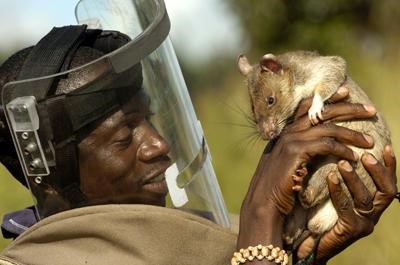
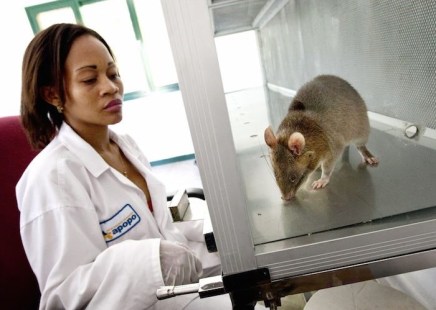
You’ve likely heard of lab rats, but detection rats technology?  APOPO, a Belgian non-profit, with headquarters in Tanzania, breeds, trains, and implements landmine and tuberculosis detection rats in Africa and Asia.  Equipped with exceptional noses, African Giant Pouched rats have helped clear over 26 million square meters of land, including nearly 100 thousand landmines destroyed in Mozambique, Angola, Cambodia, Thailand, and Vietnam.  Once ravaged by civil and international wars, these lands are now suitable for community use.

apopo1
Source: APOPO

Tuberculosis (TB) kills over a million people annually.  In countries such as Tanzania and Mozambique, prevalence of tuberculosis is high while detection and treatment are low.  This discrepancy is attributable to a lack of diagnostic equipment, trained staff, and lagging infrastructure and utilities.  A trained tuberculosis detection rat – otherwise known as a HeroRAT – can screen 100 samples in 20 minutes.  The same task would take a trained technician 4 days.  In Tanzania alone, over 8 thousand positive TB samples that were missed by technicians were identified by HeroRATS.

apopo2
Source: APOPO

Could programs like APOPO fundamentally change the way we think about rats and their role in public health?  To find out, we must first take a look back at our long, intertwined history, past traditional research laboratories, and into a future where rats may well be our colleagues.

Wherever people make a home, rats are sure to follow. Inveterate opportunists, rats make good use of our infrastructure and food system with enviable aplomb.  What works for rats hasn’t always proved advantageous for humans.  Take for instance the Bubonic Plague of the 14th century.  Long blamed for the disease that raised black, fetid boils and led to the swift demise of two-thirds of Europe’s population, rats are still synonymous with scourge, despite mounting evidence that implicates gerbils for harboring the fleas that carried the Plague.  An even more compelling argument suggests that at its most virulent, the Plague spread human-to-human.  This theory is supported by records that show that deaths increased in the winter months, a time when most rodent populations would dwindle considerably.

The story of rats next takes us to the laboratory of University of Wisconsin professor, E. V. McCollum. The year is 1908 and McCollum has just purchased 12 albino rats to further his research on nutrition.  Though he has been studying cows for some time, McCollum feels rats will be superior due to the ease of housing, feeding, breeding, and disposal.  McCollum might not yet realize that his will be the first of many rat colonies established for research.  The first experiment involves splitting the rats into two groups and feeding them different diets.  For a time, all rats will develop normally, until one group ceases to grow.   McCollum postulates the existence of a factor present in some foods that promotes extended growth.  He calls this “factor A,” known today as Vitamin A.

McCollum’s next success would come at Johns Hopkins University’s newly established Department of Chemical Hygiene, later renamed the Bloomberg School of Public Health.  McCollum and colleagues used diet to induce Rickets in rats.  Rickets, a disease that causes crippling bone deformities, was common among the children of tenement-dwellers in urban centers.  Believed to be caused by diet and environment, McCollum prescribed over 300 diets to his Rickets rats and found that those supplemented with cod-liver oil improved.  He also found that rats that had daily sun exposure fared better than those left in the dark.  McCollum named this new discovery Vitamin D.

Advents in technology revealed increasingly subtle yet deeply profound insights into human physiology.  DNA sequencing and genetic engineering allow scientists to simulate human diseases in rats, including cancer, Alzheimer’s Disease, cardiovascular disease, and diabetes.  Modern medicine owes much of what it knows about the etiology and treatment of these diseases to laboratory rats. One reason for rats’ success as research subjects in human disease is the genetic and physiological similarities we share, so similar in fact that it is not surprising to learn that all mammalian life plausibly shares a single, rat-like ancestor .

Recent studies venture past the scientific and into the silly.  Rats exposed to the psychoactive ingredient of marijuana are less likely to perform a complex task in favor of a simple task with a smaller reward.  The rat’s ability to complete the harder task is not affected, just his willingness to exert cognitive effort.  Sound familiar?

Ever wonder if rats laugh when tickled?  Dr. Jaak Panksepp thinks they do and has video to prove it!  Panksepp, a neuroscientist at Bowling Green State University, finds that young rats laugh when tickled and will seek out a tickling hand over a still one.  He also learned that rats read environmental cues when it comes to laughter.  Just as you or I wouldn’t laugh at a funeral, a young rat won’t laugh under a bright light or with the odor of cat urine in the air.

Science might ultimately prove that rats are better people than us.  Scientists wanted to know if rats would help another rat in distress, thus displaying empathy and altruism.  One experiment trapped one rat in a clear tube to determine if the other rat would free it by opening a door with its nose.  In a riskier experiment, rats on a dry platform were tasked with opening a door for a rat frantically treading water on the other side.  Even when enticed by treats, rats overwhelmingly chose to help friends and strangers alike.

When it comes to rats, there is much more than meets the eye.  Are they simply a tool to be confined to the laboratory, or might we find them suited to a diverse range of tasks, such as with APOPO?  If science has shown that rats laugh, are good Samaritans, and exhibit free will, might we need to reexamine our relationship inside and outside the lab?

Watch this Ted Talk by APOPO founder, Bart Weetjens: How I Taught Rats to Sniff Out Landmines.

From American Cheese to Vitamin A, check out 100 Objects That Shaped Public Health (and yes, rats made the list!)


Is Zika the next Thalidomide?

2015 saw a twenty-fold increase of microcephaly in Brazilian newborns.  A WHO report states with scientific consensus that the Zika virus is the cause for microcephaly and Guillain-Barre syndrome, while further neurological disorders are potentially linked.  An article published by the Journal of the American Medical Association seeks to uncover what we might learn about Zika as this cohort of babies age and what similarities can be found in the Thalidomide crisis of the 1960s.

Hailed as the ‘worst man-made peacetime disaster in history,’ thalidomide was manufactured and marketed by a German pharmaceutical company as a safe and effective sleeping pill and anti-nausea drug for pregnant women.  Thalidomide was widely available in the late 1950s and early 1960s in the United States, Europe, Australia, and parts of Asia resulting in the birth of as many as 20,000 babies with crippling deformities.  Thalidomide was banned in 1962.

thalidomide-image1
Source: The Smithsonian

For most, the story ends there.  Now, 60 years later, there are only a few thousand thalidomide survivors – known as thalidomiders – left.  They’ve taken to the Internet to share their stories which you can read here, here, and here.  Amidst stories of institutionalization and acceptance is a common theme: healthcare costs associated with a debilitating condition.  Many suffer from chronic joint ailments that make day-to-day living more difficult as they age.

louise-medus-010
Source: The Guardian

What can researchers learn from thalidomide?  Like the Zika virus itself, much is left to be discovered.

In many ways, thalidomide survivors thrived.  They married, became parents, had careers, and hobbies.  Microcephaly doesn’t hold such promise for the future.  According to the National Institute of Neurological Disorders and Strokes, microcephaly associated with Zika is likely to be severe and require lifelong intensive care.

The healthcare costs of thalidomide is hard to quantify.  Mostly of normal intelligence, thalidomiders attended mainstream schools.  Many developed ingenious adaptations to overcome the vagaries of everyday life.  There is no way to know how much money will be needed to care for children with special needs caused by Zika.  Globally children with special needs are the most vulnerable population.  They have less access to healthcare and education and face more discrimination and violence than peers.

With so much focus on microcephaly, how might Zika influence the developing brains of healthy infants and children?  Studying differences in outcomes of typical children and those with microcephaly will be key to developing treatment methods.  Does Zika have the potential to cause more damage than thalidomide?  Just ask a pediatric neurologist:

“Depending on the rapidity with which an effective vaccine can be developed and distributed effectively, the ability to marshal resources to do appropriate science, and large-scale prevention efforts, Zika has the potential to be much worse and to have an impact that continues over a much longer period of time.”

Interested in learning more about thalidomide?  Check out this great video from The New York Times Retro Report:

@USAID Video: Just Bring a Chair

In today’s video, USAID shares a message of hope amidst the horrors experienced by 2.4 million Syrian refugee children.  Along with displacement from home, Syrian children experience an interruption in education from which they might never recover.  Ms. Maha, a principal for a girls’ school in Jordan, answered the desperate pleas of Syrian parents as she welcomes us and their children into her school with the sentiment: “Just Bring a Chair.”

Video Description:

“In Jordan, where the Syrian crisis has led to around 635,000 additional people taxing already overburdened schools, hospitals and social services, some people still find reasons to open their arms and make it work. Ms. Maha is one of those people.”

Without access to education, the future is bleak for many of the youngest Syrian refugees.  A recent report by Human Rights’ Watch found that nearly one-third of refugees in Jordan are between the ages of 5 and 17.  Of these children, 56% are not enrolled in school.  Lebanon is also struggling to accommodate the inundation of refugee students.  Soon, school-aged Syrian children could outnumber their Lebanese peers.

Unfortunately, the problems do not end once children are in school.  A report by UNICEF highlights the unique educational concerns of refugee children, citing violence while traveling to and from school, abusive teachers and classmates, and separation anxiety while at school.  The same report finds that even when the school is located within the refugee camp, 75% of children do not attend.

So what’s the solution?  I think an inclusive environment like Ms. Maha creates in her school is key.  Money for teachers, educational materials, and space are paramount for educating this generation of Syrian youth.  2015 saw fundraising efforts by members of the UN fall short of the $8.4 billion goal.  Will 2016 see more Syrian children returning to classrooms?

Read Ms. Maha’s story here.