APHA Mid-Year Meeting

Below is a post from past section chair, Dr. Miriam Labbock, who is representing the IH Section at this year’s APHA Mid-Year Meeting in Charlotte, North Carolina.

Dear All:
I am at the mid-year meeting of APHA representing the IH Section – as well I might, as there only seem to be a handful at most of section members here. We gathered together at a break to see who was here…BUT HERE’S MY VOTE THAT WE GET MORE INVOLVED IN THIS MEETING FOR NEXT YEAR!!! It has little to no section or affiliate politicking and actually sticks pretty much to public health issues, and gives sufficient time for discussion and networking. If we can add in a little IH, this could serve as an excellent alternative to the possibly missing GHC opportunity, with some a solid learning time.!

Yesterday, the first day, we had a keynote speech by Dr Don Berwick, guru of improving quality in the health care setting. While he stuck pretty much close to his comfort zone by his own admission, some of the questions pulled him out to discuss public health. Bottom line: huge call for increased communication between clinical and public health agendas.

Luckily, today, the keynote was Dr Mike McGinnis, who is well known in US Public Health circles. His talk much more directly addressed the question of how to increase the dialogue and mutual action. I encourage you all to read his comments, which I am told will be on line on the APHA website soon.

Last night, we had a special session planned to discuss the supreme court decision on ACA. Of course, the decision will not be until Thursday, but there were some interesting points made. In the immigration case, the Supreme Court made a big deal of the fact that they cannot make a judgement on something that is not yet in place…so this heartened the crowd that the provisions that have not as yet been implemented may be safe…we shall see.

Breakout sessions that I attended included “Building the Evidence Base for Public Health” where the take home message was very familiar to those of us who work in other countries: you need ‘evidence’ that is more relevant to action planning! Great speakers. Again, I would encourage you to visit the site. Shiriki offered a bit on the L.E.A.D. approach that may be relevant and all the speakers were innovative and interesting. The next was on Building Community Action – again, I think we are way ahead of the game in IH, but it was good to hear about domestic efforts to involve all stakeholders in health planning. All sessions pretty much addressed increasing activity (for obesity and coronary and diabetes) and decreasing sweet drinks. Lots of sidewalks in the discussion. I wish there has been some other topics, but it was very eye opening to see how state-side public health units have to function. My hats off to them – so many bureaucratic hurdles…

Stay tuned, because tomorrow the discussion will further highlight…ACA, of course! Let’s see what the Supreme Court comes up with!!

Best wishes to all, Miriam
Motivating and Retaining Community Health Workers: The 2011 Annual CBPHC-WG workshop

By: Dr. Paul Freeman

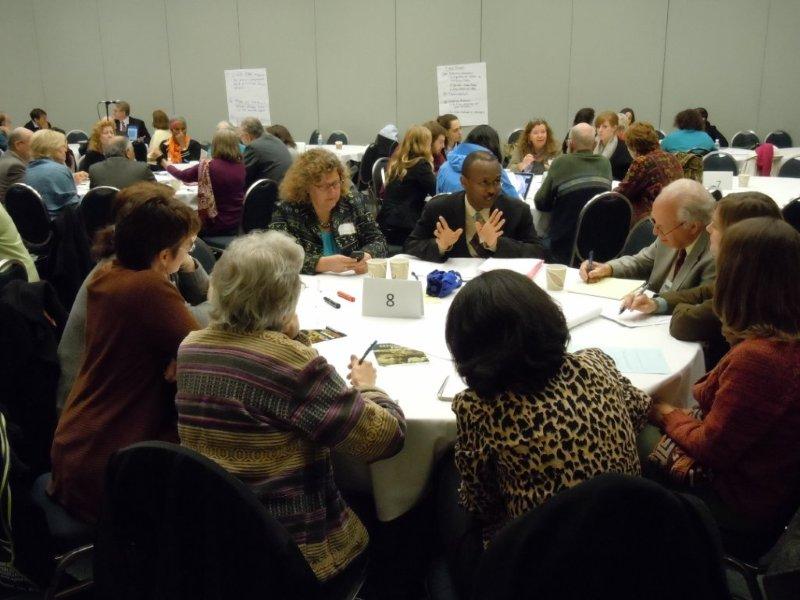
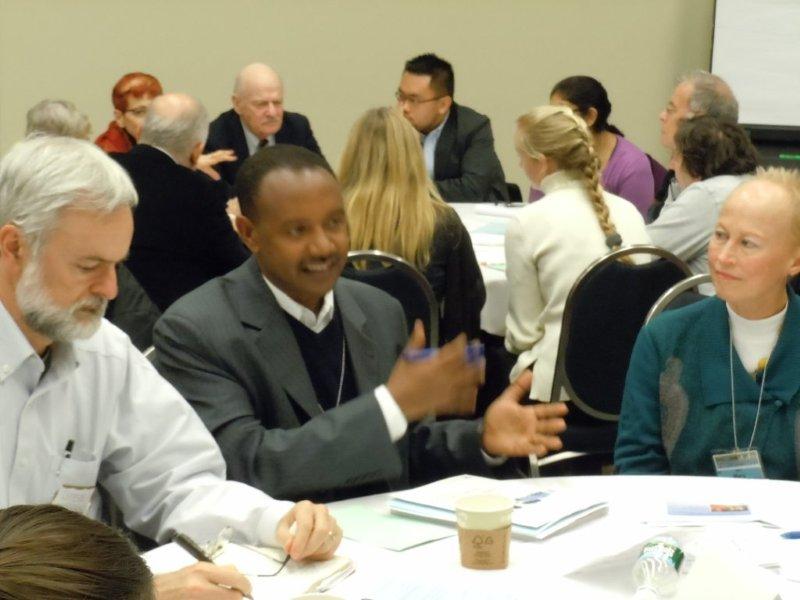
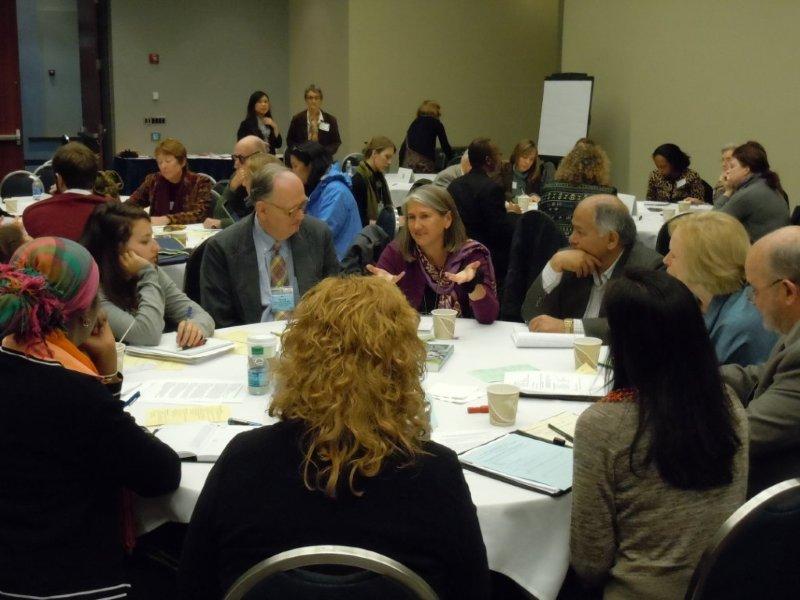
Prior to the recent APHA Annual Meeting, the CBPHC-WG held a day long workshop focusing on Community Health Workers. There were over 110 attendees including presenters and organizers. This was the largest workshop our group has held in the 13 years we have been conducting these workshops. It was a great feeling to see APHA functioning at its best in providing a venue where those from MCHIP, CORE group, academics, members of other NGOs, not-for-profit and for-profit organizations and consultants could share their views in an open, mutually respectful environment and learn from each other. This year JSI personnel, under the leadership of Mary Carnell, worked in partnership with Working Group members in all stages of workshop planning and implementation. The work of Agnes Guyon (who lead the workshop), Sandee Minovi and Kimberley Farnham, all from JSI, and our own Sandy Hoar, Vina Hulamm, Melissa Freeman, Laura and David Paragon, Tonio Martinez and Larry Casazza were outstanding.

Leban Tsuma MCHIP leading. Photo credit: Paul Freeman.

Our norms were: use of an evidence-based approach, the right for all participants to be heard and for their viewpoints to be respected. At this time, renewed attention is being given to the role of CHWs with recognition becoming more widespread now that the Millennium Development Goals, especially those for women and children, cannot be met without community involvement.  The 8 large group presentations and 16 small group discussion sessions covered well a wide range of perspectives on CHW motivation, retention and performance. I am sure some participants were being exposed to different points of view from their own for the first time.

Samuel Yalew, Urban Health Extension Project/JSI (Ethiopia) leading. Photo credit: Paul Freeman.

I would especially like to highlight the area of internal motivation of CHWs. Through Pink’s book “Drive” many of us are becoming acquainted with the “modern” approach to the importance of autonomy, mastery and purpose in motivation. Yet several NGO presentations, such as those by Tom Davis of Care Groups and Connie Gates of Jamkhed, demonstrated that these elements have already been addressed by NGOs for decades as appropriate to local circumstances.

Sarah Shannon from Hesperian facilitating. Photo credit: Paul Freeman

Melissa and I will prepare a report of the workshop to be disseminated early next year. There were many lessons to learn from conducting this workshop that should remain with the International Health Section for years to come. One of the key lessons was that with enough goodwill and cooperation from individual members – things work best with at least 8 volunteers for such an event – memorable events can be implemented by the Section. With enough “hands” each contributing a relatively small amount, things go much more smoothly than if all sit back waiting for a few to do all the work.

Paul Freeman is a physician with advanced training in tropical disease control and general public health, health personnel education, and health program management and evaluation. He has over two and a half decades of experience in capacity building and the design, planning, implementation, monitoring and evaluation of primary health care, child survival and malaria control programs in developing countries and for deprived rural indigenous populations in developed countries. He is a Clinical Assistant Professor at the University of Washington School of Global Health and the Chair-Elect of the International Health Section.

Strengthening of Public Health Associations (SOPHA) Evaluation

By: Dr. Paul Freeman

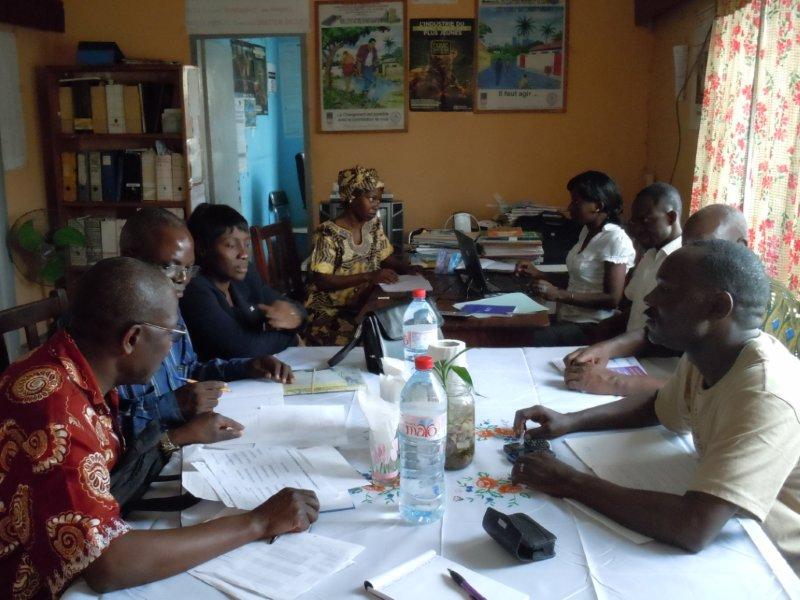
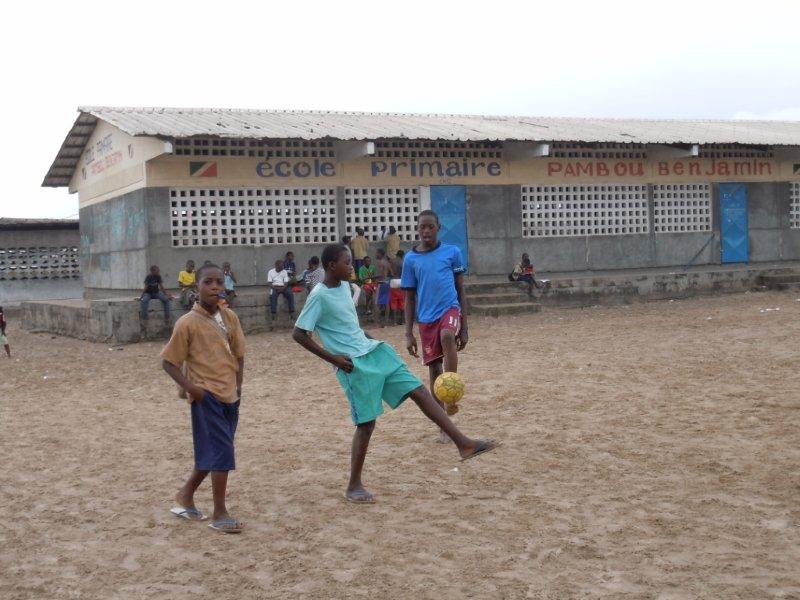
For 25 years the Canadian Public Health Association, with support from the American Public Health Association, has been facilitating ongoing processes to establish and/or strengthen Public Health Associations in developing countries. In November 2011, SOPHA has organized a mission to evaluate its program through field visits to three countries currently receiving assistance and through the results of a questionnaire answered in 5 other country partner Associations. Omar Khan and I were part of this evaluation process through field visits to Nicaragua, Mozambique and Congo Brazzaville. I accompanied Drs Henri Delatour and Deo Sekimpi to the Congo. It was inspiring to see how enthusiastic the members of the local Public Health Association – L’Association Congolese Pour La Santé Publique et Communautaire (ACSPC) – were. In the midst of poverty they devoted a lot of their own time to establish their association and to conduct ongoing activities that established the credibility of their organization with the community and government.

We huddle to discuss Public Health Association business. Photo credit: Paul Freeman.

The SOPHA program has resulted in both individual and group capacity strengthening and knowledge sharing.  Formal training was given in key aspects of strategic planning and project planning, implementation, monitoring and evaluation. SOPHA support of participation in international conferences and networking improved the profile of the organization and led to learning through sharing. In 2008 and 2010 ACSPC organized scientific conferences where different stakeholders participated. ACSPC members have built both personal and institutional capacity by attended many international meetings.  ACSPC also collaborated with municipal and national health authorities, thus contributing to strengthening the health system at those levels.  The projects contributed to public health capacity building across many health programs, such as sanitation, immunization, road safety, TB control, HIV/AIDS control and malaria control.

They appreciate what can be achieved through association. Photo credit: Paul Freeman.

Institutional capacities were adequately strengthened and they are sufficient to ensure sustainability in the short term, but better fund raising activities are needed for the mid to long term. The ACSPC staff were trained on results based management (RBM) tools which were applied in the development of project plans.   New knowledge was applied in financial management to prepare annual, midterm and final financial reports to CPHA, and strategic planning was used to prepare the strategic plan 2012-2016. Funding is not sufficient; the association is using the skills and tools acquired with the SOPHA program to look for other donors and prepare projects.

Supplying latrines and clean water to schools, a typical project. Photo credit: Paul Freeman

There were several key lessons learned. SOPHA capacity building contributes to increase the confidence and the credibility of the association. Advocacy needs to be undertaken to increase the involvement of other health professionals (doctors, nurses) and government officials in the association and develop their interest for public health issues. The main challenge and issue for project implementation was that the multi-disciplinary and multi-sectoral dimension of public health is not yet understood by many stakeholders and decision makers and, partly as a consequence of this, there are few doctors, nurses, or government (Ministry of Health and local health authority) members in ACSPC.

We talked for hours, often by gaslight in small rooms – their offices – in just adequate private housing, that we reached through dirt streets awash with water from recent rain. It was heartening to see what had been achieved and how these pioneer members, with only a few trained health professionals amongst their numbers, had established and barely kept afloat, their own Public Health Associations. Perhaps we could establish links with them for solidarity and to support their growing skill and knowledge base.

Paul Freeman is a physician with advanced training in tropical disease control and general public health, health personnel education, and health program management and evaluation. He has over two and a half decades of experience in capacity building and the design, planning, implementation, monitoring and evaluation of primary health care, child survival and malaria control programs in developing countries and for deprived rural indigenous populations in developed countries. He is a Clinical Assistant Professor at the University of Washington School of Global Health and the Chair-Elect of the International Health Section.

The Business of Benevolence

by Dr. Sosena Kebede

The Global Fund (an international financing organization that pools resources to fight against the top three leading infectious diseases in the world: AIDS, TB and Malaria, to date has committed $22.4 billion) just announced that, due to the current financial crisis, it is canceling round 11 of grant renewals for recipient countries. Most of the recipient countries are in the sub-Saharan Africa and the United States has been the single largest donor (traditionally about 33% of all donations through the GF come from the US) since the organization’s inception in 2002.

My initial reaction on hearing this news mirrors that of most of my colleagues in global health – let’s do something, anything; this can be catastrophic and may mean winding the clock back to when hundreds with HIV were perishing because they didn’t have access to drugs. Other thoughts that flash through my head include: What does this mean to governments of poor nations, NGOs, other donor agencies, pharmaceutical companies, health care workers in poor nations, business people, rich people with the disease, or poor people with the disease?  Will this mean drug rationing? Will this give rise to drug resistance if some treatments are stopped due to lack of funding? Will this mean a lucrative business for someone out there who will stand to gain big when resources shrink, and the rich will find a way to get access?  Speculations, speculations.

Some, all or none of the feared may come to pass. However, the more I think about it, the more I am bothered by the commentary this issue makes rather than the potential outcome, however grim it may (or may not) end up being.

It is deeply saddening to face the fact that the very livelihood of millions of poor people can often depend on the benevolence of the rich. Our world is changing fast; emerging economies are flexing their muscles and contending with Western powers for influence in poor countries. Yet, millions of the world’s poor will have no say on how this phenomenon called globalization will affect their lives. Poor nations have also been below the radar detection when debates rage all over the world about the global mess that years of fiscal irresponsibility and corporate greed has brought. For millions of the world’s poor, our new world order and the concept of globalization, the shift in power/wealth etc., whether good or bad, might as well be happening in another planet for all they have any part in it. Unfortunately, their lack of participation in the process does not shield them from the consequences – they stand to lose the most having no means or power for self-determination.

Poverty, health and human rights are inextricably intertwined. We can’t truly advocate for global health equity when the world continues to have millions of voiceless people and people will not have a voice unless they are economically empowered. The business of benevolence, however generous and much needed it may be, is only a temporary measure for the poor that merely affirms to us our implicit sense of moral superiority.

Sosena Kebede, MD, MPH is an assistant professor of medicine in the department of medicine at Johns Hopkins University in Baltimore, MD. She is also an associate faculty at the Johns Hopkins Bloomberg School of Medicine in the department of International Health. Her work in global health focuses on health systems strengthening works such as directing a hospital management training program in Ethiopia for Yale University as well as doing consultancy work for the World Bank. Her professional memberships include being a section counsilor for APHA’s international health advocacy and policy committee, as well as member of the advisory board for the international Association in Technology, Education and Development.

Putting Students to Work Writing APHA Policy Papers

By: Dr. Amy Hagopian 

University of Washington faculty members in the Department of Global Health have found opportunities to do double duty as teachers and APHA activists.  For two years, faculty have assigned students to write APHA position papers on important policy areas, while at the same time offering valuable learning opportunities for students.  In the last couple of years, students have written four policy papers approved by APHA’s Governing Council:

  1. Transporting nuclear waste (20107)
  2. Cleaning up the Hanford nuclear reservation (20105)
  3. Improving housing for farmworkers (adopted in 2011, not yet given a number)
  4. Creating citizenship opportunities for undocumented workers in the U.S. (number pending, adopted in 2011).

Students have also written two additional policy proposals for submission in 2012:

  1. Reducing non-point pollution run-off into coastal waters
  2. Modernizing the Clean Water Act to improve its ability to address modern point-source water pollution hazards

Now two UW faculty members, inspired by the “Occupy” movement and the brief statement of support for it adopted by the governing council at the annual meeting in DC this year, have invited two students to work on a new policy.  Faculty members Stephen Bezruchka and Amy Hagopian will work with UW graduate students Valerie Pacino and Nathan Furukawa to write a position paper on the health hazards of income inequality, but within and between nations.

Authors of the position paper are inspired by populist movements, including the ones that preceded Occupy protests–especially the Arab Spring actions in Tunisia, Egypt, Libya, and beyond.  These efforts used narratives on income inequality, wealth inequality and social inequality to spur direct action.

We invite International Health section members with ideas about how to contribute to these position statements, or who can refer us to literature citations, to be in touch. Please contact Dr. Amy Hagopian (hagopian [dot] amy [at] gmail [dot] com) for more information.