An “epidemic of poor quality”: New study finds that poor healthcare quality leads to millions of deaths globally

This is part 1 of a 4-part series on global healthcare quality.

The Sustainable Development Goals (SDGs), the global effort led by the United Nations to prioritize and standardize development goals in every country for the period 2015-2030, offer ambitious targets when it comes to the world’s health. SDG 3 is focused entirely on outcomes of health and well-being, such as reducing maternal mortality, ending diseases like AIDS and malaria, achieving universal health coverage (UHC), and ensuring universal access to reproductive health care. Other SDGs, such as Goal 2 which calls for zero hunger and Goal 6 that aims for universal and equitable access to safe drinking water as well as equal and adequate access to sanitation, have obvious implications for health. However, a recent Lancet Global Health Commission, chaired by Associate Professor of Global Health Dr. Margaret Kruk of the Harvard T.H. Chan School of Public Health, has come to some surprising conclusions about health systems in low- and middle-income countries (LMICs). Despite a push in humanitarian advocacy and research to focus on increasing healthcare access in LMIC, it is the quality of healthcare that is received by patients in these environments that may require more of our attention. The Commission estimates that as many as 5 million die each year because they are receiving poor-quality healthcare- more than a million more people than those who die due to no access to care at all (3.6 million). That means that annually, 8.6 million people living in LMIC are dying due to poor-quality healthcare systems. Poor quality care can be dangerous for patients, provides misleading data points about healthcare system improvements, and may support corrupt and fraudulent behavior by parties with power in the health sector. Is it possible to achieve the SDGs in this environment?

Health systems should be judged on “what they do for people- not how many doctors they train.”

Dr. Kruk describes quality healthcare systems as based on three factors: effective care, trust of the people, and a system that is able to adapt, both in cases of acute emergencies and with a longer-term vision. While many advancements in access can be supported by metrics, it is possible that we haven’t been measuring some of the factors that really matter. Dr. Kruk told NPR that health systems should be judged on “what they do for people- not how many doctors they train.” The Commission’s study, which was published by the Lancet earlier this month, found that the millions of deaths each year that can be attributed to poor health systems included many deaths due to factors the SDGs explicitly seek to reduce, such as neonatal conditions and traffic accidents. While one of the central tenets of SDG 3 is UHC, the Commission argues that the quality of care “is not yet sufficiently recognized in the global discourse on UHC” and that countries undertaking policies that bring them to UHC “must put better quality on par with expanded coverage” to improve health. The Commission identifies several individual initiatives in LMIC that are developing mechanisms for quality measurement and improvement. However, it is clear that improving the quality of care has not received the effort that expanding access to care has achieved, which will undoubtedly undermine efforts to achieve the SDGs, even if UHC is attained. While expanding access to care must remain a global priority, we cannot discount the need to ensure that care given is of high quality as well. Several studies from LMIC during the period of the Millennium Development Goals (2000-2015) suggested that in some instances, expanding access to care did not lead to more positive health outcomes because the quality of the care received was poor. However, we still do not even have highly rigorous and consistent tools with which to measure healthcare quality across global contexts in a way that would allow for standardized measures and generalizable conclusions.

Aside from the historical focus on access to care by humanitarian and governmental actors, there a few other reasons that quality of care has not received the appropriate amount of attention of donors and policymakers. Healthcare systems in LMIC are generally disintegrated, with pockets of government services, humanitarian agencies, and private facilities operating throughout the country. This complexity allows for the intrusion of many political and logistical barriers to providing high quality care consistently. In the public sector, corrupt bureaucrats may opt to control who is able to receive jobs at healthcare facilities rather than allow for a merit-based system where poorly qualified staff could be replaced by qualified employees, regardless of political factors. For-profit providers who have disparate financial interests may not properly follow treatment or diagnosis guidelines that are critical to quality care. However, entirely closing low quality facilities would leave some citizens with no access to care at all.

Dr. Tedros Adhanom Ghebreyesus, Director-General of the World Health Organization, published a response to the Lancet Commission, agreeing that “nothing less than a revolution” is needed to ensure that high quality care is delivered in every health system around the world, an essential component of SDG 3. He posits that poor data is one of the largest barriers to improving healthcare quality, arguing that we must “go beyond counting simply what services are delivered to measuring how they are delivered.” He calls for a “global learning laboratory for quality,” where local lessons based on the “messy realities of health services” are prioritized, but where these lessons are then disseminated and can be implemented, measured, and compared in contexts around the world. Policymakers and practitioners working in LMIC must consider these factors when designing and implementing health services or research studies. The Lancet Commission points to five distinct foundations where learning and improvement in the process of care leads to higher quality: the needs of the population, governance in the health and non-health sectors, platforms of care, the healthcare workforce, and the tools needed to provide quality care. To avoid the rising “epidemic of poor quality” that the Commission found and to put LMIC on a successful path to achieving the SDGs, we can no longer ignore the pressing need to address healthcare quality just as much as access.

Public Health and Migration

Throughout history humans have been on the move, migrating due to famine, war, persecution, and to find a better life. In a new age of “zero tolerance” policies and deeming humans “illegal” it is important to understand that how global policy defines someone matters.

There are many terms for populations that are fleeing disasters and we have to understand globally accepted terms for populations on the move.

    1. Asylum-seekers are people “whose request for sanctuary has yet to be processed”. Every nation has their own asylum system to determine who qualifies for protection and how they request this protection. If the petition for protection does not meet the host country’s criteria the individual may be deported to their home country.
    2. Internally displaced people have not crossed any borders to seek safety but have moved to another location within their home country seeking safety or shelter.
    3. Refugees are people who are forced to flee their home country in order to seek safety from conflict or persecution. This group of people are protected under international law and are not to be sent back to the situation where their safety is at risk.
    4. Migrants are people who choose to move for work, education, family unification, etc. These people can go back to their home country and continue to be protected by their home country government.
    5. Undocumented migrant is a person who has entered a country without proper documentation, or their immigration status expired while in the host country and they have not renewed their status, or they were denied legal entry/immigration into their host country but have remained in the host country.
    6. Statelessness is someone who does not have a nationality. Individuals can be born stateless or become stateless due to nationality laws which discriminate against certain genders, ethnicities, or religions, or the emergence or dissolving of countries.

These international definitions are important, because it determines if, how, and when the international community can respond to crisis situations. A large caveat is that due to national sovereignty under international law a nation must request that international organizations like UNHCR provide international assistance to these particular communities. If nations do not request assistance or reject assistance then these populations are left without any sort of protection leaving them vulnerable and isolated, as seen with Syrian refugees in Lebanon. The international community has also seen the inhumane treatment of people seeking protection to include isolated detention on islands such as is currently used in Australia.

No matter how the international community defines these populations, they face poor health outcomes due to disease, economic stress, and trauma. Examples include:

  • An increase in child brides among Syrian and Rohingya refugee populations. This in turn affects infant and maternal mortality rates as well as the woman’s future economic prospects.
  • Malnutrition of both mother and child leading to increased death rates for children under five and stunting of growth in children that survive. This is currently being seen in Yemen.
  • Decreased breastfeeding rates due to maternal stress, disease, and separation from familial groups/support systems. An increase in breastmilk substitutes in refugee or displaced persons camps is also an issue that goes against international humanitarian policies.
  • During the Mediterranean refugee crisis the international community witnessed large groups of people risking their lives on overfilled boats that often sank, causing large scale loss of life. These refugees then faced xenophobia, closed borders, and detention upon their arrival.
  • Currently in the United States there has been an increase in detaining families and child migrants from Latin American countries for an indeterminate amount of time. Organizations like American Academy of Pediatrics have begun to discuss long term effects this type of detention has on child and adolescent health outcomes such as: high risk of psychological stress that may lead to anxiety and depression due to separation and forced detention, suicidal ideations, victims of assault by other children in these detention centers, or sexual assaults from other detainees or employees at these facilities.
  • In South America sovereign nations have closed their borders or placed restrictive regulations on Venezuelan migrants seeking food, shelter, and basic medical care for their families amid a massive economic crisis. Not only do these migrants face arduous journeys, but they also face poor health outcomes like malnutrition due to starvation, and the potential for contracting diseases due to poor sanitary conditions, and consuming non-potable water.
  • Migrants are a vulnerable population who can succumb to human trafficking and the modern slave trade along their migration routes. Migrants that are caught up in human trafficking often face abuse (mental and physical), serious injury from due to extreme work conditions, and exposure to communicable diseases from overcrowded and unsanitary living environments.   

Humans take immense risks to seek safety and new opportunities that they did not have in their home country. As an international public health community, whether we work in crisis situations or not, we must make it a priority to treat all humans in a humane manner. Health is a human right, and should be guaranteed for all.  


Interventions and Strategies for Addressing Global Intimate Partner Violence

This is the fourth part of a IH Blog series featured this summer, Intimate Partner Violence: Global Burden, Risk Factors and Outcomes.

Written by: Ewinka Romulus MPH and Dr. Heather de Vries McClintock PhD MSPH MSW

Intimate Partner Violence (IPV) continues to be a serious global public health concern affecting millions of women (and in some cases, men). IPV refers to any harmful behavior within an intimate relationship that includes physical, psychological or sexual harm. Existing research suggests that different types of violence often coexist. For instance, we tend to see physical IPV often accompanied by sexual IPV and emotional abuse. While the extent of IPV varies across regions, higher prevalence exists amongst poorer countries and within communities of a lower socioeconomic level. The World Health Organization (WHO) reports a higher prevalence of IPV among African, Eastern Mediterranean, and South-East Asia Regions (approximately 37%). Whereas, lower rates of IPV are found among women in European and Western Pacific regions.

To date, different theories and models have been used to explain IPV behavior within communities. The most widely used model for understanding intimate partner violence is the Social-Ecological Model which considers the complex interaction between the individual, relationship, community and societal factors that may influence IPV. The societal level identifies broad societal factors including social and cultural norms, health, economic, educational, and social policies, which may create an environment where IPV is either encouraged or inhibited. Researchers are continuously examining the factors associated with IPV at these different levels and factors.

Relying on this conceptual framework interventions and strategies to address IPV globally require a multi-level approach. Accordingly, the World Health Organization’s Global Plan of Action to Address IPV 2016, calls for a multi-sectoral approach in which strategies for addressing IPV occur on all levels of the Social-Ecological Framework (e.g. individual, relationship, community, etc.). The goal of this plan is to strengthen the role of the health system in all settings and within a national multisectoral response to develop and implement policies and programmes, and provide services that promote and protect the health and well-being of everyone, and in particular, of women, girls and children who are subjected to, affected by or at risk of interpersonal violence. The plan calls for several actions that respond to and prevent gender-based violence against women and girls (VAWG). These include “creating an enabling legal and health policy environment that promotes gender equality and human rights, and empowers women and girls; provision of comprehensive and quality health-care services, particularly for sexual and reproductive health; evidence-informed prevention programmes promoting egalitarian and non-violent gender norms and relationships; improving evidence through collection of data on the many forms of VAWG and harmful practices that are often invisible in regular surveillance, health and crime statistics.”

Several countries, such as Uganda, India, and Nigeria have integrated multiple approaches encompassing the key principles mentioned above. For instance, in Uganda, an organization called Raising Voices works to prevent violence against both women and children. Raising Voices focuses on transforming attitudes and behaviors to promote gender equity in communities through a tool called SASA!. SASA! is a well-known intervention that has been adapted and implemented across regions, namely, the Caribbean, the Middle East, and Southeast Asia. The SASA! intervention includes four steps: Start, Awareness, Support, and Action which focus on educating communities through a series of activities that address the importance of power and awareness in relationships. A recent evaluation of SASA! in Uganda demonstrated a significant reduction in the reported level of physical partner violence against women. In Haiti the MDG Achievement Fund  partnered with local women’s organization to establish health clinics and provide counsel and care for victims of violence. Local leaders are trained to educate and spread awareness about domestic violence within communities and to report a witnessed crime to local authorities. The MDG Achievement Fund partners with UN Women to create educational and socio-economic opportunities for vulnerable women to increase economic independence and autonomy. There has also been an increase in the number of One-Stop Crisis centers worldwide to help recent victims of violence.

Contextual factors shape the etiology and manifestation of IPV and thus effective interventions differ within communities and across countries. Programs that employ models that are specific to cultural norms while including community members have been found to be effective in addressing IPV. In addition, structural and systematic intervention strategies (economic, social, political, and physical) to reduce IPV or its impact may also be essential to reduce IPV’s global burden (Bourey C, 2015). An example, of an issue embedded in underlying structural and systemic inequities is that may be potentially modified to improve IPV is that of literacy.  Regions with lower literacy levels show a higher prevalence of IPV among women. One study conducted in Ethiopia (Deyessa, 2010) found illiterate women were more likely to justify the reasons for a man beating his wife, compared to literate women. The study also found that literate women with a literate spouse were least likely to have experienced physical violence compared to literate women with an illiterate spouse. Similar findings were reported in a study in India (Ackerson, 2008) in which women residing in neighborhoods with high literacy rates were were less likely to experience IPV. Literacy can also have an important impact on other indicators of well-being entwined with outcomes for IPV such as contraceptive knowledge and use. In our recent work we found that literacy was significantly associated with the utilization of modern contraceptives (adjusted odds ratio (AOR) = 1.166, 95% CI = 1.015, 1.340). Thus, interventions that seek to modify systemic and structural components that influence literacy may have important implications for IPV.

Intimate partner violence is a common problem worldwide that needs to be addressed incorporating contextual needs. The World Health Organization calls for a collaborative, coordinated and integrated response for addressing this significant public health issue. It is evident that interventions should be multi-sectoral and a comprehensive approach should aim to address IPV implications on individual, relationship, community and societal levels.

Screen Shot 2018-08-17 at 11.00.41 AM.pngEwinka Minerva Romulus, MPH is a recent graduate from Arcadia University’s MPH program. Her master’s thesis focused on the influence of literacy on contraceptive knowledge and use among women in Swaziland. Prior to her graduate career, she studied Bio-behavioral Health at the Pennsylvania State University where she gained an understanding of the interactions among biological, behavioral, psychological, sociocultural, and environmental variables that influence health. Ewinka gained interest in global health after observing the existing issues around poverty, health, and inequality in her own country – Haiti.  She is planning on continuing her studies at Drexel University in the fall of 2018 to obtain a certificate in Epidemiology and Biostatistics. Her current interests are in women’s health, global health, and nutrition. Her global health experience includes traveling to Guatemala with Mayanza Organization to provide health education and health screenings to school-children. She is also involved in organizations in Haiti with a mission of eradicating many communicable diseases. During her free time, Ewinka enjoys reading, traveling, and learning to play the guitar.
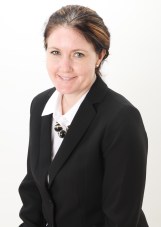
McClintock.PictureDr. Heather F. de Vries McClintock is an IH Section Member and Assistant Professor in the Department of Public Health, College of Health Sciences at Arcadia University. She earned her Master of Science in Public Health from the Department of Global Health and Population at the Harvard School of Public Health. Dr. McClintock received her PhD in Epidemiology from the University of Pennsylvania with a focus on health behavior and promotion. Her research broadly focuses on the prevention, treatment, and management of chronic disease and disability globally. Recent research aims to understand and reduce the burden of intimate partner violence in Sub-Saharan Africa. Prior to completing her doctorate she served as a Program Officer at the United States Committee for Refugees and Immigrants and a Senior Project Manager in the Center for Clinical Epidemiology and Biostatistics, University of Pennsylvania. At the University of Pennsylvania she led several research initiatives that involved improving patient compliance and access to quality healthcare services including the Spectrum of Depression in Later Life and Integrating Management for Depression and Type 2 Diabetes Mellitus Studies.


Happy Breastfeeding Week! #WBW2018

World breastfeeding week takes place from August 1st to 7th this year. This year’s theme is Breastfeeding: Foundation of Life.

There are tools for all of your advocacy and information needs!

WHO has infographics and webinar information: http://www.who.int/news-room/events/detail/2018/08/01/default-calendar/world-breastfeeding-week-2018

The World Alliance for Breastfeeding Action (WABA) has an action folder in several languages (http://worldbreastfeedingweek.org/actionfolder/) and a social media toolkit (http://worldbreastfeedingweek.org/social-media-kit/).

WABA is also hosting a Thunderclap! Those who join will automatically share the same breastfeeding message at the same time across FaceBook and Twitter on August 1. https://www.thunderclap.it/projects/70825-world-breastfeeding-week-2018

In related news: In the U.S., Idaho and Utah recently passed bills legalizing breastfeeding in public for their residents. It is now legal in all 50 U.S. states to breastfeed in public. Appropriately, this week also kicks off our own National Breastfeeding Month in the U.S. (http://www.usbreastfeeding.org/nbm).

Weekly themes:

  • Week 1: Policy Pulse 
    Finding Solutions: Small policy changes can go a long way toward supporting breastfeeding families
  • Week 2: Special Circumstances & Emergency Preparedness 
    Always Ready: Resources and guidance on how to manage feeding during an emergency
  • Week 3: Call to Action 
    Answering the Call: Everyone can help make breastfeeding easier
  • Week 4: Black Breastfeeding Week 
    Love on Top: On top of joy, on top of grief, on top of everything

Happy messaging! Support breastfeeding everyday!


Support the best nutrition for babies everywhere: Urge your U.S. Representatives to protect, promote, and support breastfeeding!

Are you aware that representatives from the U.S. sided with commercial infant formula industry interests at the expense of babies during the recent World Health Assembly (WHA) meeting in Geneva?

Screen Shot 2018-07-17 at 4.48.44 PMU.S. officials at the meeting proposed the adoption of language that would have allowed this industry unrestricted ability to aggressively market breast milk substitutes as part of a WHA resolution on infant and young child feeding that included breastfeeding. Finally, the original wording of the resolution was mostly maintained. However, Ecuador had already been forced to withdraw its sponsorship of the resolution due to U.S. threats to withdraw military and commercial support if they didn’t, instilling fear in all other smaller countries of similar retaliation from the U.S. that may persist into the future. Russia stepped up at the end to sponsor the resolution because they said they support breastfeeding!

Support the best nutrition for babies everywhere.

Urge your U.S. Representatives to protect, promote, and support breastfeeding!

Act now by calling or writing your U.S. Representatives. Need the contact information for your representatives?

The issue and the circumstances are well articulated by two articles found in News Deeply and The New York Times.

For more information about IH Section’s Policy and Advocacy Committee activities, contact:
Kevin Sykes, PhD, MPH and Elizabeth Holguin, MPH, MSN, FNP-BC
APHA, International Health Section Policy and Advocacy Committee Co-Chairs