
First Panel:
Second Panel:
Husain Haqqani, Pakistani Ambassador to the White House:

First Panel:
Second Panel:
Husain Haqqani, Pakistani Ambassador to the White House:
Attention IH section members! The IH Communications Committee has developed a survey to learn how its members use and benefit from it communications platforms. The survey comes in two parts: the first asks about the section’s traditional communications platforms (i.e. the website, newsletter, and monthly e-mails), and the second is about the section’s social media tools (Facebook, LinkedIn, and this blog). Please take a few minutes to complete the survey – we value your feedback and want to know how to better communicate with you!
The two parts of the survey can be accessed from the following links:
Traditional Communications
Social Media
Thanks in advance!
-Your friendly neighborhood Communications Chair
UPDATED: Please note that the date has changed from June 13 to June 27.
Please join us for our next bi-monthly conference call! The IH Section is hosting its topic-focused conference call for the month of June. The call will be held on Monday, June 27 from 1:00 to 2:00 p.m. EST. This call will be hosted by section members Miriam Labbock and Laura Altobelli, who will be discussing current developments in maternal, neonatal, and child health (MCNH). The call will include:
You are welcome to submit comments and questions for the speakers; however, we ask that you submit them in advance so that the panel can present them to the speaker. This will allow us to keep things organized. Please e-mail questions for the speakers to jmkeralis [at] gmail [dot] com by Friday, June 24 at 8 p.m. EST.
TOPIC: Current Developments in Maternal, Neonatal, and Child Health (MCNH)
DATE AND TIME: Monday, June 27, from 1:00 p.m. to 2:00 p.m. EST
PHONE NUMBER: (712) 432-1001 (please note that this is not a toll-free number)
PASSCODE: 477461343#
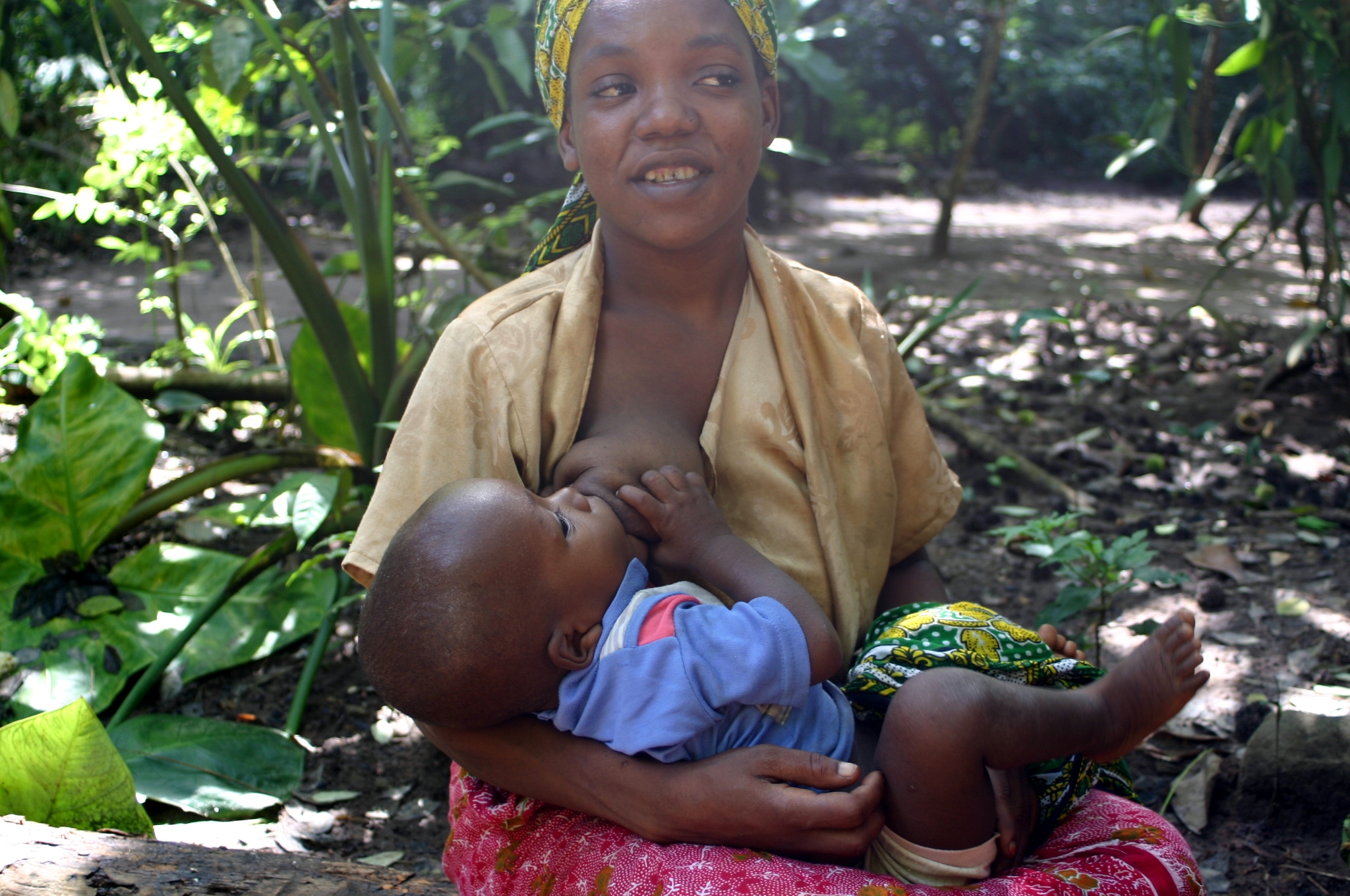 A number of NGOs and aid organizations working in Laos have spoken out against Nestlé by refusing to apply for a half-million dollar prize – and writing them a vehement letter explaining why. These organizations are speaking out against the company for violating the International Code of Marketing of Breast Milk Substitutes.
I remember seeing ads on television for baby formula, but I never noticed that they stopped running until many years later. As global health blogger Alanna Shaikh helpfully explains, advertising baby formula, or providing it as a component of relief supplies for victims of natural disasters, is a bad idea for several reasons. First of all, many women mistakenly believe that formula is safer and more nutritious for their babies, when in reality it is not. It also places babies at risk for malnutrition: women who switch to formula will eventually stop producing breast milk naturally, and if the supply of formula dries up or they can no longer afford it, then the availability of adequate nutrition is compromised. Additionally, women in resource-poor settings may not have access to clean water to mix formula powder or properly clean bottles.
The full text of the letter is below.
Aid agencies working in Lao PDR:
Save the Children Australia in Lao PDR
Health Frontiers
Francophone Institute for Tropical Medicine, Lao PDR
Adventist Development and Relief Agency, Lao PDR
Oxfam in Laos
Plan International Laos
Health Unlimited
Village Focus International
CRWRC
Handicap International
HELVETAS LAOS
ERIKSHJALPEN Laos
CARE International in Lao PDR
Japan International Volunteer Center
Welthungerhilfe
ChildFund Laos
World Vision Lao P.D.R
World Concern Lao P.D.R
Médecins du Monde Laos
24 May 2011
Peter Brabeck-Letmathe, Chairman of the Board
Paul Bulcke, Chief Executive Officer
Nestlé Suisse S.A.
Case postale 352
Vevey
CH-1800
Switzerland
We won’t be applying for your prize money, Nestle.
Your marketing of formula milk still jeopardizes the health of infants and children in Laos.
We write to inform you that our organizations will not be applying for the “Creating Shared Value” Prize, recently announced by Nestle. This prize is worth approximately USD 480 000.
We represent a number of aid agencies in Lao PDR (Laos), working to improve infant, child and maternal health, and to reduce poverty.
We won’t be applying for the prize, because Nestle continues to make millions of dollars of profit, at the expense of infants and children in Asia, through violations of the International Code of Marketing of Breast-milk Substitutes.
Unethical marketing by food companies, including Nestle, contributes to the situation of high infant and child mortality in Laos.
Babies and children are dying in Laos because food companies such as Nestle are weakening national regulatory frameworks and aggressively flooding the market with information that dilutes public health campaigns that promote breastfeeding.
In Laos, Nestle has violated the Code in the following ways:
Nestle is actively working to dilute and weaken the national regulatory framework
The first effort by Laos to enact the International Code of Marketing of Breast-milk Substitutes was in 2004, through a decree issued by the Ministry of Health entitled “Regulations on Infant and Child Food Product Control“.
In 2007, the decree was revised by the Ministry of Health (Department of Hygiene & Prevention, MOH). The changes were influenced by outsiders, mainly baby food companies. The main changes include:
After the 2007 revisions were made, Nestlé printed 1,000 copies and distributed them to hospitals across the country. This is a clear example of Nestlé working to weaken the national regulatory framework in Lao PDR.
We call on Nestle to:
Signed by
For media enquiries:
The Post-Graduate Fellowship (PGF) is an intensive training program that provides opportunities for self-directed research and interdisciplinary collaboration in health metrics. Strong candidates for this program have graduate-level training in quantitative methodology from one of the following areas: health policy, economics, mathematics, computer science, statistics, biostatistics, epidemiology, health services, demography, engineering, physics, medical sciences, or other related fields. The PGF program combines academic research, education and training, and professional work with progressive, on-the-job training and mentoring from an accomplished group of professors and researchers.
The purpose of the fellowship is to:
Fellows receive training through on-the-job research, methods workshops, access to University of Washington courses, and on-site lectures and seminars. Fellows contribute directly to IHME’s research agenda through their involvement in research teams, development of new methods, and managing and driving research projects to meet deliverables.
Eligibility and application information
In order to be considered for a Post-Graduate Fellowship, candidates must have the following:
Applications are due on November 1. Candidate selection includes phone interviews and in-person interviews held at IHME. Admissions decisions are made by the end of February for fellows that will join IHME the following fall.
Applications for the IHME Post-Graduate Fellowship include:
How to submit your application
Applicants are strongly encouraged to submit their application online starting August 1, 2011. If you are in a resource-poor setting or do not have internet access, applications can be mailed to:
Institute for Health Metrics and Evaluation
University of Washington
Attention: PGF Program
2301 Fifth Ave., Suite 600
Seattle, WA 98121 USA
More information about the program is available here. Questions and inquiries may be emailed to gf@healthmetricsandevaluation.org.

