Two Summer/Fall Internships with the Communications Committee

The IH Section’s Communications Committee is currently seeking two summer and/or fall interns! We are looking for two interns to post regularly to the IH Blog and the Section’s social media platforms, contribute to Global Health Communications Committee activities, and assist with the Global Health Jobs Analysis project. The position is unpaid, but it is remote and entirely web-based and thus can be combined with another opportunity. The weekly time commitment will be 15-20 hours a week distributed in any way that the intern can complete their duties.

The ideal candidate a self-starter who can initiate activities based on new ideas and complete projects with minimal supervision and guidance.

Qualifications: Must be a Student or Early Career Professional member of the American Public Health Association.

Not yet a member of APHA? Interested candidates may submit an application and, if selected, join before beginning the internship period. See https://www.apha.org/become-a-member/ for more information.

How to Apply: Interested candidates should e-mail a resume/CV and two writing samples to ihsection.communications@gmail.com. Please include the cover letter in the body of the e-mail.

2016 Call for Award Nominations: Recognizing our finest in International Health through the IH Section Awards

Note: The deadline for nominations has been extended to Monday, May 16th.


Each year, the International Health (IH) Section of the American Public Health Association (APHA) recognizes outstanding contributions of its members through its Lifetime Achievement Award for Excellence in International Health, its Mid-Career Award in International Health, the Gordon-Wyon Award for Community-Oriented Public Health, Epidemiology and Practice, and the Distinguished Section Service Award. The Section is now seeking nominations for deserving candidates for these awards, to be presented at its Awards Ceremony at the APHA Annual Meeting in Denver, CO in November 2016.

The Carl Taylor Lifetime Achievement Award in International Health was created by the IH Section to honor the visionaries and leaders in APHA who have shaped the direction of International Health. The evaluation criteria for the Lifetime Achievement Award include

  • quality/creativity/innovativeness of the individual’s contributions to the field of International Health;
  • the individual’s contributions to the development of APHA or the IH Section;
  • application of the individual’s work to service delivery (as opposed to primarily theoretical value)
  • the individual’s contributions as a leader/visionary/role model;
  • the volunteerism/sacrifice associated with the individual’s contributions; and
  • membership in APHA (preferably with primary affiliation with the IH Section), a State affiliate, or a national public health association that is a member of the World Federation of Public Health Associations.

No self-nomination is allowed.

Prior winners of the Carl Taylor Lifetime Achievement Award in International Health include: Jeanne Foster, Joe Wray, Carl Taylor, Milton Roemer, Warren and Gretchen Berggren, John Wyon, Derrick Jelliffe, Tim Baker, Cicely Williams, Bud Prince, Veronica Elliott, Moye Freymann, Dory Storms, Tom Hall, Samir Banoob, William Reinke, Michael Latham, William Foege, Clarence Pearson, Stanley Newman, Jack Bryant, Richard Morrow, Ray Martin, Miriam Labbok, Douglas Huber, and Henry B. Perry, III.

The Mid-Career Award in International Health is intended to recognize outstanding young professionals in the IH Section. The evaluation criteria for the Mid-Career Award include

  • a commitment to the promotion and development of primary health care in a cross-cultural setting over a period of 5-15 years (primary health care is meant here to encompass a broad array of public health issues, including HIV/AIDS prevention and environmental health);
  • demonstrated creativity in expanding the concepts pertinent to the practice of public health with an international focus; and
  • membership in APHA (preferably primary affiliation with the IH Section), a State affiliate, or a national public health association that is a member of the World Federation of Public Health Associations.

No self-nomination is allowed.

Prior winners of the Mid-Career Award in International Health include Margaret Henning, Elvira Beracochea, Laura Altobelli, Matt Anderson, Padmini Murthy, Gopal Sankaran, Jean Capps, Tim Holtz, Kate Macintyre, Sarah Shannon, Adnan Hyder, Stephen Gloyd, Luis Tam, Marty Makinen, Colleen Conroy, Mary Ann Mercer, Irwin Shorr, Walter K. Patrick, Dory Storms, Clyde “Lanny” Smith and Theresa Shaver.

The Gordon-Wyon Award for Community-Oriented Public Health, Epidemiology and Practice is intended to reward outstanding achievement in community-oriented public health epidemiology and practice. This award was established in 2006 by the IH Section. It is administered by the Community Based Primary Health Care Working Group. John Gordon and John Wyon were pioneers in this field, so encouraging and recognizing others in this field is one important way of honoring their memory. The evaluation criteria for this award include:

  • a central role in an outstanding achievement in community-oriented public health and practice;
  • demonstrated creativity in expanding the concepts pertinent to the practice of community-oriented public health with an international focus; and
  • membership in APHA or one of its affiliates (either a State affiliate or a national public health association that is a member of the World Federation of Public Health Associations.

No self-nomination is allowed.

Previous winners of the Gordon-Wyon Award for Community-Oriented Public Health, Epidemiology and Practice are Rajnikant Arole, Carl Taylor, Henry B. Perry, Bette Gebrian, Jaime Gofin, Warren and Gretchen Berggren, Tom Davis, Jr., Malcolm Bryant, Sandy Hoar, and William Robert Brieger.

In addition, the Distinguished Section Service Award is intended to honor outstanding service to the IH Section. Award criteria are

  • dedication to the IH Section mission and goals as demonstrated by continuing exceptional contribution to its activities;
  • serving on the Section elective positions or chairing its committees with remarkable or unusual effort and achievements;
  • distinguished achievement in the international health field with a remarkable career; and
  • excellence in leadership and strong ability for team work with peers in the IH Section and the APHA.

Current membership in APHA is essential.

Nomination Process
Award nominations should include (1) a detailed letter explaining why the individual nominated should receive the award, addressing the criteria for the specific award; and (2) a current curriculum vitae of the nominee.

Both documents (the nomination letter and the curriculum vitae) should be forwarded as e-files (Word or pdf). Only nominations with required documentation will be considered for the awards. Nominations should be submitted by email to Gopal Sankaran (gsankaran [at] wcupa [dot] edu). Please submit the required documents by Monday, May 2, 2016. Late submissions will not be reviewed.

Environment and health

Env_Health_WHO
Source: Environmental Impacts on Health

The second edition of the WHO “Preventing disease through healthy environments: a global assessment of the burden of disease from environmental risks” reveals that, in 2012, ~12.6 million people (nearly 1 in 4 people globally) died due to unhealthy environmental conditions in places where they live and work. Of the 12.6 million, about 8.2 million deaths could be attributed to non-communicable diseases, linked primarily to air pollution. A concomitant decrease in deaths due to infectious diseases such as diarrhea and malaria has been observed and is attributed to improved access to clean water and sanitation. The largest burden of mortality due to environmental risks is observed in South East Asia, Africa and Western Pacific regions.

Environmental risks pose a serious threat to children and older adults. Nearly 1.7 million children die each year and the main causes of death among children under 5 are lower respiratory infections such as a pneumonia. However, majority of the 4.9 million deaths among adults 50-79 years of age are due to NCDs linked to environmental hazards.

There is no doubt that unfavorable environmental conditions exist in low-income neighborhoods and disproportionately affects vulnerable populations and communities. Steps taken to prevent deaths due to environmental risk factors must benefit everyone and must  include strong working relations with other sectors. Environmental health interventions could have a broader impact on the well-being and health of people worldwide by preventing diseases before they even occur.

Watch this great video or the infographic created by WHO to learn more about health and environment.

Global News Round Up

Politics & Policies

Bipartisan Senate negotiators are trying to come to an agreement about boosting funding to combat Zika.

Programs

African Leaders for Nutrition is being spearheaded by the African Development Bank President to end malnutrition in Africa, where malnutrition contributes to 45 percent of all deaths in children under 5.

Research

A group of researchers mapped the global environmental suitability for Zika virus and have found that about 2.17 billion people inhabit these regions.  The Zika virus has been linked to microcephaly and Guillain-Barré syndrome.  It was first discovered in Uganda in 1947, with an outbreak in 2007 in the Federated States of Micronesia, and in 2013, it spread across other parts of Oceania, and finally, a large outbreak occurred in Brazil in 2015.

According to a recent study published in the American Journal of Preventive Medicine, higher levels of neighborhood greenness, such as trees, grass, park space, and other vegetation, were linked to a significant reduction in the rate of chronic illnesses, such as diabetes, hypertension, and high cholesterol in the older American population, especially in low-to-middle income neighborhoods.  The level of greenness was measured by vegetative presence via NASA satellite imagery.

Diseases & Disasters

April 25 is World Malaria Day.  For half the world, every day is malaria day – a day to keep up the fight against this killer disease.  Last year, malaria claimed 438,000 lives, with 214 million cases in 97 countries.

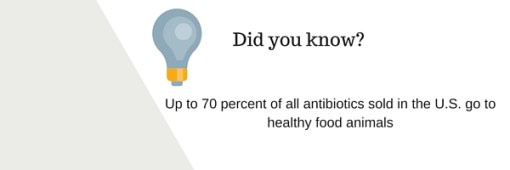
The failure of antibiotic drugs due to resistance is a very real and growing threat that, if left unchecked, could kill as many as 10 million people by 2050.

Three years after the Rana Plaza disaster in Bangladesh that killed more than 1,100 factory workers, the rights and safety of workers are in greater focus, but progress in fixing problems in the supply chain is slow, according to experts and activists.

Sanofi and its vaccines global business unit Sanofi Pasteur, announced recently that the Strategic Advisory Group of Experts on Immunization (SAGE) has issued its recommendations to the World Health Organization (WHO) on the use of its dengue vaccine.

A 7.8 magnitude earthquake hit Ecuador,  killing at least 238 people and wounding 1,550 people.  The earthquake is similar in magnitude to the 1906 San Francisco earthquake that killed over 3,000 people and destroyed over three quarters of the city.  It is the biggest earthquake to hit the country in decades.  A one point increase in magnitude is equal to ten times the size of the earthquake because the Richter scale is logarithmic.

A second earthquake hit Ecuador just days after the initial 7.8 earthquake.  This time a 6.1 magnitude earthquake hit the country and damages are estimated at $2 to $3 billion, according to the President of Ecuador.

A 7.3 magnitude earthquake hit Japan close to the city of Kumamoto, which was hit earlier by a 6.4 magnitude earthquake.  At least 42 people have died and more than 1,000 people have been injured.  These are the biggest earthquakes to hit Japan since the 9.0 magnitude earthquake in 2011.

In an effort to end polio worldwide, more than 155 countries and territories will be switching to a different polio vaccine, as the largest and fastest globally synchronized switching of a vaccine moves forward.

Technology

The Drugs for Neglected Diseases initiative will be testing an affordable hepatitis C regimen in Malaysia and Thailand.

Sisu Global Health, a Baltimore medical device maker for the developing world, received a $200,000 investment from the Abell Foundation.

Environmental Health

More than 170 countries signed the Paris Agreement climate change  accord on Friday, April 22 in New York.  It was the largest gathering of governments for a signing ceremony and it marks a strong international commitment to deliver on the promises made in Paris last December to avoid a climate disaster.  The agreement will come into force once 55 countries representing 55% of the global greenhouse gas emissions approve the agreement in their countries.

April 22 is Earth Day.  The first Earth Day was celebrated in 1970 in the US and it is organized by the Earth Day Network.  This year it coincides with the signing of the Paris agreement and because it is observed in many countries, the United Nations General Assembly designed April 22 as International Mother Earth Day in 2009.

The British Petroleum (BP) oil spill, which was the largest oil spill in US history, affected more shoreline than originally thought.  Scientists from the federal government’s National Oceanic and Atmospheric Administration and several private research companies found oil along 1,313 miles out of 5,930 miles of surveyed shoreline after the spill, an increase of 19 percent from previously published estimates.  BP agreed to pay $18.7 billion to settle all federal and state claims arising from the 2010 Deepwater Horizon oil spill, including the biggest pollution penalty in US history.

Equity & Disparities

The National Institute on Minority and Health Disparities (NIMHD) will be researching disparities in surgical outcomes for disadvantaged populations.  As much as 11-30 percent of the global burden of disease requires surgical care or anesthesia management or both.  The research program builds on the concerted efforts of the American College of Surgeons and its affiliates to improve access, quality and safe surgical care for all population groups.

A medical student describes a recent trip to North Korea to provide medical care as part of the biannual medical service trips to Pyongyang, which is led by a Korean-American neurosurgeon. The trips include surgeries, public health interventions, technical support, and local capacity building.  Ultimately, the trips are about fostering peaceful, academic, and service-driven engagement with North Korea.

Only one in four adults and one in 10 children living with HIV in West and Central Africa have access to antiretroviral (ARV) drugs, compared to almost half of HIV sufferers in Eastern and Southern Africa.  Unless ARV drugs are more readily available to those in the West and Central African regions, the UNAIDS program to help curb the HIV epidemic by 2020 will fail.

Global News Round Up is produced by the communications team

Global Health News Round Up

Politics & Policies

Mathematical disease modeling can help policymakers during their decision making process when epidemics like Ebola and Zika occur.  The Fogarty International Center recently hosted a meeting between scientists at the center and government officials from the U.S. in order to foster closer collaboration between academia and the government.

The United Nations High-Level Meeting on Ending AIDS, which will be held in New York on June 8-10, will bring out the importance of political leaders meeting ambitious goals to help end the AIDS epidemic and the need for civil society to set demands and hold government accountable for their stances and promises.

Programs

The 69th World Health Assembly (WHA) will be held in Geneva, Switzerland on May 18-26.  WHA is the decision making body of the World Health Organization (WHO) and is attended by delegations from all WHO Member States and focuses on a specific health agenda prepared by the Executive Board. The main functions of the WHA are to determine the policies of the Organization, appoint the Director-General, supervise financial policies, and review and approve the proposed programme budget.  As the world looks to 2030, and prepares to meet the challenges of an ambitious set of Sustainable Development Goals, WHO is developing three global health sector strategies to cover: HIV/AIDS, viral hepatitis, and sexually transmitted infections.  The strategies will cover the years 2016-2021 and will be finalized for consideration during the meeting.

The Consortium of Universities for Global Health (CUGH) Conference was held in San Francisco April 9-11.  It is the largest academic global health conference in the U.S. and this year’s theme was: “Bridging to a Sustainable Future for Global Health.”

Research

A new study published in The Lancet has estimated the worldwide trends in diabetes since 1980 using data from 751 studies including nearly 4.4 million adults from 146 of the 200 countries. The results show that since 1980 the age-adjusted prevalence rates of diabetes has either increased or remained unchanged in every country. The study also shows that there has been a quadrupling of the number of people with diabetes owing to population growth and an aging population. Burden of diabetes has increased faster in LMICs (low-middle income countries) than in high-income countries.

The United Nations agencies have released the latest Global Report on Urban Health. The report presents new data on the health of city-dwellers from nearly 100 countries with a special analysis on the impact of health inequities on the Millennium Development Goals achievement.

Diseases & Disasters

A strain of malaria called Plasmodium   knowlesi found in Southeast Asian Macaque     monkeys has the potential to become a major human disease.  In Borneo, Malaysia the “monkey malaria” has become the most common form of malaria diagnosed in the hospitals.  Symptoms are very similar to those found in the other five types of malaria strains and patients respond to standard malaria treatment upon early diagnosis. Current research is focusing on whether this strain of malaria can have the potential of being easily transmitted from human to human in the future because it is normally a zoonotic (animal to human transmission) disease.

The yellow fever epidemic that started in Angola in December has spread to Democratic Republic of Congo, where there have been 51 deaths. While steps are being taken to curb the epidemic, with the complete depletion of emergency stockpile of vaccines there is a global vaccine shortage.

Technology

A handful of researchers are separately working on inexpensive, paper-based diagnostic tests that accurately pinpoint the cause of a disease in minutes and could speed up treatment and prevent its spread.

Environmental Health

More than 100 countries, including the world’s top four polluters, plan on signing the Paris Agreement on climate change during a ceremony in New York at the United Nations on April 22.  Among them is India, which plans to provide electricity to every village by 2017 and every household by 2019.  Approximately 300 million Indians do not have access to electricity.  Rich countries are committed to helping developing countries with at least $200 billion per year starting in 2020 to help them meet their goals, however, there is opposition from the Third World Network, which cautions the poorer nations to reconsider signing until the financial commitment by the richer countries is fulfilled.  Carbon Brief estimates developing countries will need about $3.5 trillion by 2030 to implement their plans.

Equity & Disparities

Analysis of the data from the Global Adult Tobacco Survey conducted in 5 countries between 2011 and 2012 shows that the socially and economically disadvantaged populations are at greater risk of tobacco usage. Their results show that risk for tobacco use was considerably lower in women when compared to men and among people who were better educated. These results call for interventions that specifically focus on these vulnerable populations.

The Global Food Security Act—HR 1567—was passed by the house. The bill authorizes “a comprehensive, strategic approach for U.S. foreign assistance to developing countries to reduce poverty and hunger, achieve food security and improved nutrition, promote inclusive, sustainable agricultural-led economic growth, improve nutritional outcomes, especially for women and children and build resilience among vulnerable populations.”