Cultural Challenge of Female Genital Circumcision by M.L. Tatum

photo

A very basic definition of culture is the cumulative deposit of knowledge, experience, beliefs, values, attitudes, meanings, hierarchies, religion, notions of time, roles, spatial relations, concepts of the universe, and material objects and possessions acquired by a group of people in the course of generations through individual and group striving (Hofstede, 1997).

Undoubtedly, most humanitarians, community workers, and public health specialists would be able to supply a sufficient definition for culture. The words may vary somewhat, but the basic concept would be the same. However, how many of them truly grasp the vitality of this definition? Moreover, truly value why various practices or beliefs came to be and have continued for generations even in today’s fast-paced and shrinking world with advances in technology, increased availability of education, increases in family income, et cetera.

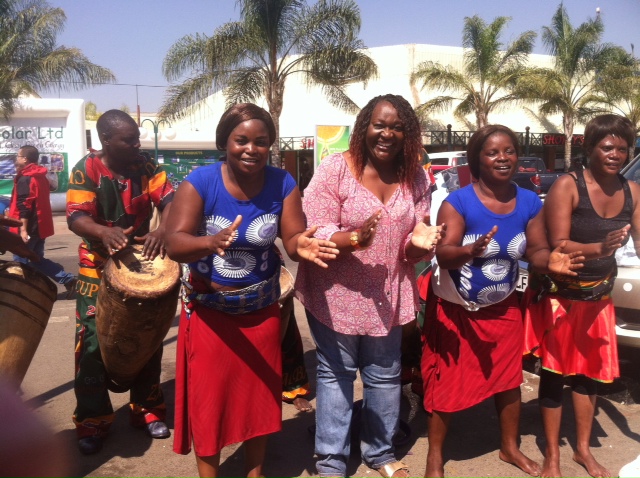
One cultural practice common in parts Africa and a part of the Middle East is the practice of female genital circumcision (FGC). FGC is believed to have been initiated in the fifth century B.C and continues today, affecting an estimated 2 million girls annually (Shah, Luay, & Furcroy, 2009).

FGC is a coming-of-age tradition for females which takes a variety of forms. It includes the partial or total removal of the external female genital, near complete sewing-up the vagina with only a small opening for urination and menstruation, introduction of corrosive substances into the vagina, and other injury for non-therapeutic reasons (WHO, 1997). Some of the biomedical consequences include infection or hemorrhaging which can lead to loss of life, bowel and bladder incontinence, painful intercourse, and complications with childbirth.

Many persons would consider this to be an atrocity and defilement of girls; as a result, there has been a great deal of global support to implement programs and various interventions to support the cessation of this act. However, termination of FGC continues to be an uphill battle.

I believe us, as professionals, sometimes, do not grasp how deeply ingrained FGC is believed to be necessary in the preparation of a young girl for womanhood. The roots of this practice are so deeply psychologically and emotionally based that families have risked breaking judicial law to continue preparing their child for womanhood. For example, Kenya’s Children’s Act of 2001 made it illegal to subject girls to any form of FGC; consequently, it is believed that practicing tribes are now performing the act secretly, to decrease the risk of being imprisoned. This theory has been supported by people being caught in the act or dealing with girls who are infected or bleeding after going through the procedure (Library of Congress, 2011). What’s more, families who have migrated to Europe and the United States bring their daughters back to their country of origin when they come of age to have this procedure performed.

The complexity of cultural beliefs and their unseen components are sometimes difficult to conceptualize, thus, making it challenging to influence health behavior change. FGC is not just a physical alteration to the body; it is a celebration among friends, mothers, grandmothers, aunts, cousins, and neighbors. It means the individual has now graduated to the next level. She is now of age and ready to progress to the next stage in life. Yes, female genital mutilation is a procedure with unfortunate consequences and it should be addressed by community workers, public health professionals, and humanitarians. Nevertheless, we have to proceed respectfully and view cultural practice in a holistic manner to be effective in implementing sustainable behavioral changes.

The Severity of Racial Health Inequities

Guest Blogger: Tiffany Gilliam


African American women are more likely to succumb to negative health outcomes than any other race or ethnicity. Health inequities are classified as the differences in health status between one disadvantaged population and a group of advantaged. Numerous social determinants of health are related to health inequities, such as:

  • Socioeconomic status
  • Education
  • Age
  • Sex
  • Race and ethnicity
  • Lack of access to quality healthcare

These factors also increase the risk of cardiovascular disease, high blood pressure, diabetes, strokes and healthcare inequity. Nearly 50,000 African American women die each year from cardiovascular diseases. There is a significant gap in life expectancy for African American women compared to white women.

Research has shown that larger populations, like those found in metropolises, correlate to wider gaps in life expectancy. The county of Philadelphia is one of the most racially diverse counties in the United States. That same county contains one of the most racially segregated cities in terms of access to quality healthcare and positive health outcomes. The Philadelphia population is estimated at 1,560,006 residents: 44.2 per cent of which are African American. A recent study conducted by the University of Pennsylvania examined the patient ratio to primary care physician (PCP) in low socioeconomic neighborhoods. The study revealed a PCP ratio of 3,000:1  in underserved areas of Philadelphia. Given this PCP a question is raised regarding the level of care provided to patients. The patient to primary care physician ratio is high due to several reasons such as shortage of primary care physicians, increased amount of Affordable Care Act-covered patients, and the high density of elderly and chronically ill in underserved areas.

In a recent conversation with Sheila, my esthetician, she stated a previous diagnosis of ovarian cancer. The physician immediately advised a treatment of chemotherapy, without any willingness to answer questions or provide additional information.

Before that treatment occurred, however, Sheila received a second opinion from another physician, which revealed that she suffered from endometriosis, not ovarian cancer. After this conversation, numerous questions were raised.  How many other African American women were misdiagnosed and treated for illnesses they did not have? Why was it so difficult for the doctor to make an accurate diagnosis? How often are doctors encouraging participatory medicine when interacting with patients?

How can public health clinicians improve negative health outcomes amongst underserved African American women populations? It is crucial that health polices are created to enforce the overall well-being of African American women of disadvantaged populations. Health policies that promote affordable education, employment opportunities, and adequate accessible health promotion programs are needed in order to improve fair and equal treatment, along with disease prevention and detection.


 Tiffany Gilliam is a first year masters student in Public Health at La Salle University, with a focus in Maternal and Child Health, Social and Behavior Sciences and Health Equity. Her academic interest includes Global Health, Reproductive and Sexual Health and Public Health Policy. For the past three years, Tiffany has worked as a Behavioral Health Worker at Northeast Treatment Center, providing coping strategies, social skills, methods to reduce impulsive behavior at school to children with Attention Hyperactivity Deficit Disorder (ADHD), Oppositional Defiant Disorder (ODD)/Conduct Disorder and Mood Disorder.

Guest Blog: Second Annual Global Social Service Workforce Alliance Symposium at the US Institute of Peace

Guest Blogger: Amanda Hirsch


The SSW symposium provided a forum for practitioners, government representatives, academics, and other experts from around the world to discuss current efforts (3) being undertaken internationally to expand the social service systems for the health and safety of children and families. The presentation was broken into three parts, each part discussing one component of the stride to strengthen the social service workforce.

  1. Planning: Dr. Jini Roby, a professor in the Department of Social Work of Brigham Young University along with Ms. Joyce Nakuta, Deputy Director of the Namibia Ministry of Gender Equality and Child Welfare spoke on the topic of planning the social service workforce. Planning the workforce, they agreed, “takes a system”- a calculated outline of each potential worker and their respective responsibility. To be most effective, social service must work on a network basis from workers on the ground (ie child health workers who raise and mentor orphaned children) to policy makers that have the capacity to encourage funding of child health worker training programs- all positions are necessary for the job to effectively get done.
  2. Robin Sakina Mama, Dean of Monmouth University School of Social Work and Ms. Zenuella Sagantha Thumbadoo, Deputy Director of National Association of Child Care Workers, South Africa discussed developing the social work force. This component of the process deals with educating and training social service workers. Dr. Robin Sakina Mamma spoke about the issue of certification and degrees. Today, many countries in need of social service work are left at a disadvantage because they lack existing institutions that provide proper degrees for social work or do not yet have a place in  the workforce for professional social workers. With that, many do not receive enough of an education in social work to be effective and many do not have a chance to practice and/or use their degrees in their home countries of need.
  3. Natia Partskhaladze of UNICEF and the Georgian Association of Social Works discussed the issue of supporting the workforce. Dr Partskhaladze spoke about worrisome recruitment and retention rates that are particularly high in developing countries, such as her home country of Georgia. The social work profession was non-existent in Georgia as of fifteen years ago. After establishing a study program and professional network for social work in the year 2000, an organization of social workers has since been formed. Centered on retention and development, the organization strives to keep social workers in the workforce while encouraging Georgians to get involved in the field of social work through the development of academic and professional programs and support groups. This organization of social workers now boasts 600 members, making Georgia an example of what committed recruitment and retention efforts can do to create or revive a supply of social workers within a country in need.

In her opening remarks Deputy of the Child Protection Section of UNICEF, Dr. Karin Heissler, noted that social work uses data and lessons learned in order to make decisions about the social service workforce and influence policy- a concept that is very familiar in public health.

Public health is entirely driven by data and “lessons learned”- both are at the base of nearly all interventions and both are necessary when public health professionals must have a voice at the community or policy levels.

The process of “planning the workforce” described is similar to the process of planning an intervention in public health. Both require assessing an issue; anticipating the immediate, medium, and long-term needs to be addressed; and creating a system with which to achieve a goal at all anticipated levels.


twitter photoAmanda Hirsch is a summer Global Health intern for APHA. She is starting her final undergraduate year at the GWU Milken Institute School of Public Health. Her passion for global health began in rural Honduras, and she is particularly interested in disparities in healthcare systems that affect the Latino community. She intends to pursue an MPH degree with a dual concentration in Community-Oriented Primary Care and Global Health. You can follow her on Twitter at @amandahirsch12.

It’s (UN) official: South Korea’s mandatory HIV testing for foreigners is racial discrimination

Note: This was cross-posted to my own blog.


South Korea has come under fire in recent years for its treatment of immigrants, migrant workers, and non-ethnic Koreans (and even their own working-class people). Last fall, Bitter Harvest, Amnesty International’s report on the country’s treatment of agricultural migrant laborers highlighted how Southeast Asian migrants went unpaid, were subjected to harsh treatment and squalid living conditions, and were either deprived of medical care or forced to pay for their own care out of pocket (from their own meager wages). In some cases, the migrants were forced to take (and pay for) an HIV test, with employers requiring a negative test result.

In the case of migrant workers, this is clearly illegal – currently, the only visa category for which the South Korean government requires an HIV test is E-2 (native-speaking English teachers from the US, Canada, the UK, Ireland, South Africa, Australia, and New Zealand). However, even this requirement – first implemented in 2007 in response to a racially-fueled moral panic – has been determined to be discriminatory and racially motivated, according to a ruling from the UN’s Committee to End all forms of Racial Discrimination (CERD) handed down last week. The ruling, issued in response to a case filed by a New Zealand woman who lost her job in 2009 after refusing to take an HIV test to renew her contract – has been long awaited by the expat ESL community in Korea. Whether the Korean government will remove the requirement remains to be seen.

The case was brought to CERD by Benjamin Wagner, an international human rights attorney who co-authored a legal paper on the issue of South Korea’s use of HIV testing as a proxy for racial discrimination with Matt van Volkenburg. The paper (PDF) provides an excellent background on the history, political and cultural climate, and xenophobic advocacy efforts that led to the implementation of the testing requirement, as well as how the requirement is a clear example of South Korea shirking its international human rights obligations:

The HIV and drug test requirements for foreign teachers were first established as emergency measures in 2007 by the Ministry of Justice
(“MOJ”), which claimed they were necessary in order to “ease the anxiety of the citizens.” Part II of this Article examines the background and
context of the implementation of these requirements and argues that they were introduced during a period of media hysteria and moral panic…a civil society group called the “Citizens’ Group for Upright English Education”…succeeded in courting public opinion against foreign English teachers by contributing to highly sensationalized media reportage replete with lurid tales of perversion, sex crimes, drug use and AIDS. This group was also successfully able to influence national policy by petitioning the government for measures against foreign teachers, including mandatory HIV and drug tests.

Part III examines the ROK’s international commitments to eliminate discrimination and stigma based on actual or presumed HIV status and
examines how and why the ROK has failed to honor these commitments.

Korea’s HIV restrictions for foreign teachers are among the most extreme form of HIV restrictions in the world…Of the forty-nine countries in the world that continue to have some form of HIV-related restrictions in place for foreigners only about six have restrictions so extreme as requiring in-country testing for foreign workers that must be repeated on a regular basis, and nowhere are teachers subject to such restrictions. Indeed, the ROK’s extreme position toward its foreign teacher population has attracted the attention of UN Secretary-General Ban Ki-moon who has urged the ROK to eliminate its HIV restrictions on foreign teachers.

Obviously, any foreigner who tests positive for HIV is immediately detained and deported; in 2008, the Korean CDC reported that it had deported 521 out of 647 HIV-positive foreigners. Non-nationals of Korean ethnicity have been able to successfully challenge such deportations, but the Korean judicial system explicitly differentiates between the legal rights of citizens versus foreign nationals.

Interestingly, South Korea has given CERD “the same authority as domestic law” regarding foreign nationals; however, this means next to nothing as Wagner explained in a different piece last week:

Professor Kyong-Whan Ahn…remarked that the constitutional analysis used by Korean courts to determine whether an incidence of discrimination has occurred is relatively underdeveloped. The method relied upon by courts is the “reasonableness test”. But, Ahn complains, decisions are all too often “a foregone conclusion” with little analysis or scrutiny.

[T]he status of the CERD is unique in that “it has the same authority of domestic law and does not necessitate additional legislation,” as the Republic of Korea has made clear to the Committee on several occasions. Nevertheless, the Committee has responded, “although the Convention forms part of the domestic law and is directly applicable in the courts of [South Korea], there are no court decisions which contain references to or confirm the direct applicability of its provisions.” The Committee has pointed out to the government that the situation may be the result of “a lack of awareness of the availability of legal remedies” and has recommended “information campaigns and education programmes on the Convention and its provisions.” Unfortunately, however, the treaty remains relatively unknown in Korea and neither the government nor the courts have done enough to change that.

van Volkenburg, who has been covering this issue (and its origins) since it all began in 2005 at the long-running Korean expat blog Gusts of Popular Feeling, has a great summary of the ruling and its implications (as well as the best collection of links to the news coverage of the ruling):

The summary makes public the justification the UMOE offered for the tests – something that many people taking these tests have known for years, but never admitted by the government:
[D]uring arbitration proceedings, L.G.’s employers, the Ulsan Metropolitan Office of Education (UMOE), said that HIV/AIDS tests were viewed as a means to check the values and morality of foreign English teachers.

One of the Committee’s recommendations isn’t very surprising:

The Committee recommends that the State party grant the petitioner adequate compensation for the moral and material damages caused by the above-mentioned violations of the Convention, including compensation for the lost wages during the one year she was prevented from working.

It continues with much more sweeping recommendations, however:

It also recommends that the State Party takes the appropriate means to review regulations and policies enacted at the State or local level related to employment of foreigners and abolish, both in law and practice, any piece of legislation, regulation, policy or measure which has the effect of creating or perpetuating racial discrimination. The Committee recommends the State party to counter any manifestations of xenophobia, through stereotyping or stigmatizing, of foreigners by public officials, the media and the public at large, including, as appropriate, public campaigns, official statements and codes of conduct for politicians and the media. The State party is also requested to give wide publicity to the Committee’s Opinion, including among prosecutors and judicial bodies, and to translate it into the official language of the State party.

This doesn’t just refer to English teachers, but to regulations for all foreign workers. And as I’ve covered here, the references to the conduct of the media and politicians is very pertinent, considering the ‘Citizens Group for Upright English Education’ (also known as Anti English Spectrum) worked closely with the media and had access to politicians when pushing for the creation of the HIV testing policy (among others) in the first place.

It will be interesting to see how the Korean government will respond to the CERD’s ruling – whether it will in fact change the law in accordance with its treaty obligations. Based on South Korea’s history of human rights protections, it does not look promising. Even when human rights principles are codified into law, employers (and often police officers) who violate workers’ legal rights do so with widespread impunity and are rarely prosecuted or held accountable – as demonstrated by the cases of the migrant workers in Bitter Harvest and the workers enslaved on salt farms on the islands of Jeollanam-do. The admission that HIV tests were seen as a way to “check the values and morality” of visa applicants is a slap in the face – doubly so considering that only foreigners are required to have “upright values” in order to get jobs.

Nonetheless, the CERD ruling is a major victory – a solid foundation on which to pressure the South Korean government, which has demonstrated that it wants to be taken seriously in the international community.

#Polio eradication in @CDCMMWR: Are we finally on the cusp of that elusive dream?

Note: This was cross-posted to my own blog.


I came across a very encouraging article in last week’s MMWR (the CDC’s Morbidity and Mortality Weekly Report) this morning about polio eradication. After several reappearances in 2013, cases are down again this year and, if things continue to go well, the end may be in sight:

Four of six WHO regions have been certified as free of indigenous WPV, and endemic transmission of WPV continued in only three countries in 2014. In 2013, the global polio eradication effort suffered setbacks with outbreaks in the Horn of Africa, Central Africa, and the Middle East; however, significant progress was made in 2014 in response to all three outbreaks. Nonetheless, the affected regions remain vulnerable to WPV re-importation from endemic areas and to low-level, undetected WPV circulation. Continued response activities are needed in these regions to further strengthen AFP surveillance and eliminate immunity gaps through high-quality SIAs and strong routine immunization programs.

Progress in Nigeria since 2012 has brought the goal of interrupting the last known chains of indigenous WPV transmission in Africa within reach. Elimination of all poliovirus transmission in Nigeria in the near term is feasible, through intensified efforts to 1) interrupt cVDPV2 transmission, 2) strengthen routine immunization services, and 3) increase access to children in insecure areas. Similar efforts should be implemented in all countries in Africa, where 9 months have passed without a reported WPV case, and 6 months have passed since the last reported cVDPV2 case.

"Number
Number of cases of wild poliovirus type 1 in countries with recent polio outbreaks, by territory* — January 1, 2013–March 30, 2015

*Central Africa (Cameroon and Equatorial Guinea), Horn of Africa (Ethiopia and Somalia), and Middle East (Iraq and Syria).

The eradication push has suffered major blows in the last two years. In 2013, after six years of being polio-free, a major outbreak in Somalia contributed more polio cases to the year’s tally than the rest of the world combined; meanwhile, the virus made its way back into Syria that same fall after a 14-year hiatus. Luckily, extraordinary efforts in the midst of conflict zones on the part of health workers were able to beat the virus back to the heart of the fight – the final three countries in which it remains endemic.

Number of cases of wild poliovirus type 1 among countries with endemic poliovirus transmission, by country — January 1, 2013–March 30, 2015

Most (86%) WPV cases in Afghanistan in 2014 resulted from importation from Pakistan; however, the detection of orphan viruses highlights the need to strengthen the quality of both polio vaccination and AFP surveillance (10). Efforts are also needed to increase population immunity by intensifying routine polio immunization activities to ensure high coverage among infants with at least 3 OPV doses.

Recent challenges to the secure operation and public acceptance of the polio eradication program in Pakistan are unprecedented (10). Although poliovirus transmission has been concentrated primarily in the FATA region of northwest Pakistan, transmission has continued in the greater Karachi area, and WPV cases have been reported from all major Pakistan provinces. Successful efforts to enhance security to protect health workers and increase public demand for vaccination are urgently needed.

The recent gains in control and elimination of poliovirus transmission globally must be maintained and built upon through innovative strategies to access populations during SIAs in areas with complex security and political challenges, improve AFP surveillance, and strengthen routine immunization. With the progress achieved in 2014 to interrupt endemic WPV transmission in Nigeria and polio outbreaks in Africa and the Middle East, permanent interruption of global poliovirus transmission appears possible in the near future, provided that similar progress can be made in Afghanistan and Pakistan; progress there would also reduce the risk for future importation-related outbreaks in polio-free countries.

While there have been several cases of circulating vaccine-derived poliovirus in northern Nigeria, the fact that no wild poliovirus has been seen in the country since last July is extremely encouraging – eradication in Africa may be in sight. The final stronghold will be Pakistan and Afghanistan (primarily its regions that border Pakistan) – where, as the global health community has discussed ad nauseum, militants take advantage of the lack of public trust in eradication owing to bad intelligence schemes, among other things.

Obviously, it is still too early to tell. Gaps in surveillance mean incomplete data; there are most likely more cases that have not been reported. Furthermore, ongoing conflict (not to mention the recent Ebola outbreak) has left the health systems of many countries devastated, so vulnerabilities are everywhere. Nevertheless, with continued dedication (and a little luck), we may very well get there. Here’s hoping.