
UK pardons homosexuals: Too little, too late?

The British Parliament announced last week that it would posthumously pardon individuals convicted of homosexual offences that are now deemed legal.  Known throughout history as sodomy, buggery, or the abominable crime, Britain punished individuals who engaged in sexual acts not key in reproduction – or involving an animal – by imprisonment or death.  Homosexual acts in England and Wales were decriminalized between consenting adults over 21 in 1967, as well as in Scotland and Northern Ireland in 1980 and 1982, respectively .

Homosexuality, as well as a wide spectrum of other sexual and gender expressions, have been a part of countless cultures for thousands of years. Several African languages  have pre-colonial terms to describe homosexual activities and relationships. Even prehistoric rock paintings  in Zimbabwe depict two men engaging in anal sex. In China, same-sex relationships were tolerated and prevalent among scholars and those of a higher class to denote power and wealth .  Known as “two-spirit” or “berdache,” native people of the Americas were intersex, androgynous, and homosexual individuals who were accepted as part of society.  In some instances, these individuals were married, served as caretakers to family members, and held rank as spiritual leaders and teachers . In some cultures, homosexual relationships were viewed as a mechanism to pass power between generations.

This inclusive worldview, expressed in various ways around the globe, changed dramatically when Europeans set foot on distant shores.  Along with Christianity and communicable diseases, British imperialism left homophobia in its wake (only 22 countries have not at one time in their history been under the sovereignty of the British Empire ).  Compared to other European colonizers, former British colonies are significantly more likely to have current laws against homosexual activities .  A report found that 70% of countries that were once in British possession still criminalize homosexual acts, even when controlling for such factors as religiosity, modernity, and wealth.

Homophobia has led many countries to severely persecute its citizens who engage in same-sex sexual activity.  In the Gambia, acts of homosexuality and HIV infection can be grounds for life imprisonment .  Nigeria’s anti-gay laws make promotion of homosexuality a punishable offense with a sentence of 10 years’ imprisonment.  This law is also used to punish public health workers and people who fail to inform on acquaintances and neighbors.

uganda-anti-gay

In Jamaica, mounting violence against homosexuals and LGBT organizations have led to the gruesome murders of activists.  In the United States, anti-sodomy laws have been used to routinely deny civil liberties such as the right to marry, raise children, and job security.  Today, in 9 U.S. states, discussion of homosexuality in schools is explicitly banned in sex education unless described as a route for sexually transmitted infections.

In addition to perpetuating human rights violations and encouraging discrimination and violence, deeply entrenched homophobia impedes HIV prevention efforts, further marginalizing one of the groups at highest risk for infection:  MSM, or men who have sex with men.

The term “MSM” has been used in public health literature to describe this sexual minority in the hopes of reducing stigma related to HIV infection and men who engage in homosexual behaviors.

Men who have sex with men (MSM) is a term introduced in 1992 to attempt to capture a range of male–male sexual behaviours and avoid characterisation of the men engaging in these behaviours by sexual orientation (homosexual, bisexual, heterosexual, or gay) or gender identity (male, female, transgender, queer).1 MSM includes gay-identified men, heterosexually identified men who have sex with men, bisexual men, male sex workers who can have any orientation, men engaging in these behaviours in all male settings, such as prisons, and the rich and wide array of traditional identities and terms for these men across cultures and subcultures .

In the United States, MSM, along with men who identify as gay or bisexual, account for 55% of those living with HIV, though they only represent 2% of the total population.  Among the age group 13-24, men who have sex with men, make up nearly the total (92%) of new HIV infections.
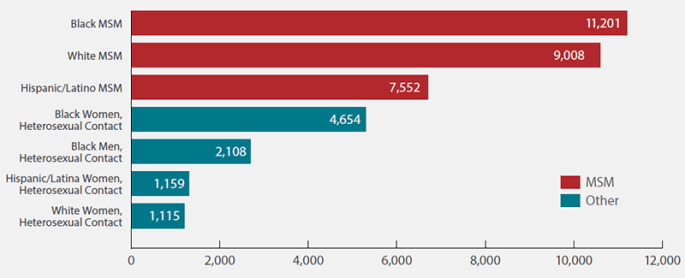
usa-msm

A six-part series published in the Lancet finds that prevalence of HIV in MSM is growing around the globe, though data concerning this population is lacking across the board.  A joint report by WHO, UNAIDS, UNFPA, and UNDP  found that MSM sexual health needs in Eastern Europe and Central Asia are summarily ignored:

The current response to HIV among MSM communities and transgender people in the region is largely failing to provide a basis for Universal Access (UA) among this key population. The issue is either essentially ignored due to lack of sufficient data and analysis, or marginalized with little resource allocation within national HIV programmes. The list of barriers to prevention, care, treatment and support programmes includes, but is not limited to, human rights violations, stigma and discrimination, lack of effective national policies and sufficient government support, inadequate funding, lack of sustainability and continuity of project activities, as well as the lack of biological and behavioral research in the region to better “know your epidemic”.

An article published in the Psychology and AIDS Exchange Newsletter reports that discrimination, stress, and homophobia experienced by homosexuals is a driving force in behaviors that contribute to HIV transmission.  Homophobia has otherwise been implicated with risk-seeking behaviors such as substance abuse, sexual promiscuity, self-harm, and suicide.  Often rejected by family and community, MSM have trouble establishing monogamous relationships, which could decrease transmission .

In countries where homosexual relationships are punishable by imprisonment or even death, MSM are even harder to reach.

Punitive legal and social environments hinder the ability of gay men and other men who have sex with men to organize and participate meaningfully in the design and implementation of programmes to provide HIV-related services. This poses a concern for the HIV response—studies have demonstrated that the involvement of gay men and other men who have sex with men and transgender people in peer outreach and other community-level behavioural interventions can reduce HIV risk behaviours by up to 25%.

As the UK prepares to expunge the records of individuals, many of whom are deceased, is it perhaps a better use of time to address this issue impacting the living?


Global News Round Up

Politics & Policies

Election campaigns are light on science. But once a new president is in office, technical issues have a way of demanding attention.

Hillary Clinton affirmed women’s right to abortion while Donald said he would appoint judges to the Supreme Court who oppose it.

Global Health Council (GHC), announced today that it has named Loyce Pace, a leader who has worked on the ground in more than 10 countries delivering health programs and mobilizing advocates, as the organization’s new Executive Director.

Two weeks after congress allocated $1.1 billion in supplemental funding to fight Zika, the Department of Health and Human Services (HHS) announced today during a teleconference how the pie of Zika funding will be sliced among major players.

Who will be the World Health Organization’s next director-general? In September, the U.N. agency announced the six nominees, four men and two women.

The next WHO Director-General faces major challenges: operational responsibilities for epidemic response, universal health coverage (UHC), and the rise of non-communicable diseases.

Programs

Purdue’s chapter of Timmy Global Health and the Purdue Student Engineering Council are teaming up to host an event to contribute to Quito, Ecuador, where Timmy works with people in need of medical assistance.

Research

The Zika virus outbreak in the Americas has caused global concern. To help accelerate this fight against Zika, we launched the OpenZika project.

This is the first study to evaluate the efficacy and safety of switching to E/C/F/TAF in HIV/HBV-coinfected adults. One year after switching from predominantly TDF-based regimens to E/C/F/TAF, participants maintained high rates of HIV and HBV suppression, had improved renal function, and reduced biomarkers of bone turnover, consistent with other E/C/F/TAF studies.

Accumulating evidences have assigned a central role to parasite-derived proteins in immunomodulation.  Here, we report on the proteomic identification and characterization of immunomodulatory excretory-secretory (ES) products from the metacestode larva (tetrathyridium) of the tapeworm Mesocestoides corti (syn. M. vogae).

In this study, SIV-infected rhesus macaques were treated with an antiretroviral drug for 90 days and in addition they were treated with a specific antibody for 23 weeks. After finishing this therapy, all macaques showed sustained control of the infection as almost no SI viruses could be detected in the blood and gastro-intestinal tissues.

Diseases & Disasters

TV crew filmed as a 15th century church spectacularly collapsed in Italy yesterday as the country was rocked by a string of powerful earthquakes.

Across the globe, poor diets now pose a greater collective health risk than unsafe sex, alcohol, drugs and tobacco use combined.

Briefing the United Nations General Assembly on the humanitarian situation in Haiti following the devastation caused by Hurricane Matthew, Secretary-General Ban Ki-moon underlined the urgency of additional resources to help respond to the dire needs on the island.

Hurricane Matthew, which ripped through Haiti 13 days ago, has left more than 700,000 people in an “extremely difficult situation.” United Nations Special Adviser David Nabarro said today, and while steady progress is being made, led by Haitians themselves, the response must be accelerated as the needs are still great, frustrations are high, and access to hard-hit areas remains tough.

Using a recently developed technology for analyzing DNA, the scientists found dozens of genes and two major biological pathways that are likely involved in the development of the disorder but had not been uncovered in previous genetic studies of schizophrenia.

Household air pollution created by using wood, coal and other solid fuels for cooking and heating homes is a leading cause of respiratory and cardiovascular diseases worldwide.

Scientists in India will extract DNA from more than 20 skeletons of suspected victims of devastating floods in 2013 in the northern state of Uttarak.

Tuberculosis is killing more people than thought, yet governments are not doing enough to bring the debilitating infectious disease under control, the World Health Organisation has said.

Technology

The World Health Organization, drugmakers and humanitarian groups are hammering out details of new vaccine supply system aimed at getting vital shots to vulnerable people in crises such as wars or natural disasters.

A register of patients in England with breast and other cosmetic implants has been set up to allow them to be traced in the event of any safety concerns.

Environmental Health

The United Nations World Health Organization (WHO) in partnership with the Coalition for Climate and Clean Air (CCAC) and the Government of Norway has launched a global awareness campaign in the dangers of air pollution – especially ‘invisible killers’ such as black carbon, ground-level ozone and methane – for the health of individuals and the planet.

Up to 122 million more people worldwide could be living in extreme poverty by 2030 as a result of climate change and its impacts on small-scale farmers’ incomes, a major UN report warned on Monday.

Equity & Disparities

Girls in developing countries are less likely than boys to complete schooling because of forced marriage, child labour and female genital mutulation, risking the opportunities presented by their largely young populations, said the study, launched in London.

Maternal, Neonatal & Children’s Health

The humanitarian crisis in South Sudan is contributing to severe health service delivery challenges: It impedes access to already highly vulnerable populations, slows delivery of medical supplies and drugs, and exacerbates shortages of health workers.

The “Midwives voices, midwives realities report 2016″ documents the voices and realities of 2470 midwifery personnel in 93 countries and describes, from their perspective, the barriers they experience to providing quality, respectful care for women, newborns and their families.

Bangladesh has a reasonably good network of health care facilities – most recently expanding the network of community based clinics. But it still suffers from a shortage and distribution of qualified health workers.

It was amazing and very educative as a jam-packed Parliament listened to children, especially girls conducting parliamentary session right in the Well of the Parliament of Sierra Leone as ‘Honourable Members of Parliament’ in commemoration of the International Day of the Girl Child.

Women aged 25 to 35 are the most likely group in Northern Ireland and Republic of Ireland to access medication online to end a pregnancy, a study suggests.

One girl under the age 15 is married every seven seconds, according to a new report by Save the Children.

The global news round up was prepared by the communications team.

A New Context for Development Effectiveness

an-age-of-choice-for-development-finance_evidence-from-country-case-studies

For those of you interested in the past, present, and future of international aid and development, this blog post will provide you with an introduction to frameworks and partnerships that have evolved over the past few decades. It will also highlight an organization that caught my interest when I stumbled upon its “Aid in Danger: the Perils and Promise of Humanitarianism” series.

The Overseas Development Institute (ODI) is an independent think tank located in the United Kingdom (UK). For more than fifty years, the institute’s main focus has been on informing policy and practice that result in poverty reduction and sustainability in international development as well as humanitarian efforts. ODI hosted its 2016 Center for Aide and Public Expenditure (CAPE) conference from October 18th-19th, with the goal of updating the Global Partnership for Effective Development Co-operation’s development effectiveness agenda to reflect a new context that has emerged over the past 10 years. This context involves additional evidence that has been gathered on development effectiveness implementation, a commitment to the Sustainable Development Goals (SDGs), positive changes in donor-recipient relationships, and an increased number of finance providers. Although developing countries now have a broader selection of finance providers to assist them, including actors in the private sector, these new players may not be familiar with the Monterrey Consensus  or High Level Fora on Aid Effectiveness that were developed to cast vision and establish commitment to development co-operation and improvements in the quality of aid delivery. As a result, if these new finance providers do not adhere to or are not aware of key discussions that have taken place to improve overall aid and development initiatives, then it makes it difficult to evaluate their impact.

The Organisation for Economic Co-opertation and Development works with key players such as governments and multilateral organizations to “improve the quality of development co-operation.” Despite international development effectiveness and co-operation partnerships being greatly shaped by the High Level Fora on Aid Effectiveness, time and budget constraints, unattainable goals, and mixed political motivations have prevented lasting change from taking place. More specifically, traditional development effectiveness principles have been based on the Paris Declaration of Aid Effectiveness  and the Busan Partnership for Effective Development. The common set of principles previously defined as having contributed to improved quality of aid was reinforced by the Busan Partnership, which went a step further and developed the following action points for implementation:

  • Use results frameworks designed with the needs of the partner country in mind as a common tool, and using country-led coordination arrangements.
  • Untie aid to the maximum extent possible and – in 2012 – review plans to achieve this.
  • Use country public financial management systems as the default option for development financing, and support the strengthening of these systems where necessary.
  • Strengthen transparency and approve a common standard for the electronic publication of data on development co-operation, to be fully implemented by 2015
  • In 2012, establish common principles to prevent the proliferation of multilateral organisation and global programmes and funds, also in 2012 establish common principles to tackle the issue of countries that receive insufficient assistance (aid orphans).
  • By 2013, provide recipient countries with regular, timely, indicative three-to-five-year forward expenditure plans.
  • Increase support given to parliaments and local governments in carrying out their functions. Foster an environment for civil society organisations as independent development actors.

More recently, ODI research has shown that developing countries are more likely to pick and choose which effectiveness principles to implement and that there are priorities outside of effectiveness principles that also influence countries.

Overall, the conference focused on two main questions:
1) How does the private sector play a role in development and is it effective?
2) What is the role of external support as the SDGs focus on development for all people everywhere and policies that “leave no one behind?”

Stay tuned for more….

Health Literacy in the Viral Media Age

October is Health Literacy Month. And even though we only have a few days left in the month, I thought squeezing in a communications related post would be a fitting first blog post for the newest addition to the Communications Committee.

According to the World Health Organization, health literacy is defined as “the cognitive and social skills which determine the motivation and ability of individuals to gain access to, understand and use information in ways which promote and maintain good health. Health literacy means more than being able to read pamphlets and successfully make appointments. By improving people’s access to health information and their capacity to use it effectively, health literacy is critical to empowerment.”

With health literacy playing a critical role in empowering individuals to make positive health choices, it should come as no surprise then that low levels of health literacy are associated with poor health outcomes. As such, it is our responsibility as public health professionals to promote health literacy by ensuring that the health information we disseminate is accurate, accessible, and actionable. In many ways we are already experts at this, from presenting information either orally or through pictures in low literacy settings to adapting messaging to the local culture. We understand the value of delivering contextually relevant health information.

Although many individuals still rely on health professionals for trusted health information, we cannot ignore the influence of communities on health literacy and in particular the rising role of digital communities. Digital communities have helped individuals with similar health concerns share information and support each other and have enabled the growth of viral media campaigns that raise awareness on health topics and reinforce key health messages. And while digital communities have certainly helped advance health literacy by making information more readily accessible, they have also had a detrimental effect.

In the viral media age, inaccurate health information can easily diffuse to a large number of people at lightning speed in digital communities. On top of that, social networks yield incredible power in influencing health behaviors even while taking into account individual characteristics such as income and education. This combination of factors should raise some alarms.

A recent article in The Atlantic discusses the challenges created by the spread of health misinformation and criticism in digital communities during epidemics. From the 2014 measles scare in Vietnam to SARS in China example after example demonstrates the potential harms of digital communities. Whether through exacerbating individual fears or creating mistrust between health professionals and the public, digital communities can negatively impact health literacy.

Although the author notes this is most evident in the Asia Pacific region, where the confluence of Internet users, smartphones, and infectious diseases has created the perfect storm, the problem of health misinformation among digital communities isn’t limited to epidemics or geography. The problem of health misinformation exists anywhere the Internet does. It is a problem that isn’t going away anytime soon and will only continue to grow. In 2015, over 3 billion people worldwide were using the Internet compared to 738 million in 2000. Of those users, 2 billion live in developing countries compared to only 100 million in 2000.

Projects focused on increasing global Internet access, like Facebook’s Internet.org which has brought free basic mobile Internet service to over 25 million people from India to Zambia, are gaining traction. In addition, data and mobile phones are becoming more affordable. These factors are driving the ubiquity of the Internet. Thus, it is imperative that we think about ways to limit the spread of health misinformation by staying ahead of the conversation in the days, months, and years ahead of us.

As we think about how to accomplish this, here are a few ideas to start with:

Check out the “Section Connection” – the IH Section’s pilot e-newsletter!

We are excited to present the Section Connection, the IH Section’s new quarterly e-newsletter! This one-year e-newsletter pilot was conceptualized and compiled by our Global Health Connections Committee Chair, Theresa Majeski, according to feedback from a survey of the Section’s students and early career professionals conducted earlier this year. The newsletter features an introduction to select members of the Section leadership, information on how to get connected within APHA, tips on how to get the most out of the upcoming Annual Meeting in Denver, and a special dedication to one of our most dedicated Section members, Miriam Labbok, who passed away this year.

Many longtime Section members remember our original Section newsletter, which was compiled each year by a designated editor and disseminated by APHA staff. While APHA has retired this version of the newsletter, we have collected and archived previous editions on APHA Connect, going all the way back to the year 2000. You can access those in our Section’s APHA Connect documents library. (Note: You will need to log in with your APHA membership credentials.)