@USAID Video: Just Bring a Chair

In today’s video, USAID shares a message of hope amidst the horrors experienced by 2.4 million Syrian refugee children.  Along with displacement from home, Syrian children experience an interruption in education from which they might never recover.  Ms. Maha, a principal for a girls’ school in Jordan, answered the desperate pleas of Syrian parents as she welcomes us and their children into her school with the sentiment: “Just Bring a Chair.”

Video Description:

“In Jordan, where the Syrian crisis has led to around 635,000 additional people taxing already overburdened schools, hospitals and social services, some people still find reasons to open their arms and make it work. Ms. Maha is one of those people.”

Without access to education, the future is bleak for many of the youngest Syrian refugees.  A recent report by Human Rights’ Watch found that nearly one-third of refugees in Jordan are between the ages of 5 and 17.  Of these children, 56% are not enrolled in school.  Lebanon is also struggling to accommodate the inundation of refugee students.  Soon, school-aged Syrian children could outnumber their Lebanese peers.

Unfortunately, the problems do not end once children are in school.  A report by UNICEF highlights the unique educational concerns of refugee children, citing violence while traveling to and from school, abusive teachers and classmates, and separation anxiety while at school.  The same report finds that even when the school is located within the refugee camp, 75% of children do not attend.

So what’s the solution?  I think an inclusive environment like Ms. Maha creates in her school is key.  Money for teachers, educational materials, and space are paramount for educating this generation of Syrian youth.  2015 saw fundraising efforts by members of the UN fall short of the $8.4 billion goal.  Will 2016 see more Syrian children returning to classrooms?

Read Ms. Maha’s story here.

CBPHC Pre-Conference Workshop and Call for Student Abstracts

Are you interested in the call for “Health for All”? Don’t miss out on an exciting conference, and register for our special ONE Day Community Based Primary Health Care (CBPHC) Pre-conference workshop on  Saturday October 29th from 8AM to 5 PM in Denver, Colorado Convention Center, Room 401-403.

Workshop leaders include internationally renowned practioners in global health including Dr. Susan Rifkin, Dr. Henry Perry, Thomas Davis, and Dr. Gretchen Bergren, who have all worked internationally to reduce health inequities.

Register here. The cost is only $35 for the whole day, and $25 students.

Agenda:

  1. Community empowerment and health: Keynote Speaker, Dr. Susan Rifkin
  2. Evidence for CBPHC and Improved Health, Dr. Henry Perry
  3. Breakout sessions on:
    • Measurement of community empowerment
    • CHWs and the role of community empowerment
    • Empowering fathers and the social determinants of health
    • Tools for empowerment: care groups, gender, and interpersonal psychotherapy for groups
  4. Poster session: Student abstracts
  5. Training of trainers session on positive deviance hearth: a strengths-based approach to reducing malnutrition in low resource settings: Dr. Gretchen Berggren

Pre-conference workshop sponsored by the APHA CBPHC Working Group, International Health Section.
Contact: CBPHC working group (cbphc2016@gmail.com)

Visit our website for all the latest information on CBPHC, the conference, and the call for student abstracts below.


Call for Student Abstracts in Community Based Primary Health Care

Does your research or program implementation include community based participatory methods?

Want to receive feedback from / network with world renowned health care professionals who apply groundbreaking community-based participatory methods on the ground?

You could be eligible to share your research at the 2016 APHA Pre-Conference Community Based Primary Health Care (CBPHC) Workshop!

To learn more, check out our website!

Global News Round Up

Politics & Policies

Humanitarians across the world risk their lives in the line of duty every day. They negotiate access with militias to deliver food into besieged cities, they vaccinate children in war zones, and they perform surgeries in bombed out hospitals. With over 65 million people displaced across the world, never more have we needed committed humanitarians to respond to so many complex crises. Yet, however skilled or brave humanitarians may be, their efforts are wasted without the real political leadership to resolve conflicts and share the global responsibility for hosting people fleeing conflict.

A non-profit organization is proving that new drugs don’t have to cost a fortune. Can its model work more broadly?

Mike Bloomberg appointed by WHO as a global health ambassador to help countries tackle NCDs. The former NYC mayor has a strong proven track record in using data to drive policies.

Programs

The University of California Global Health Institute announce funding for two multicampus Centers of Expertise.  The system wide institute will create a new Center of Expertise on Planetary Health and has renewed funding for the Center of Expertise on Women’s Health, Gender & Empowerment.

Kenya has pledged approximately Sh500 million ($5 million) donation to the Global Fund to fight HIV, TB, and Malaria.  President Uhuru Kenyatta disclosed the contribution at a side event at the Sixth Tokyo International Conference on African Development (TICAD) in Nairobi. He said it was time for all global health partners to work together to fight diseases and to accelerate the attainment of universal health coverage in Africa.

Donald Ainslie Henderson, the charismatic public health official who led the World Health Organization’s successful effort to eradicate smallpox and later turned his attention to bioterrorism, died Friday at Gilchrist Hospice in Towson of complications after a hip fracture. He was 87.

Cultural barriers gave way to goals and slide-tackles in Uganda this summer as part of a public health immersion camp led by USC students and alumni.

Every day, humanitarian aid workers stand on the front lines of war and disaster, braving tremendous dangers and difficulties to deliver assistance to those who need it most. World Humanitarian Day (WHD), which takes place every year on August 19, recognizes the aid workers who risk their lives in humanitarian service, and mobilizes people to advocate for humanitarian action.

Research

Fluoridation with sodium fluoride could be a contributing factor to diabetes rates in the US, as the chemical is a known preservative of blood glucose.

The US  Army Medical Research Institute of Infectious Diseases has found a mosquito virus that’s broken up into pieces. And the mosquito needs to catch several of the pieces to get an infection.

In recent years, researchers in China pay more attention to the negative impacts of smoking on working memory.  A longitudinal study for eight long-term smokers found the decline of their memory, cognitive function, and attention ability was closely related to smoking.

Variation in crytococcal antigenemia prevalence found in Nigeria should be taken into consideration as plans are made to integrate routine screening into clinical care for HIV-infected patients.

Diseases & Disasters

Italy on Tuesday held a poignantly symbolic funeral for victims of last week’s earthquake amid the ruins of Amatrice, the small town that bore the brunt of the disaster.

A devastating 6.2 earthquake in central Italy on August 24 that killed more than 290 people was the country’s largest since a magnitude-6.3 earthquake in 2009 that hit the town of L’Aquila, about 40 kilometres away. That event killed 308 people, destroyed tens of thousands of homes and a university. Controversially, it also caused six scientists to be put on trial for manslaughter.  Of the 292 people known to have died in last Wednesday’s earthquake, 242 were from Amatrice or nearby Accumoli.

So far, it’s looking like predictions from computer models were pretty much spot on: Zika wasn’t a big threat in Rio de Janeiro during the Olympic Games.

The ongoing violence in Syria has taken a physical and mental toll on many, including one 9-year-old boy, who began to look up “ways to commit suicide” online, according to Dr. Hussam Jefee-Bahloul, who assisted with his care.

India may have  a million more tuberculosis (TB) patients than previously estimated.  A million more tuberculosis patients than previously estimated.  A new study indicated that there are 2.2 million tuberculosis patients being treated in the private sector alone.

Wars and uprisings in the Middle East have wiped five years off local life expectancy due to high casualties and drops in healthcare standards, a study warns.

The United Nations World Health Organization (WHO) is ramping up its response in north-eastern Nigeria, where initial assessments have revealed urgent health problems among populations in areas formerly held by Boko Haram insurgents. “Protracted conflict situations, such as seen in northern Nigeria – and the surrounding Lake Chad basin countries of Cameroon, Chad and Niger – are among the greatest threats to health, globally,” Peter Salama, Executive Director of WHO’s Health Emergencies Programme said in a news release today.

A shortage of HIV testing could undermine global efforts to diagnose and treat people with the infection,  warn experts from the World Health Organization.

The Zika virus can be transmitted by a female mosquito to her eggs, eventually infecting her adult daughters, researchers reported on Monday.

Mosquitoes have begun spreading the Zika virus in a second part of Miami — the popular tourist destination of Miami Beach — Florida officials announced Friday.

A shocked Syrian boy pictured Ssitting in an ambulance covered in blood and dust after an airstrike has become a symbol of civilian suffering in Aleppo, drawing worldwide attention.

Although diseases of the heart and blood vessels (cardiovascular disease, CVD) kill more people worldwide than anything else, with 17.3 million deaths globally, cancer has now overtaken CVD as the main cause of death in 12 European countries.

Health is an integral part of India’s growth and it is hence, imperative for the central and state governments to to prioritise non communicable diseases (NCDs) and work in a more coordinated manner,” said V Selvaraju, secretary, Indian Health Economics and Policy Association (IHEPA) on Wednesday.

The world has watched the dramatic economic growth and industrialization of China unfold in awe. But, according to a new Harvard study, these changes are also fueling the rise of China’s deadliest killer:  cardiovascular disease.  

For years following the events of September 11, 2001 in lower Manhattan, the disaster and its aftermath may have affected women and their babies who were not even conceived yet, according to a new study.

Technology

It’s been just over a year since 9-year-old Zion Harvey received a double-hand transplant, and he said Tuesday what he really wants to do is play football.

Penicillin, the world’s first antibiotic, works by targeting certain proteins—appropriately named penicillin-binding proteins (PBPs)—that play a critical role in building and maintaining the bacterial cell wall. Now, scientists at Harvard Medical School have identified another class of proteins which play a similar role and could be a target for the next generation of antibiotics.

Environmental Health

The Kathmandu Valley (Nepal) holds the dubious distinction of being the third most air-polluted city in the world. Seven years after the government had stopped monitoring the air quality in the capital city, a measuring station is now monitoring air quality.

South Jakarta District Court found National Sago Prima guilty of burning the forests in Riau in 2014. This subsidiary group of Sampoerna Agro has been fined Rp2 billion.

Cheap paper surgical masks do well in blocking dust particles, almost as well as the N95 masks that the researchers used for comparison in this study.

Native American Tribes are taking on Washington State’s controversial plan that includes new water quality standards. This new plan threatens the traditional fishing practices that have helped reestablish the tribe.

Equity & Disparities

USC scientists have been tracking 73 low income teens in a five year study to understand how culture, family, exposure to violence and other factors shape the human mind. Their preliminary results based on MRI scans show that children who grow up with higher levels of  violence have weaker real time neural connections in areas of the brain involved in awareness, ethical and emotional processing.

A recent study in JAMA shows that US spending on prescription drugs far exceeds that in other countries. In 2013, US spent $858 per capita on prescription medication while the average per capita spending in 19 countries was $400. Interestingly, the authors suggest that there is no evidence of association between research, drug development and high prices. But instead it seems to be based on what the market will bear.

Consumption of fruits and vegetables is low worldwide. Low affordability of fruits and vegetables, particularly in low income countries, is associated with poor consumption of fresh fruits and vegetables.

The global news round up was prepared by the communications team.

One Humanity

The World Humanitarian Day is today August 19th, 2016 and the theme for this year is “One Humanity”. The day was designated in 2003 to honor the lives of 22 humanitarian workers who were killed in  a terrorist attack in Baghdad, Iraq.

Currently, there are 130 million people who are living in crisis and face impossible choices. All wars, conflicts and internal displacements disrupt the strong social, economic and cultural support systems that people have built and cultivated over the years. This decimation of all forms of support has a direct impact on people’s mental and physical health. The consequences also extend to our colleagues who put their lives in danger to serve people in many conflict zones. You will recall the loss of lives from the many acts of violence against hospitals and clinics.

As global/public health professionals, it is our duty to take a stand and commit today to move the needle on the 7 core commitments that were identified at the World Humanitarian Summit that happened in May 2016.

Source: LEARN, World Humanitarian Summit

At a minimum, we can do these few things listed below, learn more about these here (scroll down to the bottom of the page):

  • Support the Agenda for Humanity
  • Take the Humanitarian Quiz and see the impossible choices people face
  • Tweet your country’s leader and ask them to commit to action
  • Donate to the UN’s Emergency Response Fund
  • Sign Up to Messengers of Humanity so you can stay involved
  • Start Impossible Choices to walk in the shoes of a refugee

If you are in the mood to learn about some of the horrendous choices people in conflict zones have to make, take the “Would You Rather” quiz here.

This post has been cross posted to my own blog as well.

Global News Round Up

Politics & Policies

The Obama administration on Friday declared a public health emergency in the US territory of Puerto Rico, saying the rapid and widespread transmission of the Zika virus threatens the health of infected pregnant women and their babies.

Programs

The World Health Organization (WHO) on Wednesday appointed the philanthropist and former mayor of New York Michael Bloomberg as a global health ambassador to help governments tackle chronic diseases such as diabetes, stroke, cancer and heart disease.

The Conrad N. Hilton Foundation announced today that a distinguished panel of independent international jurors has selected The Task Force for Global Health, an Atlanta-based international organization dedicated to addressing large scale health problems primarily affecting people living in extreme poverty, as this year’s recipient of the Hilton Humanitarian Prize—the world’s largest humanitarian prize.

Research

In this paper, the authors present a mathematical model for studying RBC dynamics in circulating blood during a malarial infection. This blood-stage model has been developed to analyze data from rhesus Macaques infected with P. coatneyi.

In this study, the authors found that about 140 million were affected by climate-related natural disasters and that about 7 million surgical procedures were needed to care for this population. The authors also predict that the “countries with the least surgical capacity will have the greatest need for surgical care for persons affected by climate-related natural disasters.”

The Chilean Ministry of Health developed labels for food packages that would help make consumers quick healthy decisions at the supermarket. The labels were a part of a three pronged approach to combat obesity.

A new study reveals a large disparity between the number of reported and projected Zika cases. The researchers, responding to a ‘call to arms’ to model the spread of the virus, say that while a major US outbreak is not projected, a certain set of countries in the Americas have the right conditions for “major outbreaks.”

United States could soon become the first country to approve the commercial use of a common bacterium to fight the spread of mosquitoes that can transmit viruses such as Zika, dengue and Chikungunya.

Diseases & Disasters

The scale of the Syrian crisis is nearly beyond comprehension: 4.9 million refugees, 6.6 million people displaced inside Syria’s borders. But the numbers don’t tell the whole story. CDC’s Emergency Response and Recovery Branch (ERRB) has been on the scene since 2012, working to protect the health of those affected by the crisis. We have conducted more than 85 humanitarian public health missions related to the crisis, making this our second largest humanitarian response to date, surpassed only by ERRB’s work following the 2010 Haiti earthquake.

Three more people in Florida have tested positive for Zika caused by local mosquitoes, including another person who does not live in the one-square-mile (2.6-square-km) area believed to be the hub of local transmission, state officials said on Friday.

The Zika virus has been found in the sperm of an Italian man six months after his first symptoms, twice as long as in previously reported cases.

A baby born in a Harris County hospital has become the first infant to die from Zika in the US and the first Zika-related death in Texas.

Zika virus seems to affect babies late into pregnancy and its symptoms do not become apparent until months after birth.

About 120 million people worldwide are at risk for river blindness (onchocerciasis), 99 percent of them in Africa, where 31 countries are affected. “The biggest challenge is the sheer scale of what we’re looking at in Africa,” says Darin Evans, senior medical and technical adviser of Neglected Tropical Diseases (NTDs), at USAID.

In Peru’s third major oil spill this year, an estimated 600 barrels of crude oil gushed out near the Marañon River, in Datem del Marañón on June 24. The spills proved devastating to local Indigenous communities, but the health response fell far short—with little international attention to the long-term health and social consequences.

On June 7, the World Health Organization congratulated Thailand on eliminating mother-to-child transmission of HIV and syphilis, guaranteeing an HIV-free generation. Thailand is the first country in the Asia-Pacific region to successfully transform an HIV-ravaged society into a model for how to address the global HIV/AIDS epidemic.

After being polio-free for the over 2 years, the Nigerian Government has reported that two children in the state of Borna have been paralyzed by polio virus.The Government is collaborating with partners of the Global Polio Eradication Initiative, including the WHO to respond urgently by conducting large scale immunizations and strengthening surveillance systems.

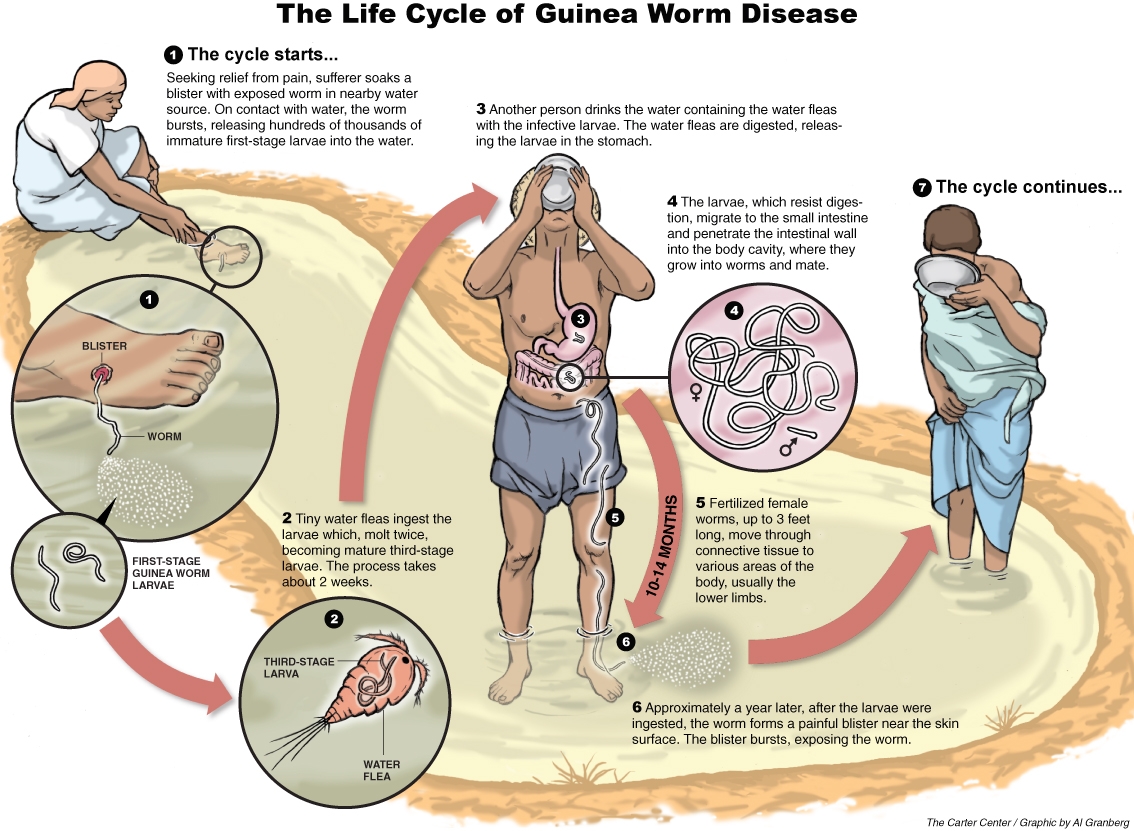
In the early ’80s, there were 3.2 million cases of Guinea worm — a 2-foot-long worm that emerges slowly — and excruciatingly — from a blister on the skin.  Now, the worm has been linked to dogs and Dr. Donald Hopkins at the Carter Center is leading the effort to eradicate Guinea worm. “I’m confident we’re going to do it. We’ve have already seen 17 of 21 countries get rid of Guinea worm, and it’s stayed away there.”  That confidence comes with some serious credentials: Hopkins was key in helping to eradicate smallpox — the only human disease to be wiped out, so far.

Despite having higher rates of diabetes and other conditions, Hispanics live longer than other ethnic groups. Now, a new study may help explain why: their blood has a slower aging rate. While Hispanic Americans have a longer lifespan than individuals of other ethnicities, they have higher rates of disease; for example, the rate of diagnosed diabetes among Hispanics is 12.8 percent, compared with 7.6 percent among non-Hispanic whites.  This has long baffled researchers, who often refer to the longer lifespan of Hispanics as the “Hispanic paradox.”

Technology

Pham Sy Long, 28, has volunteered to become the first person in Vietnam to undergo a full head transplant.

A new type of mosquito trap running on solar electricity and using human odor as bait has cut mosquito populations by 70 percent in a test on a malaria-ridden island in Kenya, according to a new study.

Tuberculosis (TB) remains a major global public health challenge, causing substantial morbidity and mortality. One of the most important risk factors for the increasing TB burden is HIV/AIDS, which contributes to the difficulty in diagnosing TB in co-infected patient.  The introduction of the Xpert MTB/RIF represents the first “game-changer” in the field of TB diagnostics in decades due to improved sensitivity, ease of use, and rapid turn-around-time of results made possible by the molecular platform, and in 2010, the World Health Organization endorsed the use of the Xpert device.

Environmental Health

Humans are acclimating to higher temperatures on Earth, according to a study co-led by Kristie Ebi, a University of Washington professor in the School of Public Health.The findings suggest that people can adapt to gradual increases in average temperatures, though whether that adaptability can be sustained with the advance of climate change is yet unanswered.

Recent climate talks have prompted many countries to reevaluate their energy policies and initiatives.  As a result, the landscape of India could soon be changing (and getting a bit brighter) with a new focus on solar power.

We have to recycle water on a massive scale.  The world is running out of drinkable water, and putting a price on the stuff won’t work. But we are well on the way to building a circular water economy.  Between rising population, megacities, pollution and climate change, the next few decades will see water stresses on a vast scale. The grave difficulties already apparent in the western US and Australia will afflict many more areas of the world. Ethiopia is gripped by the worst drought in decades; with it comes the spectre of famine.

Japan and New Zealand will formally approve the Paris climate agreement this year, officials in Tokyo and Wellington confirmed on Wednesday.

Equity & Disparities

New research published in the American Journal of Public Health shows increase in mental health problems among racial minorities who experienced multiple incidents of racial discrimination. Interestingly, the study also found that “it was the fear of avoiding spaces and feeling unsafe due to racial discrimination that had the biggest cumulative effect on the mental health of ethnic minorities.

An Indonesian central government minister’s comment about banning LGBT people from college campuses led to an immediate backlash and hostility toward the LGBT community. In response to the Human Rights Watch groups criticization, Indonesia has said that there is no room for the LGBT movement in their country. These events unfolded in a country where homosexulaity is not illegal and has had a largely tolerant attitude towards the LGBT group.

Analysis of data from the Global Disease Burden Study shows that Indian women have some of the highest suicide rates in the world.

Former assistant director general of the World Health Organisation told Australian policy makers that poverty is a critical health issue.

Doctors Without Borders (MSF) has decried the high cost humanitarian organizations pay for vaccines – up to 20 times the normal prices – for vulnerable children in refugee settings. MSF and Save the Children are calling on drug companies to lower vaccine prices.

The global news round up was prepared by the communications team.