From December 4 to 10, the US Centers for Disease and Control (CDC) celebrated National Influenza Vaccination Week (NIVW). It was an effort to spread the message of the importance of continuing flu vaccination through the holiday season and beyond. (Source: http://www.cdc.gov/Features/FightTheFlu/?s_cid=fb1293)
At the 16th International Conference on HIV/AIDS and STIs, the World Health Organization (WHO) announced “Rapid Advice” document that presents a guidance on the diagnosis, prevention and management of cryptococcal disease in HIV-infected adults, adolescents and children, with a focus on settings with limited health systems capacity and resources, and a high burden of the disease. It will be officially launched in March 2012. (Source: http://www.panapress.com/WHO-gives-guidelines-on-cryptococcus-disease—15-809357-29-lang2-index.html)
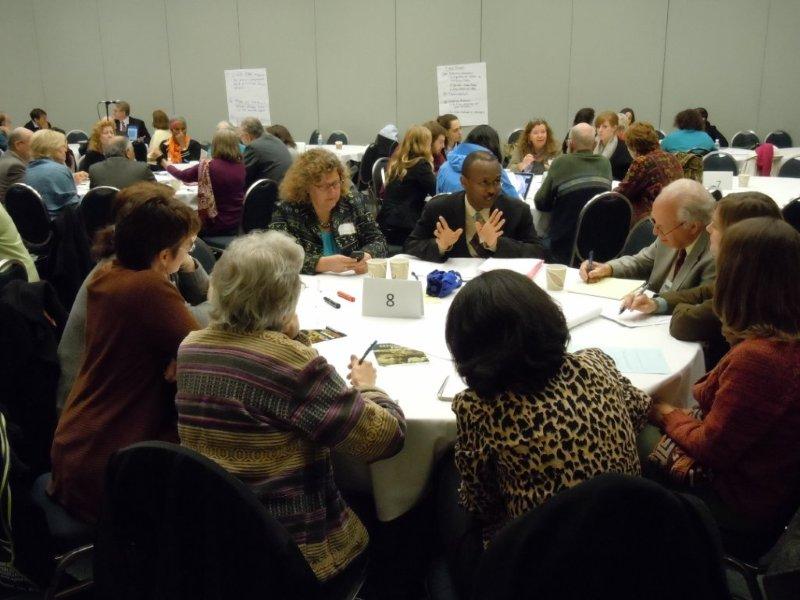
Prior to the recent APHA Annual Meeting, the CBPHC-WG held a day long workshop focusing on Community Health Workers. There were over 110 attendees including presenters and organizers. This was the largest workshop our group has held in the 13 years we have been conducting these workshops. It was a great feeling to see APHA functioning at its best in providing a venue where those from MCHIP, CORE group, academics, members of other NGOs, not-for-profit and for-profit organizations and consultants could share their views in an open, mutually respectful environment and learn from each other. This year JSI personnel, under the leadership of Mary Carnell, worked in partnership with Working Group members in all stages of workshop planning and implementation. The work of Agnes Guyon (who lead the workshop), Sandee Minovi and Kimberley Farnham, all from JSI, and our own Sandy Hoar, Vina Hulamm, Melissa Freeman, Laura and David Paragon, Tonio Martinez and Larry Casazza were outstanding.
Leban Tsuma MCHIP leading. Photo credit: Paul Freeman.
Our norms were: use of an evidence-based approach, the right for all participants to be heard and for their viewpoints to be respected. At this time, renewed attention is being given to the role of CHWs with recognition becoming more widespread now that the Millennium Development Goals, especially those for women and children, cannot be met without community involvement. The 8 large group presentations and 16 small group discussion sessions covered well a wide range of perspectives on CHW motivation, retention and performance. I am sure some participants were being exposed to different points of view from their own for the first time.
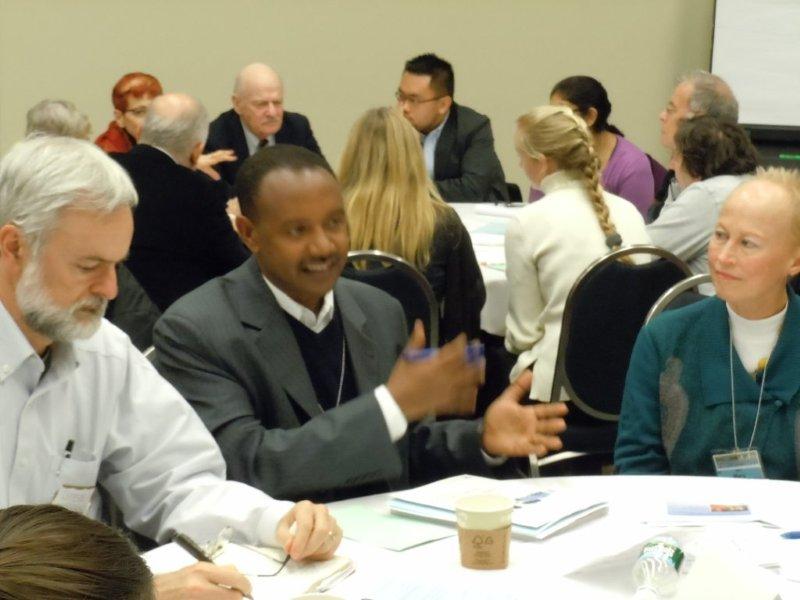
Samuel Yalew, Urban Health Extension Project/JSI (Ethiopia) leading. Photo credit: Paul Freeman.
I would especially like to highlight the area of internal motivation of CHWs. Through Pink’s book “Drive” many of us are becoming acquainted with the “modern” approach to the importance of autonomy, mastery and purpose in motivation. Yet several NGO presentations, such as those by Tom Davis of Care Groups and Connie Gates of Jamkhed, demonstrated that these elements have already been addressed by NGOs for decades as appropriate to local circumstances.
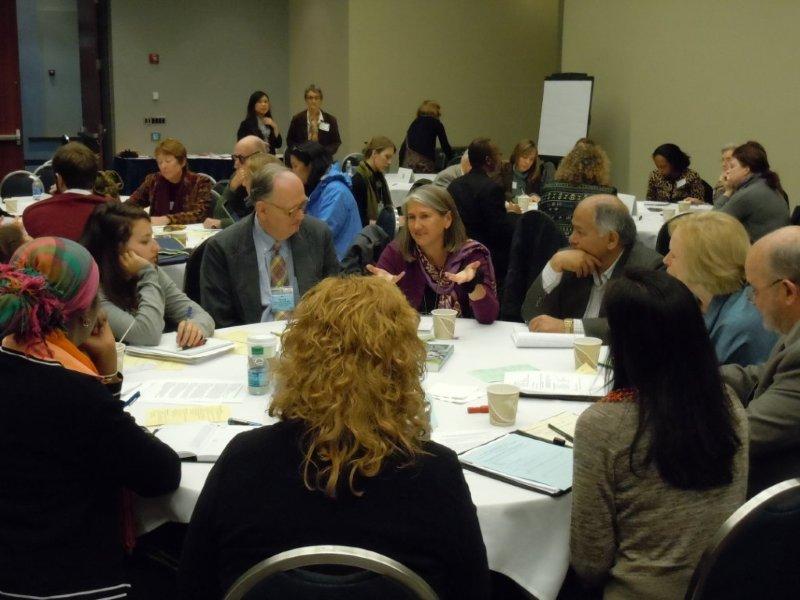
Sarah Shannon from Hesperian facilitating. Photo credit: Paul Freeman
Melissa and I will prepare a report of the workshop to be disseminated early next year. There were many lessons to learn from conducting this workshop that should remain with the International Health Section for years to come. One of the key lessons was that with enough goodwill and cooperation from individual members – things work best with at least 8 volunteers for such an event – memorable events can be implemented by the Section. With enough “hands” each contributing a relatively small amount, things go much more smoothly than if all sit back waiting for a few to do all the work.
Paul Freeman is a physician with advanced training in tropical disease control and general public health, health personnel education, and health program management and evaluation. He has over two and a half decades of experience in capacity building and the design, planning, implementation, monitoring and evaluation of primary health care, child survival and malaria control programs in developing countries and for deprived rural indigenous populations in developed countries. He is a Clinical Assistant Professor at the University of Washington School of Global Health and the Chair-Elect of the International Health Section.
World AIDS Day was observed on December 1st by the CDC and its partners from around the globe. (Source: http://www.cdc.gov/Features/worldaidsday/?s_cid=fb1285) According to the report by the World Health Organization (WHO) there has been 15% reduction of new infections and a 22% decline in death due to this deadly virus. (Source: http://www.who.int/en/)
The minister of health of Jamaica, Hon. Rudyard Spencer, on the occasion of World AIDS Day, disclosed that amendments were being made to the Public Health Order to remove the discriminatory provisions relating to people suffering from HIV/ AIDS in their country. (Source: http://www.jis.gov.jm/news/leads-106/29388)
Dr. Donald M. Berwick, official in charge of US Medicare and Medicaid described these policies as “extremely high level of waste”. He said that both involved activities that don’t have any value which if eliminated could save $150- $250 billion a year. (Source: http://www.houmatoday.com/article/20111204/WIRE/111209831?p=2&tc=pg)
A potential effective treatment for the peripheral arterial disease has been brought into light by a group of researchers at Universityof Minnesota. According to them exercise may be more effective than peripheral stunts for pain. (Source: http://seattletimes.nwsource.com/html/health/2016916385_exercise05.html)
A recent report indicated increasing number of HIV infected children resistant to AIDS drugs. Most of the children on the drug therapy have been seen to have low bone density. Scientists believe that the reason behind the signs of osteoporosis might be due to toxic effects of some AIDS drugs like tenofovir. (Source: http://www.ibtimes.com/articles/259419/20111201/hiv-positive-children-asia-grow-resistance-aids.htm)
The experts at AfriHealth Conference (30 November- 1 December) in Kenya said “most African health needs can be solved by the age-old basics of water and sanitation, nutrition and hygiene; if we concentrate on these we will make big strides in the lives of our people.” The experts said that a focus on high-tech healthcare solutions could come at the expense of basic prevention. E-health and telemedicine strategies are lacking in Africa, together with the laws that guide their practice. (Source: http://www.scidev.net/en/new-technologies/icts/news/african-e-health-moving-in-wrong-direction-.html)
Out of 26,000 reported measles cases from January to October 2011, more than 80% of them have occurred in Western Europe. World Health Organization (WHO)- Europe has issued a warning to European nations. (Source: http://www.medicalnewstoday.com/articles/238590.php)
Lawrence Macdonald, vice president for communications and policy outreach at the Center for Global Development, explains how CGD helped make $1 trillion available to developing countries after the global financial crisis. In the spring of 2009, participants at the G-20 summit decided to include developing countries in its global stimulus package. But how much money was needed for the most vulnerable countries and where would it come from? Nancy Birdsall, president of CGD, prepared a note stating that they would need access to 1 trillion dollars to cope with the effects of the crisis. Birdsall then put together a blueprint for making the resources available. By channeling the plan to the right people and testifying in front of Congress, CGD helped to unlock the $1 trillion and make it possible for the IMF and World Bank to help vulnerable countries cope with the crisis.


 IH CONNECT