Call for Nominations

Dear APHA International Health Section members:

It is now time once again to nominate your colleagues for one of the Section awards that will be presented at the next annual meeting of APHA which will be in Atlanta, November 12-15, 2023. The deadline for submission of nominations is Monday, June 19, 2023.

These awards provide us with the opportunity to recognize our colleagues who have made significant contributions to international health and to our Section.

The IH Section has five award categories:

  1. Carl E. Taylor Lifetime Achievement Award in International Health
  2. Gordon-Wyon Award for Community-Oriented Public Health, Epidemiology and
    Practice
  3. Mid-Career Award in International Health
  4. Distinguished Section Service Award
  5. Young Professional Award

Further details on these awards are provided below. You can also access the award descriptions and criteria, along with the names of past awardees as compiled by IH Historian Ray Martin, on the IH website, https://aphaih.org/ih-section-awards-2/.

The nomination process is quick and easy. We ask for only a page or so that describes how the nominee meets the award criteria along with a copy of the nominee’s curriculum vitae. An individual can be nominated for only one award in a calendar year. If you have an idea of persons who might merit an award and desire some feedback, or if you need to verify whether they are APHA or IH Section members, please contact me at hperry2@jhu.edu.

The IH Section Awards Committee consists of Laura Altobelli, Jean Marie Armas (IH Section Secretary), Paul Freeman, Omar Khan, Ray Martin, Carol Dabbs (IH Section Chair ex officio), Henry Perry, Brianne Riggin-Pathak, Gopal Sankaran, Rose Schneider, Sarah Shannon (former IH Section Chair), and Curtiss Swezy.

Sincerely,

Henry B. Perry, MD, PhD, MPH

IH Section Awards Committee Chair

Annual Awards guidance, international health section, american public health association

The International Health (IH) Section recognizes each year outstanding individuals who have contributed in an important way to the field of international health and/or to the IH Section. Guidance is provided here on the process and criteria for selecting the individuals to receive the five major awards:

  • Carl E. Taylor Lifetime Achievement Award
  • Gordon-Wyon Award for Community-Oriented Public Health, Epidemiology, and
    Practice
  • Mid-Career Award in International Health
  • Distinguished Section Service Award
  • Young Professional Award

Process for award nominations and selection

The Awards Committee of the IH Section is entrusted with the awards process, with collaboration and input from IH Section leadership when needed.

The annual request for nominations for IH Section awards is prepared by the IH Section Awards Committee. This request is sent out to all IH Section members and others on multiple virtual platforms managed by the IH Section Communications Committee.

A nomination can be made by submitting to hperry2@jhu.edu two items: (1) a letter of nomination of about one page that specifies the name of the nominee, the title of the award, and how the nominee meets the specific criteria for the award (listed below); and (2) the nominee’s current curriculum vitae. A person can be nominated for only one award category in any calendar year.

Nominations will be reviewed by the IH Section Awards Committee and a short list of candidates for each award will be developed. The committee will then vote on short-listed candidates.

Awardees are honored at the following Annual Meeting of the American Public Health Association (APHA).

Award criteria

Carl E. Taylor Lifetime Achievement Award in International Health

This award honors a visionary and leader who has shaped the direction of International Health. Carl E. Taylor was the founder of the APHA International Health Section and a pioneer in and global champion for international health in the 20th century. The evaluation criteria for this award include: (1) Quality, creativity, and innovativeness of the individual’s contributions to the field of international health; (2) Application of the individual’s work to international health practice; (3) The individual’s contributions as a leader, visionary, and role model in international health; and (4) Current membership in APHA, and preferably membership in the IH Section.

Gordon-Wyon Award for Community-Oriented Public Health, Epidemiology, and
Practice


This award recognizes outstanding achievement in international community-oriented public health, epidemiology, and/or practice. John Gordon and John Wyon were pioneers epidemiologists and mentors in this field. The evaluation criteria include: (1) Outstanding achievement in international community-oriented public health, epidemiology, and/or practice; (2) Demonstrated creativity in expanding the concepts pertinent to the practice of international community-oriented public health; and (3) Current membership in the APHA IH Section.

Mid-Career Award in International Health

This award recognizes an outstanding mid-career professional in the IH Section. Evaluation criteria include: (1) Demonstrated achievement and commitment to international health promotion and development over a suggested period of 7-20 years; (2) Demonstrated creativity in expanding the concepts pertinent to the practice of public health with an international focus; and (3) Current membership in the APHA IH Section.

Distinguished Section Service Award

This award honors outstanding service to the IH Section. The evaluation criteria include: (1) Dedication to the IH Section mission and goals as demonstrated by exceptional contribution to its activities over 5 or more years (2) Serving in elected positions in the IH Section or chairing one of its committees with outstanding effort and achievements; (3) Excellence in teamwork with peers in the IH Section and the APHA, and (4) Current membership in the APHA IH Section.

Young Professional Award

This award recognizes the important contribution of young professionals for their leadership, innovation, and demonstrated contribution to international health. The evaluation criteria include: (1) Demonstrated contribution to the field of international health through leadership, innovation, and impactful practice; (2) Age younger than 35 years at the time of application; and (3) Current membership in the APHA IH Section.

Updated and approved by the IH Section Awards Committee, April 2022
Who, What, Where: Female Genital Mutilation

This is the first in a series of Who, What, Where: A Series on Global Health Issues. We hope to introduce public health issues across the world and educate readers about their history. 

Let’s talk about Female Genital Mutilation. 

What exactly is FGM? According to the World Health Organization, it is the practice of removing the external female genitalia for non-medical purposes, often resulting in injury due to improper surgical techniques, non-sterilized equipment/environments, and inexperienced practitioners. A large percentage of these procedures causes life-long health complications such as cysts, recurrent bladder infections, and even infertility. 

Who is affected by FGM? As the name suggests, this issue is one that plagues individuals assigned female at birth —primarily African and Middle Eastern women. Some cultures view FGM as a rite of passage girls undergo before transitioning into womanhood while others believe it suppresses a woman’s sexual desire, allowing her virginity to stay intact when the time for marriage comes. The latter has fostered an environment where FGM became the norm as mothers are expected to ensure the next generation kept the traditions alive. Certain communities also believe it enhances the sexual pleasure for their husbands. 

Where is FGM most likely practiced? There are about 200 million women and girls who are currently living with the consequences. Somalia is believed to have the highest prevalence with a whopping 98%, followed by Guinea at 97%, Djibouti with 93%, etc. Although the practice is a concern in European, Asian, and South American countries alike, cases in African countries continue to soar. Preventative measures are being taken to combat FGM through educating women on the complications, advocating for fathers and men to speak against the practice, and compelling religious leaders to denounce it. The key factor is educating mothers, as the cultural expectations are deeply ingrained into their upbringing. Young girls are more likely to follow along if their mothers are uneducated about the health issues brought on by the practice.  

While International Day of Zero Tolerance for Female Genital Mutilation falls annually on February 6th as a joint effort to combat FGM on a global level, the COVID-19 pandemic has set back the goal of stamping out the practice completely by the end of 2030. The global lockdown has brought forth high rates of domestic violence incidents, has made many educational programs wholly unable to function, and families have had easier access participating in the procedure without being cornered. Despite the unforeseeable circumstances brought by the pandemic, the fight to dismantle FGM practices continues to rage on. 

APHA’s New Networking Platform

IH Section members: This post was originally posted in December of last year. However, APHA has recently made some changes to the platform, so I am re-posting it with updated information.


Happy Holidays, IH Section members! Hopefully this holiday season finds you all happy and healthy, with whatever projects you are working on going well. The purpose of this post is to introduce you to a new networking and communication platform that they have introduced. It is APHA’s Online Community, and it is integrated into your APHA membership profile. The purpose of the community is to encourage members of APHA to connect and discuss shared professional interests and information about events relevant to you and your colleagues. The platform was just recently opened to the general membership, so I have taken some time to explore its different features and thought I would share them here. Please note that you can click on any of the screen shots below

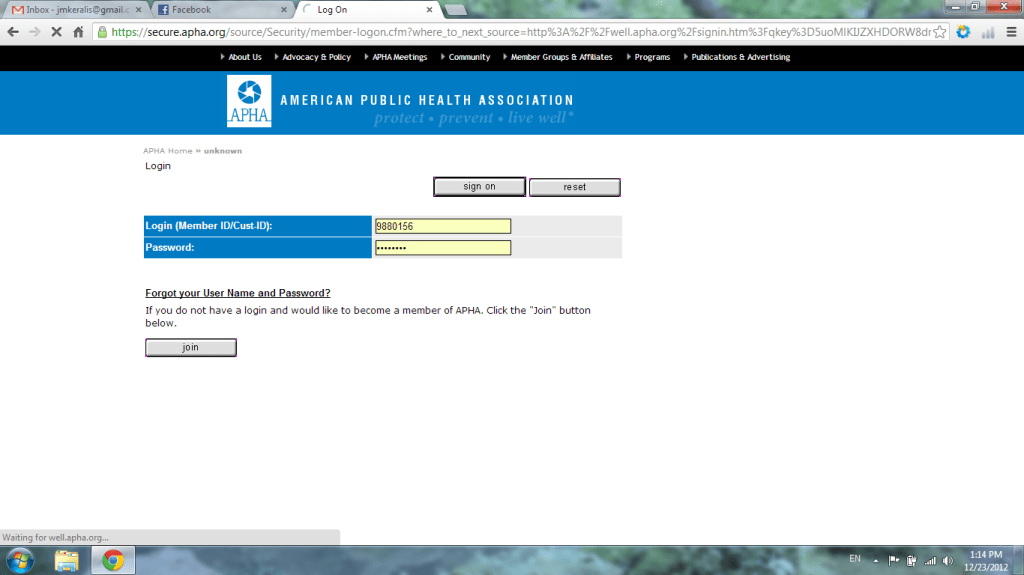
In order to access the community, visit http://connect.apha.org and use your APHA membership ID and password to log in. If you don’t have this information, just go to APHA’s website and request that an e-mail with the information be sent to you (About Us > Membership Information > Update Your Member Profile, then click the link that says “Forgot Your Username and Password?”).

login screen

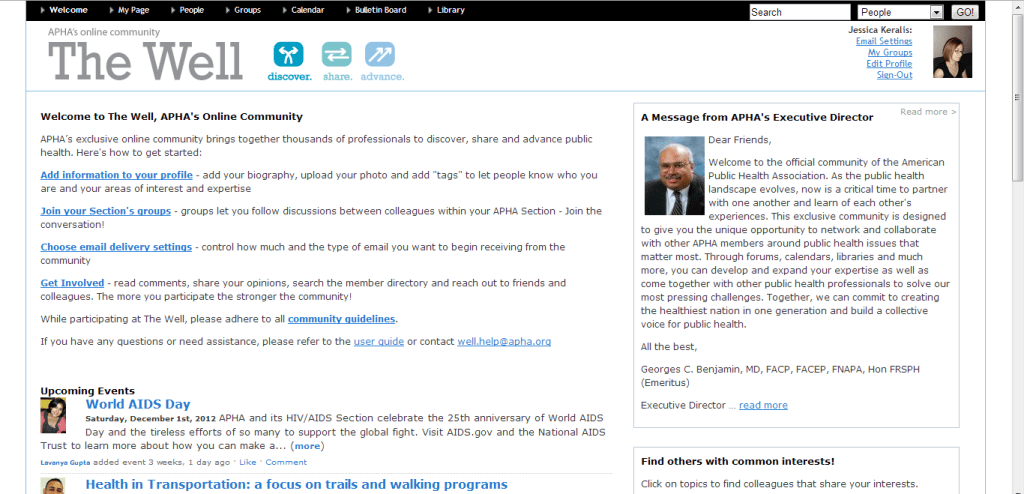
After logging in, you should come to the following screen. From here, you can access your Member Profile, the groups you are a member of, and your e-mail delivery settings.

welcome screen

The first thing you should do is set up your Member Profile so that other members with similar interests can network with you. If you go to edit your profile, you will come to the following screen:

edit profile

Here, you can edit your name, your photo, your academic background, where you work, tags (keywords that allow other members to search for you based on your interests), address and phone numbers (only if you choose to make them available to other members), a short bio, and any social media profiles you have (e.g. Twitter, LinkedIn, Facebook, etc.). Once you have input all of this information, you can view your profile as others see it.

view profile

The main focus of the community, however, are the discussions that APHA is encouraging members to have within their professional sections. When you go to access “My Groups” (the link is in the upper right-hand corner of the screen), you will come to a screen that looks like this:

my groups

From there, you can access the group that corresponds to the section(s) of which you are a member.

IH section group

Within each section’s group are the tools for communication and networking with other members. Here, you can search the section membership, access e-mail listservs, put events on the calendar, post to the bulletin board (essentially a message board), upload documents to the library, and post content to the wiki.

This tool has great potential to increase communication and networking among members. I strongly encourage you all to log in, set up a profile, and have a look around!

APHA’s 2013 Fellowship in Government: Deadline is April 9

The deadline for applications for the 2013 APHA Fellowship in Government (including CV and three letters of recommendation) for the 2013 APHA Public Health Fellowship in Government is Monday, April 9, 2012.

Applications and additional information are available on APHA’s website. Please note there are two steps to the application process and both parts must be completed by April 9.

For more information, contact Charlene Bright at charlene.bright@apha.org.

Strengthening of Public Health Associations (SOPHA) Evaluation

By: Dr. Paul Freeman

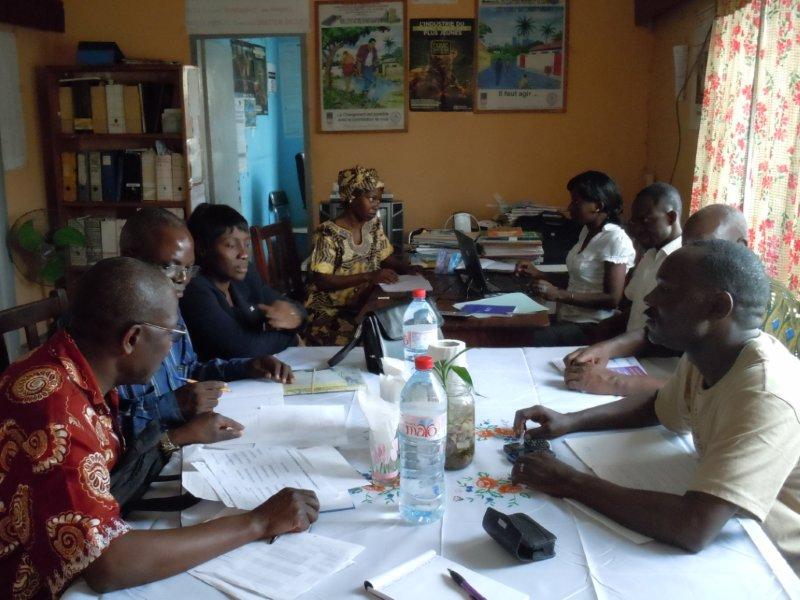
For 25 years the Canadian Public Health Association, with support from the American Public Health Association, has been facilitating ongoing processes to establish and/or strengthen Public Health Associations in developing countries. In November 2011, SOPHA has organized a mission to evaluate its program through field visits to three countries currently receiving assistance and through the results of a questionnaire answered in 5 other country partner Associations. Omar Khan and I were part of this evaluation process through field visits to Nicaragua, Mozambique and Congo Brazzaville. I accompanied Drs Henri Delatour and Deo Sekimpi to the Congo. It was inspiring to see how enthusiastic the members of the local Public Health Association – L’Association Congolese Pour La Santé Publique et Communautaire (ACSPC) – were. In the midst of poverty they devoted a lot of their own time to establish their association and to conduct ongoing activities that established the credibility of their organization with the community and government.

We huddle to discuss Public Health Association business. Photo credit: Paul Freeman.

The SOPHA program has resulted in both individual and group capacity strengthening and knowledge sharing.  Formal training was given in key aspects of strategic planning and project planning, implementation, monitoring and evaluation. SOPHA support of participation in international conferences and networking improved the profile of the organization and led to learning through sharing. In 2008 and 2010 ACSPC organized scientific conferences where different stakeholders participated. ACSPC members have built both personal and institutional capacity by attended many international meetings.  ACSPC also collaborated with municipal and national health authorities, thus contributing to strengthening the health system at those levels.  The projects contributed to public health capacity building across many health programs, such as sanitation, immunization, road safety, TB control, HIV/AIDS control and malaria control.

They appreciate what can be achieved through association. Photo credit: Paul Freeman.

Institutional capacities were adequately strengthened and they are sufficient to ensure sustainability in the short term, but better fund raising activities are needed for the mid to long term. The ACSPC staff were trained on results based management (RBM) tools which were applied in the development of project plans.   New knowledge was applied in financial management to prepare annual, midterm and final financial reports to CPHA, and strategic planning was used to prepare the strategic plan 2012-2016. Funding is not sufficient; the association is using the skills and tools acquired with the SOPHA program to look for other donors and prepare projects.

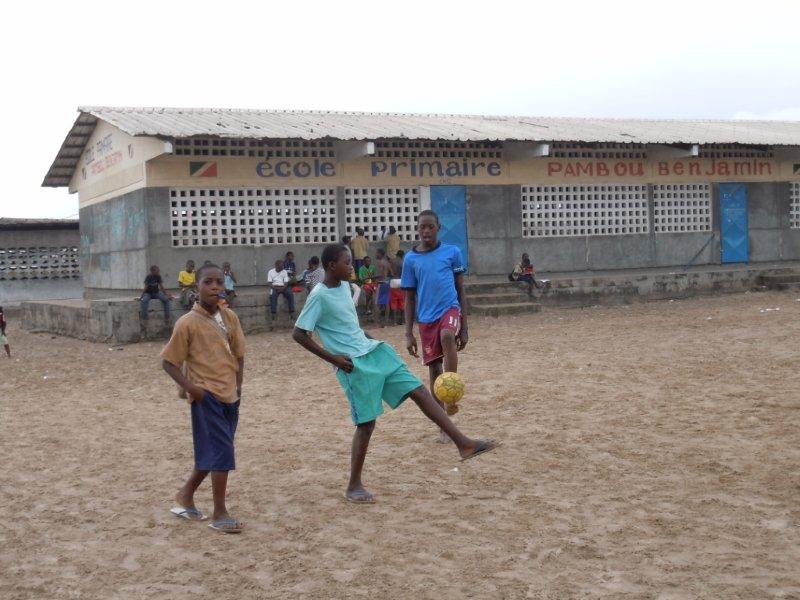
Supplying latrines and clean water to schools, a typical project. Photo credit: Paul Freeman

There were several key lessons learned. SOPHA capacity building contributes to increase the confidence and the credibility of the association. Advocacy needs to be undertaken to increase the involvement of other health professionals (doctors, nurses) and government officials in the association and develop their interest for public health issues. The main challenge and issue for project implementation was that the multi-disciplinary and multi-sectoral dimension of public health is not yet understood by many stakeholders and decision makers and, partly as a consequence of this, there are few doctors, nurses, or government (Ministry of Health and local health authority) members in ACSPC.

We talked for hours, often by gaslight in small rooms – their offices – in just adequate private housing, that we reached through dirt streets awash with water from recent rain. It was heartening to see what had been achieved and how these pioneer members, with only a few trained health professionals amongst their numbers, had established and barely kept afloat, their own Public Health Associations. Perhaps we could establish links with them for solidarity and to support their growing skill and knowledge base.

Paul Freeman is a physician with advanced training in tropical disease control and general public health, health personnel education, and health program management and evaluation. He has over two and a half decades of experience in capacity building and the design, planning, implementation, monitoring and evaluation of primary health care, child survival and malaria control programs in developing countries and for deprived rural indigenous populations in developed countries. He is a Clinical Assistant Professor at the University of Washington School of Global Health and the Chair-Elect of the International Health Section.