
Read Dr. Georges Benjamin’s response to our open letter and learn how you can be involved in public health advocacy efforts:

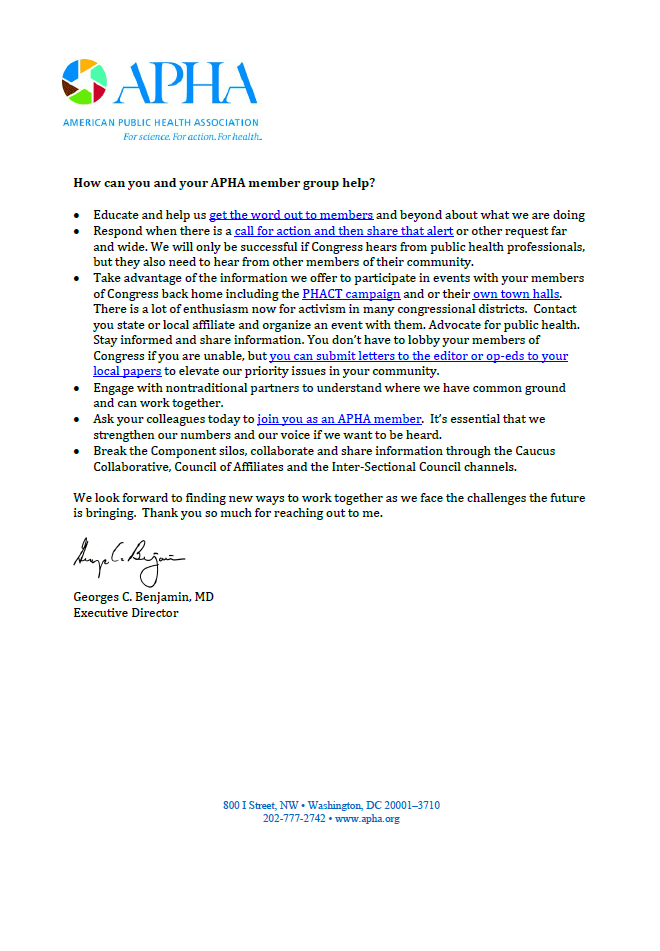

Read Dr. Georges Benjamin’s response to our open letter and learn how you can be involved in public health advocacy efforts:
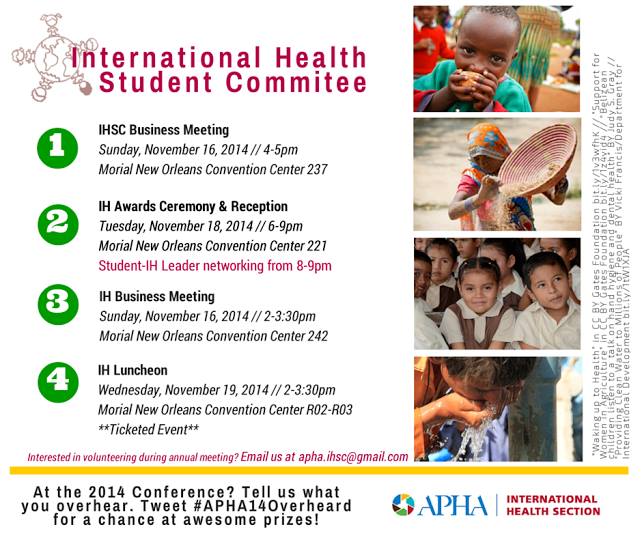
Networking can be a daunting task for the young professional, but speaking from experience, it is worth it and a superlative time to perfect this skill-yes, “networking” is a skill- one that you acquire while you are finishing your career as a student.
In today’s professional world, it is becoming less and less about what your resume says and more about who you know. Of course, what you know matters too, but only if you get the interview in the first place. There are many opinions about whether this is a good or a bad thing; regardless it is the reality. In order to make my point I would like to share my personal experiences.
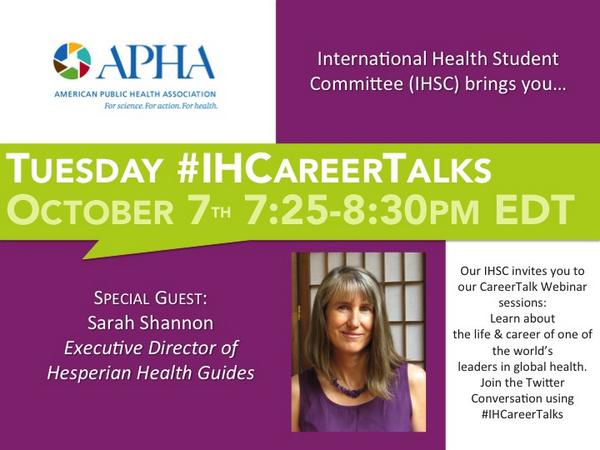
Environmental health issues are present in our everyday lives, and I am committed to improving the environment in which we live, globally. Most recently, I realized that in order to make a difference on environmental issues, all I need are simple tools. This realization inspired me to become involved with APHA’s International Health Student Committee (IHSC). In this committee, I can promote and increase awareness about important international health issues including, environmental health, among students interested in the field. To accomplish these goals, I use tools such as advertising and blog-writing. I help design flyers to advertise IHSC’s initiatives, some of which include educating students on how to address environmental health issues through our CareerTalk series. I am writing this blog to encourage you to attend our upcoming webinar! Continue reading “Students, Find Your Tools to Address Global and Environmental Health Issues!”
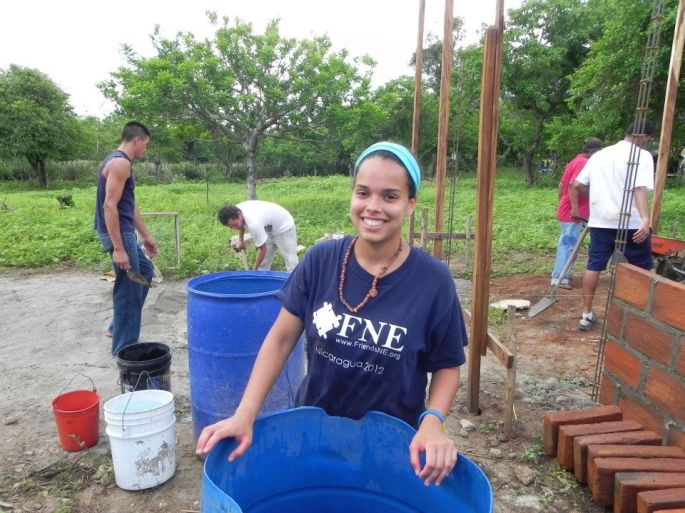
Leaving your comfort zone is one of the hardest, yet most rewarding experiences you can have. It was for me. During my undergraduate years, I spent three consecutive semesters studying abroad in Spain and Chile fulfilling my Spanish & Latin American Literature and Culture major. I realized the importance of expanding my horizons, gaining a multicultural perspective of the world and becoming more culturally competent. As a public health graduate student, my travels to Latin America took a global health perspective. My mind was once again exposed to another side of the world that we often miss while secluded in our comfort zones. In Central and South America, I volunteered on heath initiatives and sustainable development projects, and conducted research. I witnessed numerous global health disparities including lack of sanitation, children living in homes made with plastic walls and dirt floors, and physicians striving to provide quality reproductive care to low-income, immigrant women at a family planning clinic with scarce resources.
My ultimate goal is to become a primary care physician to help reduce health disparities globally. Going abroad was one step towards that goal.
The Guardian recently posted an interview with Kenyan writer Binyavanga Wainaina. You may know his name from the popular satirical essay “How to Write About Africa” or his commentary on the new laws in Nigeria and Uganda targeting LGBTI groups, but if you’re unfamiliar, he’s an opinionated, outspoken, and often controversial figure (especially when it comes to development in Africa).
In the interview, Wainaina speaks about stereotypes in development and the failure to align aid with the reality of Africa. He talks about the imbalanced, unsustainable power relationships between the West, African governments, and civil society. He calls for a restructuring of these relationships, and says it must come from Africans. I’d like to hear more about his ideas on exactly what it takes for Africans to shift power in an effective way, but he didn’t go into details in this interview. Also, according to Wainaina, it’s within the political sphere that change can happen and because civil society has “become anti-politics,” it’s missing the mark.
His blunt criticisms and his definition of the word community – someone utterly powerless upon which power is being imposed – made me laugh. If you work in development I’m sure you’ll agree that there’s some truth to everything he said, but as with most generalizations, they don’t apply to all aid, civil society organizations, or African governments. I can think of many counterexamples.
Click here to watch the video and share your thoughts with us in the comments below.
 IH CONNECT