
Lab rat, HeroRAT

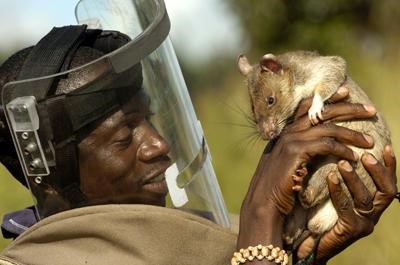
You’ve likely heard of lab rats, but detection rats technology?  APOPO, a Belgian non-profit, with headquarters in Tanzania, breeds, trains, and implements landmine and tuberculosis detection rats in Africa and Asia.  Equipped with exceptional noses, African Giant Pouched rats have helped clear over 26 million square meters of land, including nearly 100 thousand landmines destroyed in Mozambique, Angola, Cambodia, Thailand, and Vietnam.  Once ravaged by civil and international wars, these lands are now suitable for community use.
apopo1
Source: APOPO

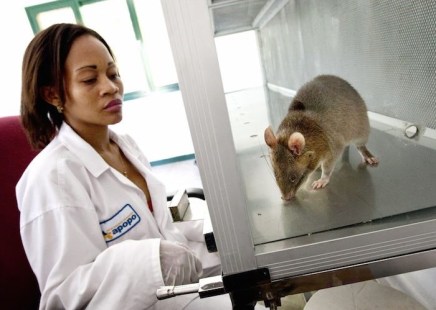
Tuberculosis (TB) kills over a million people annually.  In countries such as Tanzania and Mozambique, prevalence of tuberculosis is high while detection and treatment are low.  This discrepancy is attributable to a lack of diagnostic equipment, trained staff, and lagging infrastructure and utilities.  A trained tuberculosis detection rat – otherwise known as a HeroRAT – can screen 100 samples in 20 minutes.  The same task would take a trained technician 4 days.  In Tanzania alone, over 8 thousand positive TB samples that were missed by technicians were identified by HeroRATS.
apopo2
Source: APOPO

Could programs like APOPO fundamentally change the way we think about rats and their role in public health?  To find out, we must first take a look back at our long, intertwined history, past traditional research laboratories, and into a future where rats may well be our colleagues.

Wherever people make a home, rats are sure to follow. Inveterate opportunists, rats make good use of our infrastructure and food system with enviable aplomb.  What works for rats hasn’t always proved advantageous for humans.  Take for instance the Bubonic Plague of the 14th century.  Long blamed for the disease that raised black, fetid boils and led to the swift demise of two-thirds of Europe’s population, rats are still synonymous with scourge, despite mounting evidence that implicates gerbils for harboring the fleas that carried the Plague.  An even more compelling argument suggests that at its most virulent, the Plague spread human-to-human.  This theory is supported by records that show that deaths increased in the winter months, a time when most rodent populations would dwindle considerably.

The story of rats next takes us to the laboratory of University of Wisconsin professor, E. V. McCollum. The year is 1908 and McCollum has just purchased 12 albino rats to further his research on nutrition.  Though he has been studying cows for some time, McCollum feels rats will be superior due to the ease of housing, feeding, breeding, and disposal.  McCollum might not yet realize that his will be the first of many rat colonies established for research.  The first experiment involves splitting the rats into two groups and feeding them different diets.  For a time, all rats will develop normally, until one group ceases to grow.   McCollum postulates the existence of a factor present in some foods that promotes extended growth.  He calls this “factor A,” known today as Vitamin A.

McCollum’s next success would come at Johns Hopkins University’s newly established Department of Chemical Hygiene, later renamed the Bloomberg School of Public Health.  McCollum and colleagues used diet to induce Rickets in rats.  Rickets, a disease that causes crippling bone deformities, was common among the children of tenement-dwellers in urban centers.  Believed to be caused by diet and environment, McCollum prescribed over 300 diets to his Rickets rats and found that those supplemented with cod-liver oil improved.  He also found that rats that had daily sun exposure fared better than those left in the dark.  McCollum named this new discovery Vitamin D.

Advents in technology revealed increasingly subtle yet deeply profound insights into human physiology.  DNA sequencing and genetic engineering allow scientists to simulate human diseases in rats, including cancer, Alzheimer’s Disease, cardiovascular disease, and diabetes.  Modern medicine owes much of what it knows about the etiology and treatment of these diseases to laboratory rats. One reason for rats’ success as research subjects in human disease is the genetic and physiological similarities we share, so similar in fact that it is not surprising to learn that all mammalian life plausibly shares a single, rat-like ancestor .

Recent studies venture past the scientific and into the silly.  Rats exposed to the psychoactive ingredient of marijuana are less likely to perform a complex task in favor of a simple task with a smaller reward.  The rat’s ability to complete the harder task is not affected, just his willingness to exert cognitive effort.  Sound familiar?

Ever wonder if rats laugh when tickled?  Dr. Jaak Panksepp thinks they do and has video to prove it!  Panksepp, a neuroscientist at Bowling Green State University, finds that young rats laugh when tickled and will seek out a tickling hand over a still one.  He also learned that rats read environmental cues when it comes to laughter.  Just as you or I wouldn’t laugh at a funeral, a young rat won’t laugh under a bright light or with the odor of cat urine in the air.

Science might ultimately prove that rats are better people than us.  Scientists wanted to know if rats would help another rat in distress, thus displaying empathy and altruism.  One experiment trapped one rat in a clear tube to determine if the other rat would free it by opening a door with its nose.  In a riskier experiment, rats on a dry platform were tasked with opening a door for a rat frantically treading water on the other side.  Even when enticed by treats, rats overwhelmingly chose to help friends and strangers alike.

When it comes to rats, there is much more than meets the eye.  Are they simply a tool to be confined to the laboratory, or might we find them suited to a diverse range of tasks, such as with APOPO?  If science has shown that rats laugh, are good Samaritans, and exhibit free will, might we need to reexamine our relationship inside and outside the lab?

Watch this Ted Talk by APOPO founder, Bart Weetjens: How I Taught Rats to Sniff Out Landmines.

From American Cheese to Vitamin A, check out 100 Objects That Shaped Public Health (and yes, rats made the list!)


Global News Round Up

Politics & Policies

Our mission to end extreme poverty by 2030 will only be realized if the international community comes together to strengthen health systems and provide lifesaving vaccinations. Both the public and private sectors play undeniably critical roles to invest in the research, development and distribution of vaccinations.

In 2015, 773 organizations received $6.65 billion to implement global health programs in 90 countries.

Joe Biden has called on the Congress to allow an up-or-down vote on funding to combat the Zika virus. Congress failed to approve the President’s asking of $1.9 billion before it went on recess.

Last week in a Washington Post op-ed, Centers for Disease Control and Prevention Director Tom Frieden and National Institute of Allergy and Infectious Diseases Director Anthony Fauci shed light on the ramifications of federal Zika funding shortfalls, including more than $670 million that have been directed away from other pressing public health priorities. Those dollars will run out by September 30 and Zika response will grind to a halt without additional funding.

There is growing concerns regarding the potential consequences of Bill Clinton’s departure (if Hillary Clinton gets elected) on global health programs such as the Clinton Health Access Initiative run by the Clinton Foundation.

Next week, the Dutch parliament will discuss its policy contributions in the strengthening of health systems  via development cooperation programmes. Specific attention will be paid to the containment of transnational epidemics, such as the Ebola outbreak, ongoing HIV/AIDS epidemics in several parts of the world and the Zika viral disease that has spread to large parts of the Americas and some countries in Southeast Asia.

A symposium was held to honor the contributions of Prince Mahidol Adulyadej of Songkla to public health and medicine in Thailand and the progress the country has made over the past century.

Programs

The 2016 Triangle Global Health Conference will be held on September 30 in Chapel Hill, NC. You will get to “explore health solutions that not only transcend borders but cross traditional institutional and disciplinary boundaries.”

Planetary health — the Earth’s ability to regenerate and sustain life — is under increasing pressure. Human population growth and activity increases as the climate changes and the environment bears the impact, resulting in reduced species diversity, emerging disease and diminishing supplies of available food and potable water.

Research

We describe a role for Hsp70 in circarial invasion behavior. To date, only generic stimulation with skin lipid, linoleic acid or L-arginine are known to induce cercarial invasion behavior; thus, we can begin an initial investigation of molecular requirements for host invasion and environment transition for schistosomes and possibly other parasitic organisms.

Non-communicable diseases (NCD) are the leading cause of premature death and disability in the Pacific. The purpose of this paper is to describe a regional, collaborative framework for coordination, innovation and application of NCD monitoring activities at scale, and to show how they can strengthen accountability for action on NCDs in the Pacific.

We report three autochthonous cases of scrub typhus caused by O. tsutsugamushi acquired on Chiloé Island in southern Chile, which suggests the existence of an endemic focus in South America.

A drug that treats malaria could help ease the burden on overwhelmed health-care facilities during Ebola outbreaks, according to a study published last week in the journal PLOS ONE.

Dengue is a major mosquito-borne viral disease and an important public health problem. Identifying which factors are important determinants in the risk of dengue infection is critical in supporting and guiding preventive measures.

Antiretroviral therapy (ART) regimens for HIV could improve clinical outcomes for patients. To inform global guidelines, we aimed to assess the comparative effectiveness of recommended ART regimens for HIV in ART-naive patients.

Toxoplasma gondii oocysts are an important form of contamination with a high dispersion in the environment, but their detection is still a challenge. This study evaluated the recovery of oocysts from strawberries and crisphead lettuce.

Doctors around the world are over diagnosing the most common thyroid cancer, creating an artificial epidemic that costs billions of dollars each year in unnecessary medical costs, suggests new research.

Diseases & Disasters

A huge fire has ripped through a favela in Brazil’s most populous city, Sao Paulo, destroying hundreds of homes.

Dr. Attaran dire pre-Olympic predictions about worldwide Zika virus transmission was completely wrong, but the alarm likely aided global health.

Every year more than 800,000 people take their own life and there are many more people who attempt suicide. Every suicide is a tragedy that affects families, communities and entire countries and has long-lasting effects on the people left behind.

Loneliness, which Emily Dickinson described as “the Horror not to be surveyed,” is a quiet devastation. But in Britain, it is increasingly being viewed as something more: a serious public health issue deserving of public funds and national attention.

Mosquitoes carrying the Zika virus have been found in the Miami area, according to the Florida Department of Agriculture and Consumer Services, marking the first time that the virus has been found in mosquitoes in the continental United States.

The World Health Organization (WHO) has officially declared Sri Lanka a malaria-free country, in what they’ve called a “remarkable public health achievement.”

Uganda is edging closer to eliminating river blindness from the country.  The government announced this week that it eliminated the disease in four areas of focus in the country, leaving only two more areas with active transmission of the parasite.

Researchers have found that the Zika virus can live in eyes, and research in mice may help explain why some Zika patients develop eye disease, including a condition that can lead to permanent vision loss.

Dr. Louise Ivers, with the nonprofit Partners in Health, which runs the largest teaching hospital in Haiti, is concerned that Zika is spreading as a silent epidemic.
As Zika infects large numbers of immunologically naïve populations in the Americas, significant concern has been raised about the possibility that Culex mosquitoes could be responsible for transmitting the virus.

Health authorities in Madrid are taking steps to contain an outbreak of Crimean-Congo haemorrhagic fever (CCHF) that has killed one man and infected a nurse who treated him.

Technology

Attitudes about vaccines are primarily positive around the world, according to a new survey, but confidence in vaccines varies widely across different countries —with a surprising show of skepticism in Europe, for example.

In the ongoing fight against three of the world’s deadliest diseases — AIDS, malaria and tuberculosis — Microsoft founder and billionaire philanthropist Bill Gates says instability in Africa’s war-torn regions has made it difficult to deliver “the basics of health.”

Scientists say they have found a new compound that stops malaria in animal studies with a single, low dose.

Sisu Global Health, the company that makes a low-cost blood transfusion device, received the first investment from a new fund focused on Maryland startups and is closing in on $1M seed round.

Environmental Health

An increase in water temperatures is having a profound effect that, with hidden stores of frozen methane thawing out, will soon start to feed on itself.

Analyses of data from the KORA study that included 3000 participants who live in the city of Augsburg and two adjacent rural counties in Germany revealed that the risk of developing insulin resistance as a pre-diabetic state increased with exposure to air pollution. The authors found that the association between elevated blood marker (in pre-diabetic individuals) and air pollutant levels was significant.

With its large shale gas and shale oil reserves, Argentina has been attracting several oil companies. The indigenous communities in Argentina say that fracking has polluted their land and water and have now united to stop fracking.

Daldykan River near the Russian city of Norilsk mysteriously turned blood red in color. The city is among the worst polluted cities in the world and the residents feels that the color might be due to mixing of waste water and mineral oil leak from Hope Metals Plant.

Water lilies thrive not just in stagnant waters, but in warming ones. And this summer, the hottest on record, they bloomed with abandon.

Equity & Disparities

His experiences as a young immigrant proved pivotal for Pérez-Stable, who grew up to become a physician and scientist, whose research has documented the impact of language barriers and other issues on the health of Latinos. At 64, he leads the National Institutes of Health’s division for funding and guiding minority health research.

With nearly 80% of medical equipment in LMICs donated, the problem of non-functional equipment is huge. A study that looked at inventory of medical equipment from 16 countries showed that about about 40% of donated equipment are nonfunctional, compared to the 1% of equipment that are out of service in high-income countries.

The global news round up was prepared by the communications team.

Is Zika the next Thalidomide?

2015 saw a twenty-fold increase of microcephaly in Brazilian newborns.  A WHO report states with scientific consensus that the Zika virus is the cause for microcephaly and Guillain-Barre syndrome, while further neurological disorders are potentially linked.  An article published by the Journal of the American Medical Association seeks to uncover what we might learn about Zika as this cohort of babies age and what similarities can be found in the Thalidomide crisis of the 1960s.

Hailed as the ‘worst man-made peacetime disaster in history,’ thalidomide was manufactured and marketed by a German pharmaceutical company as a safe and effective sleeping pill and anti-nausea drug for pregnant women.  Thalidomide was widely available in the late 1950s and early 1960s in the United States, Europe, Australia, and parts of Asia resulting in the birth of as many as 20,000 babies with crippling deformities.  Thalidomide was banned in 1962.

thalidomide-image1
Source: The Smithsonian

For most, the story ends there.  Now, 60 years later, there are only a few thousand thalidomide survivors – known as thalidomiders – left.  They’ve taken to the Internet to share their stories which you can read here, here, and here.  Amidst stories of institutionalization and acceptance is a common theme: healthcare costs associated with a debilitating condition.  Many suffer from chronic joint ailments that make day-to-day living more difficult as they age.

louise-medus-010
Source: The Guardian

What can researchers learn from thalidomide?  Like the Zika virus itself, much is left to be discovered.

In many ways, thalidomide survivors thrived.  They married, became parents, had careers, and hobbies.  Microcephaly doesn’t hold such promise for the future.  According to the National Institute of Neurological Disorders and Strokes, microcephaly associated with Zika is likely to be severe and require lifelong intensive care.

The healthcare costs of thalidomide is hard to quantify.  Mostly of normal intelligence, thalidomiders attended mainstream schools.  Many developed ingenious adaptations to overcome the vagaries of everyday life.  There is no way to know how much money will be needed to care for children with special needs caused by Zika.  Globally children with special needs are the most vulnerable population.  They have less access to healthcare and education and face more discrimination and violence than peers.

With so much focus on microcephaly, how might Zika influence the developing brains of healthy infants and children?  Studying differences in outcomes of typical children and those with microcephaly will be key to developing treatment methods.  Does Zika have the potential to cause more damage than thalidomide?  Just ask a pediatric neurologist:

“Depending on the rapidity with which an effective vaccine can be developed and distributed effectively, the ability to marshal resources to do appropriate science, and large-scale prevention efforts, Zika has the potential to be much worse and to have an impact that continues over a much longer period of time.”

Interested in learning more about thalidomide?  Check out this great video from The New York Times Retro Report:

@USAID Video: Just Bring a Chair

In today’s video, USAID shares a message of hope amidst the horrors experienced by 2.4 million Syrian refugee children.  Along with displacement from home, Syrian children experience an interruption in education from which they might never recover.  Ms. Maha, a principal for a girls’ school in Jordan, answered the desperate pleas of Syrian parents as she welcomes us and their children into her school with the sentiment: “Just Bring a Chair.”

Video Description:

“In Jordan, where the Syrian crisis has led to around 635,000 additional people taxing already overburdened schools, hospitals and social services, some people still find reasons to open their arms and make it work. Ms. Maha is one of those people.”

Without access to education, the future is bleak for many of the youngest Syrian refugees.  A recent report by Human Rights’ Watch found that nearly one-third of refugees in Jordan are between the ages of 5 and 17.  Of these children, 56% are not enrolled in school.  Lebanon is also struggling to accommodate the inundation of refugee students.  Soon, school-aged Syrian children could outnumber their Lebanese peers.

Unfortunately, the problems do not end once children are in school.  A report by UNICEF highlights the unique educational concerns of refugee children, citing violence while traveling to and from school, abusive teachers and classmates, and separation anxiety while at school.  The same report finds that even when the school is located within the refugee camp, 75% of children do not attend.

So what’s the solution?  I think an inclusive environment like Ms. Maha creates in her school is key.  Money for teachers, educational materials, and space are paramount for educating this generation of Syrian youth.  2015 saw fundraising efforts by members of the UN fall short of the $8.4 billion goal.  Will 2016 see more Syrian children returning to classrooms?

Read Ms. Maha’s story here.

CBPHC Pre-Conference Workshop and Call for Student Abstracts

Are you interested in the call for “Health for All”? Don’t miss out on an exciting conference, and register for our special ONE Day Community Based Primary Health Care (CBPHC) Pre-conference workshop on  Saturday October 29th from 8AM to 5 PM in Denver, Colorado Convention Center, Room 401-403.

Workshop leaders include internationally renowned practioners in global health including Dr. Susan Rifkin, Dr. Henry Perry, Thomas Davis, and Dr. Gretchen Bergren, who have all worked internationally to reduce health inequities.

Register here. The cost is only $35 for the whole day, and $25 students.

Agenda:

  1. Community empowerment and health: Keynote Speaker, Dr. Susan Rifkin
  2. Evidence for CBPHC and Improved Health, Dr. Henry Perry
  3. Breakout sessions on:
    • Measurement of community empowerment
    • CHWs and the role of community empowerment
    • Empowering fathers and the social determinants of health
    • Tools for empowerment: care groups, gender, and interpersonal psychotherapy for groups
  4. Poster session: Student abstracts
  5. Training of trainers session on positive deviance hearth: a strengths-based approach to reducing malnutrition in low resource settings: Dr. Gretchen Berggren

Pre-conference workshop sponsored by the APHA CBPHC Working Group, International Health Section.
Contact: CBPHC working group (cbphc2016@gmail.com)

Visit our website for all the latest information on CBPHC, the conference, and the call for student abstracts below.


Call for Student Abstracts in Community Based Primary Health Care

Does your research or program implementation include community based participatory methods?

Want to receive feedback from / network with world renowned health care professionals who apply groundbreaking community-based participatory methods on the ground?

You could be eligible to share your research at the 2016 APHA Pre-Conference Community Based Primary Health Care (CBPHC) Workshop!

To learn more, check out our website!