My global health journey: a reflection on my time in the field and advice for students and young professionals

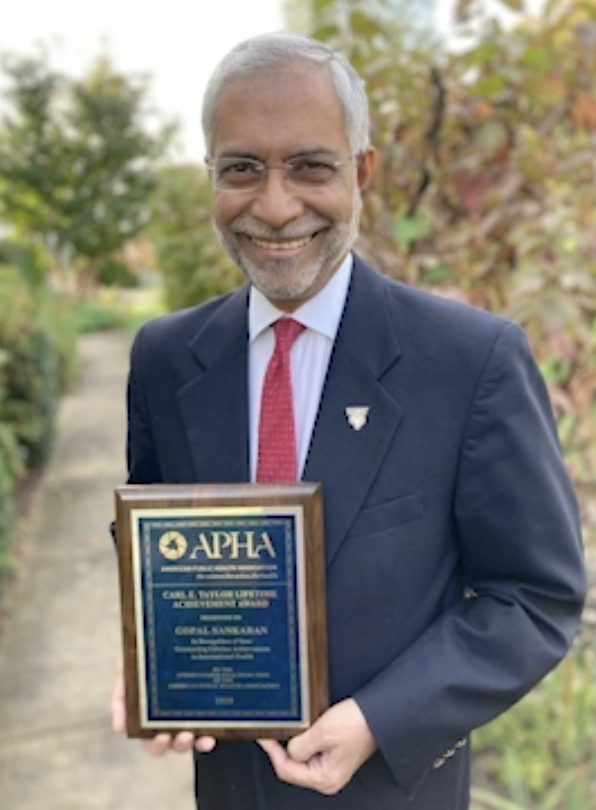
By: Kiran Kamble, M.B.B.S., AFIH, MPH, PhD Candidate

After graduating with a medical degree, I started my professional career as a primary care physician in Mumbai, India, where I partnered with Government of India’s Revised National Tuberculosis Control Program (RNTCP) providing free diagnostic and treatment services to my patients suffering from tuberculosis (TB). In many cases, the financial savings these services created for the low-income families made them avoid bankruptcy. This challenging yet tremendously satisfying experience showed me the complementary nature of clinical medicine and public health. Later, when I took up a job at the World Health Organization supporting India’s RNTCP implementation through public private partnerships (PPP), I got to experience the tremendously influential role of the civil society in public health. Working with the not-for-profit and for-profit health and non-health organizations, I experienced first-hand the importance of socio-economic determinants in health policies and programs.

Later, as a consultant, I got the opportunity to work on diverse projects such as developing the bottom-up (from a village level) action plan for India’s national health sector reform initiative, mapping HIV/AIDS high-risk groups to develop focused behavioral interventions for these groups, operationalizing protocols for emergency first responders, evaluating India’s financial voucher scheme for reducing maternal mortality, and conducting a feasibility study to establish super specialty diagnostic centers through PPPs in underserved areas. I learned the crucial role a public health practitioner can play in shaping public health policy and implementation to improve lives.

My first foray into global public health (global health) was as a member of an international team tasked with revising health policies for the Government of Abu Dhabi. I was amazed with the complexity of developing a health policy, let alone implementing it. Stakeholder mapping, understanding, and accommodating demands of different groups, and balancing and prioritizing conflicting needs is as difficult as performing a heart transplant. I also understood how important it is for a public health practitioner to have basic knowledge of certain quantitative and qualitative skills. On learning those tools through an MPH from Harvard University, I got the opportunity to expand my experience in global health by providing consultancies to The Global Fund, various United Nations (UN) organizations, European Union (EU), United States Agency for International Development (USAID), and other global health organizations across 30 countries and counting. Working in fragile nations such as Afghanistan, Central African Republic (CAR), Haiti, Iraq, South Sudan, and Yemen as well as developed countries like Japan and South Korea, gave me insights into different health systems.

My global health experience keeps me grounded when I think of all those ordinary people doing extraordinary tasks that I had the opportunity to learn from. From the Auxiliary Nurse Midwife in a small tribal village in India, who despite being physically assaulted, continued her work of vaccinating children for decades traveling on foot across forests; the Catholic nurses and Ramakrishna Mission priests in Jharkhand, India, who tirelessly provided care to TB and leprosy patients; the community health workers in Iraq and Yemen who risked their lives to ensure availability of HIV, TB, and malaria medicines to hard-to-reach areas; the orthopedic surgeon manning a primary health care center in Afghanistan, working on a meagre salary of $120 per month yet providing free care to the poor; the medical doctor in Guyana who spent after work hours educating people about HIV prevention in his community; the warehouse stock keeper in Haiti who acquired a supply chain management diploma to contribute to strengthening medicine supply in his country; the woman NGO owner in Somali, Ethiopia, who without any technical knowledge or experience, conceptualized a revolving fund system using funds from The Global Fund grant to help people living with HIV establish their own small-scale businesses; the Director of TB Control in Solomon Islands who spent his own funds to travel across the islands to monitor the program; the District Administrator in Oyam, Uganda, who underwent training for malaria control and attended as many village-level camps as he could to motivate his staff; and the Peace Corps volunteers from the United States who get out of their comfort zone to live and work on social projects in the most remote parts in the developing world. There are so many such stories that may never be told but will always inspire me. Besides, COVID-19 has shown us how unavoidably interconnected we are and how important the global health approach is.

So, some of you who want to make a career in global health but wonder how to go about it? Here are my two cents. Most important, in my opinion, is having a passion for public health and acknowledging that it is more than a job. I chose the path of consultancies against a full-time job as I wanted to explore different program areas and it suited my personality better. It is, however, not easy to immediately take a plunge into the world of consultancy. One would need to establish some work experience and build their network. I will give network building a higher level of importance and it should start right from when you are as a student. Try and identify your interest area and reach out to the experts in your field – seeking knowledge of the field and advice on how to maneuver your career path. It is easier said than done but you would be surprised how many would respond to you, provided that you do not put them on the spot by asking for a job recommendation. Use your school faculty and alumni to make such connections and actively use professional networking platforms. Learn what specific skill sets organizations are looking for in your field of interest. Get to know the keywords they look for and try and get those skill sets into your curriculum vitae through the academic route first. At the end I have listed a few resources, apart from your very own APHA membership, that will help you explore global health organizations and jobs.

From my understanding, one of the core requirements in global health, in addition to domain knowledge, is the readiness to travel internationally and relocate, at least initially. The rewards are tremendous personally, academically, professionally, and financially too. Global health will make your friend circle and professional network grow exponentially. And please do not forget the pleasure and honor of interacting with different cultures and learning from them! After having explored a few different career paths myself, medical practice, pharmaceutical manufacturing and retail, and occupational health consulting, I can unequivocally state that there are few other fields like global health that give such breadth and depth of knowledge, exhilaration, soul-satisfaction, and adrenaline rush. Of course, as any other profession, there are risks and stressors, but the benefits certainly outweigh the risks.

A few photos from my global health journey:

Photo Captions
Top Left: Director of National Malaria Program directing his driver through a flooded street in Dushanbe, Tajikistan.
Bottom Left: Hotel constructed from shipping containers in Juba, South Sudan.
Middle: This may just be the world’s smallest pharmacy – in Port-au-Prince, Haiti.
Right: The smallest plane (6-seater) I have ever traveled in. The pilot asked me to plug a piece of paper in this aperture to keep it open so that air pressure inside the cabin was maintained– Solomon Islands.

Global Health Resources

https://www.fic.nih.gov/Global/Pages/NGOs.aspx, https://www.albany.edu/globalhealth/organizations-working-global-health, https://sph.umich.edu/global/non-governmental-orgs.html; https://ocs.fas.harvard.edu/explore-careers/global-health; https://www.who.int/emergencies/partners/non-governmental-organizations; https://www.tephinet.org/global-health-and-international-nonprofit-organization-websites; http://www.imva.org/Pages/orgfrm.htm;

Apply for open leadership positions on the IH Student Committee!

The IH Student Committee is looking for members to join their core leadership group!

Available Board Opportunities and Responsibilities:

  • Secretary: Record and maintain the minutes of all committee meetings; Assist the committee’s co-chairs as needed.
  • Membership Outreach: Oversee maintenance of membership lists; Collaborate with Communication Lead to reach new members.
  • Communications Lead: Create and maintain all committee’s communications, including social media, newsletters, blogs, and communications with the APHA IH section.

We are interested in having dedicated new members to join our core leadership group. To be considered, we ask that you be willing to make a year-long commitment. Contributions generally require about five hours a month, and that you can join our monthly conference call. Please note that you must be a member of APHA to be considered for a leadership role. 

If interested, please email aphaihstudentscommittee@gmail.com your CV, and a brief statement of intent (no more than 1 page) or video cover letter (no more than 2 minutes) by Friday, January 29th, including:

  1. the position for which you are applying
  2. relevant experience 
  3. how you can contribute to the student committee 
  4. specific interests you’d like to pursue with us

All complete applications will be reviewed, and applicants will be notified via email. 

We look forward to hearing from you! Please feel free to contact us at aphaihstudentscommittee@gmail.com with any additional questions. 

Best, 

Hassanatu Blake and Glenda Young 

IHSC Co-Chairs

Religion and Mental Health

This is the seventh part of a IH Blog series, Global Mental Health: Burden, Initiatives and Special Topics.

Out of over 7 billion people on Earth, more than 80% identify with a religious group. The Pew-Templeton Global Religious Future Project reports that Christianity is the world’s largest religion, with approximately 2.4 billion individuals affiliating as Christian. The project estimates that 1.9 billion individuals affiliate as Islamic, 1.2 billion with Hinduism, 507 million with Buddhism and 15 million with Judaism. In most countries, a majority claim that God plays an important role in their daily lives

As mentioned in the first part of this IH Blog Series, over one in three people will experience a mental health problem in their lifetime. Out of the total number of people who experience a mental health problem, 76-85% of people do not receive the treatment they need. With religion playing such a significant role in people’s lives and with mental illness being a global crisis, understanding the interplay between religion and mental health care seeking is of crucial importance. 

Religion divides but it also unites us. All religions offer explanations for the meaning of life, purpose of life and rationalize human suffering. With religion being a source of individual growth, community strength, solidarity and resilience, it is clear that a person’s faith and spirituality has implications on their mental health. For example, in Hinduism, there is a broad view of life summed up in four aims (Purushartha): Dharma, Kama, Artha and Moksha. Each highlights harmony in different dimensions of life. Religious and spiritual beliefs and activities are commonly used to cope with stressful life events. Whether an individual lives in a high, middle or low-income country, people look to religious leaders and advisors for guidance in place of or before seeking out mental health treatment. In addition to poor access, stigma, a lack of understanding and religious insensitivity by mental healthcare professionals are just a few of the barriers religious people face in seeking out formal mental health services. We are discovering more about the role religion and spirituality play in mental health care seeking globally, but there are a number of gaps in our current knowledge on the subject. Most studies on religion and mental health treatment seeking have been done in the U.S. and Europe with religiosity garnering more attention than spirituality. 

Elena: I first became interested in the relationship between religion and mental health when I interned at the National Alliance on Mental Illness’s (NAMI) national office in Arlington, Virginia five years ago. I remember exploring the NAMI website and discovering a page on faith and spirituality with a link to NAMI’s interfaith resource network, NAMI FaithNet. As a spiritual Jewish atheist, I found this perspective to mental health eye-opening. In the summer of 2019, at the start of my Master of Public Health program at Arcadia University, I began developing my capstone research project on the topic of Black clergy and their role in the mental health of their congregants. The aim of this research was to explore Black Protestant Philadelphia clergy’s perceived self-efficacy in the mental health gatekeeper role. From my background research, I discovered that Blacks are more likely to report serious psychological distress compared to Whites, but are less likely to utilize formal mental health services. Instead of utilizing these services, many Christian Blacks seek guidance from clergy, who are increasingly being called mental health gatekeepers. Philadelphia is a large, historical center of the Black Protestant community, but through a detailed literature review, I discovered that qualitative research was lacking on this topic within this population. 

After conducting six semi-structured interviews with Philadelphia Black clergy, several themes emerged. The clergy I interviewed had differing mental health gatekeeper identities, with some considering themselves mental health gatekeepers and others not identifying with the title at all. Self-efficacy was high for clergy’s ability to recognize what was and was not within their scope of expertise, but self-efficacy varied for other skills, such as recognition of mental illness. Clergy acknowledged similar challenges in assisting congregants in need of mental health treatment and all admitted a need and desire to improve access to mental health resources. All respondents discussed interest in developing collaborations that may help them provide mental health assistance and connect congregants to mental health professionals in Philadelphia. Intervention and policy initiatives aimed at collaborating with Black Philadelphia Protestant clergy to address the perceived mental health needs of their congregations could strengthen their self-efficacy in the mental health gatekeeper role.

The role of religion in mental health and well-being is substantial. In a time when mental health outcomes globally are declining, exploring and understanding the mechanisms that shape our mental health is critical. This provides the foundation for developing effective strategies to prevent mental health issues as well as manage and treat these conditions. Further research is needed to fully elucidate the relationship between mental health and religion/spirituality in a range of populations and settings to inform intervention development and dissemination. 

About the Authors:

Screen Shot 2020-03-31 at 7.52.50 PM

Elena Schatell MPH (c) MMS (c)

Elena Schatell is a current student at Arcadia University enrolled in the Dual Master of Public Health/Master of Medical Science in Physician Assistant Program. She aims to promote public health in underserved communities as a future physician assistant. Her current public health interests include access to mental health services, stigma surrounding mental illness, and the relationship between faith and mental health. She has interned at the National Alliance for Mental Illness (NAMI) national office in Arlington, Virginia, working closely with the Advocacy and Public Policy team on conducting research on service barriers and state mental health policy. During her time at NAMI, she also authored articles for the Advocate magazine and blog.

McClintock.Picture

Dr. Heather F. McClintock PhD MSPH MSW

Dr. McClintock is an IH Section Member and Assistant Professor in the Department of Public Health, College of Health Sciences at Arcadia University. She earned her Master of Science in Public Health from the Department of Global Health and Population at the Harvard School of Public Health. Dr. McClintock received her PhD in Epidemiology from the University of Pennsylvania with a focus on health behavior and promotion. Her research broadly focuses on the prevention, treatment, and management of chronic disease and disability globally. Recent research aims to understand and reduce the burden of intimate partner violence in Sub-Saharan Africa. Prior to completing her doctorate she served as a Program Officer at the United States Committee for Refugees and Immigrants and a Senior Project Manager in the Center for Clinical Epidemiology and Biostatistics, University of Pennsylvania. At the University of Pennsylvania she led several research initiatives that involved improving patient compliance and access to quality healthcare services including the Spectrum of Depression in Later Life Study and Integrating Management for Depression and Type 2 Diabetes Mellitus Study.

Now accepting applications for the IH Section’s Global Health Mentoring Program!

The Global Health Mentoring Program is pleased to announce the opening of applications for the 2021 cohort, which runs January 2021 – September 2021.

Please visit the link below to learn more about the Mentoring Program and how to apply. Applications are due: Friday December 4, 2020 at 11:59 PM US Eastern Time. 

https://aphaih.org/global-health-mentoring-program/

For any questions please email ih.gh.mentoring@gmail.com 

Brianne Riggin-Pathak
IH Section Mentoring Committee Chair

News Round Up

Politics & Policies

Across much of the world—including one remote Nigerian village—the availability of family planning will largely depend on the outcome of the U.S. presidential election.

https://foreignpolicy.com/2020/10/14/isolated-in-rural-nigeria-and-waiting-for-america-to-vote/

POLITICO Launches ‘Global Pulse’ Newsletter To Highlight Global Health, Discusses U.S. Drawdown From Global Health Leadership

https://www.politico.com/newsletters/global-pulse/2020/10/22/a-world-without-america-490668

What strategies should governments adopt to improve the health of their citizens? Amid the COVID-19 syndemic it would be easy to focus attention on global health security—at a minimum, strong public health and health-care systems. WHO has based its global health strategy on three pillars: universal health coverage, health emergencies, and better health and wellbeing. 

https://www.thelancet.com/journals/lancet/article/PIIS0140-6736(20)32131-0/fulltext

USAID Sends Letters To Prime Recipients Of Global Health Assistance, U.N. SG Emphasizing Expectation To Comply With Statutory, Policy Abortion Restrictions, Discussing Concerns Regarding Sexual, Reproductive Health Terminology

https://www.kff.org/news-summary/usaid-sends-letters-to-prime-recipients-of-global-health-assistance-u-n-sg-emphasizing-expectation-to-comply-with-statutory-policy-abortion-restrictions-discussing-concerns-regarding-sexual-repr/

Health officials across the country are calling it quits in the midst of a global pandemic as otherwise below-the-radar public servants become the targets of anger and frustration in a hyperpartisan age.

https://thehill.com/policy/healthcare/public-global-health/512350-dozens-public-health-officials-quitting-pandemic

Programs, Grants & Awards

In order to ensure that those exposed to COVID-19 receive the help they need to quarantine and cooperate with public health guidance, UCSF’s Pandemic Initiative for Equity and Action (UPIEA) is adding a soft-skills component to the training California contact tracers receive: cultural humility.

https://globalhealthsciences.ucsf.edu/news/california-covid-19-contact-tracing-expand-cultural-competency-funding-skoll-foundation

Dr. Anthony Fauci Launches YIGH Global Health Conversation Series Webinar

https://medicine.yale.edu/news-article/28298/

In new strategy, Wellcome Trust takes on global health concerns

https://science.sciencemag.org/content/370/6515/392

Research

By adulthood, gender inequalities in health and wellbeing are apparent. Yet, the timing and nature of gender inequalities during childhood and adolescence are less clear. Researchers describe the emergence of gender inequalities in health and wellbeing across the first two decades of life.

https://www.thelancet.com/journals/langlo/article/PIIS2214-109X(20)30354-5/fulltext

The burden of malaria infection in sub-Saharan Africa among school-aged children aged 5–15 years is underappreciated and represents an important source of human-to-mosquito transmission of Plasmodium falciparum. Additional interventions are needed to control and eliminate malaria. Researchers aimed to assess whether preventive treatment of malaria might be an effective means of reducing P falciparum infection and anaemia in school-aged children and lowering parasite transmission.

https://www.thelancet.com/journals/langlo/article/PIIS2214-109X(20)30325-9/fulltext

Unless the spread of the disease is contained, COVID-19 will likely lead to reduced life expectancy in severely affected areas, according to a new study published in the journal PLOS ONE. The study examined the impact of COVID-19-related deaths on life expectancy for four broad world regions across multiple rates of infection and age groups.

https://www.sciencedaily.com/releases/2020/09/200917181301.htm

Is there a quantifiable association between the coronavirus disease 2019 (COVID-19) pandemic and the volume, type, and content of primary care encounters in the US?

https://jamanetwork.com/journals/jamanetworkopen/fullarticle/2771191

Infectious diseases prevalent in humans and animals are caused by pathogens that once emerged from other animal hosts. In addition to these established infections, new infectious diseases periodically emerge. In extreme cases they may cause pandemics such as COVID-19; in other cases, dead-end infections or smaller epidemics result.

https://www.cell.com/cell/fulltext/S0092-8674%2820%2931012-6

Diseases & Disasters

Representatives from the global south used this year’s World Health Summit to send a message to their counterparts in richer countries: They have a vision for how to emerge from the COVID-19 pandemic, and while they welcome advice and technical expertise, they are not interested in being told what to do.

https://www.devex.com/news/at-the-world-health-summit-global-south-representatives-had-a-message-for-donors-98425

The coronavirus pandemic has caused major disruption in global health, and exposed gaps in global health governance and coordination. But as the sector rethinks the current global health architecture, global health expert Steve Davis cautioned against trying to fix it by just setting up a new institution.

https://www.devex.com/news/watch-steve-davis-on-rethinking-global-health-98398

Nearly eight months after the pandemic was declared, researchers are gaining a more complete understanding of how the new coronavirus affects people.

https://globalhealth.washington.edu/news/2020/10/02/how-covid-19-affects-some-people-long-after-they-become-infected-coronavirus

India’s COVID-19 cases soared even higher today, as the world’s second most populous nation came closer to edging out Brazil as the second worst-hit country.

https://www.cidrap.umn.edu/news-perspective/2020/08/india-surge-pushes-global-covid-19-total-higher

Technology 

The US government has invested billions of dollars to create new health technologies — including tests, drugs, and vaccines — to combat COVID-19. These innovations could change the trajectory of the pandemic in the United States and other high-income countries, but unfortunately many of these tools may not work for people living in the world’s poorest places, where different challenges demand different solutions.

https://www.globalcitizen.org/en/content/covid-19-health-technologies-us-invest/?utm_source=twitter&utm_medium=social&utm_campaign=share&_branch_match_id=801454931345192725

The HIMSS Global Health Equity Network and Accelerate Health are working together to host the Global Maternal Health Tech Challenge, a worldwide call to action to create technology solutions focused on improving maternal health outcomes.

https://www.mobihealthnews.com/news/himss-announces-global-tech-challenge-improve-maternal-health-outcomes-worldwide

New commitments from governments, international organizations and the private sector support unified approach to end pandemic, backing a response of unprecedented scale, scope and speed­—through the Access to COVID-19 Tools Accelerator­—as pandemic claims more than 1 million lives.

https://www.who.int/news-room/detail/30-09-2020-un-welcomes-nearly-1-billion-in-recent-pledges-to-bolster-access-to-lifesaving-tests-treatments-and-vaccines-to-end-covid-19

Environmental Health

The world has already observed many devastating effects of human-induced climate change. A vivid manifestation is the several large wildfires that have occurred recently — in some cases, fires of unprecedented scale and duration — including wildfires in Australia in 2019 to 2020, the Amazon rainforest in Brazil in 2019 and 2020, the western United States in 2018 and 2020, and British Columbia, Canada, in 2017 and 2018. Since August of this year, record-breaking wildfires have burned 2.7 million hectares (as of September 18, 2020) along the West Coast of the United States, killing more than 30 people and leaving tens of thousands homeless. Robust projections indicate that the risk of wildfires will continue to increase in most areas of the world as climate change worsens and that the fires will increase excess mortality and morbidity from burns, wildfire smoke, and mental health effects.

https://www.nejm.org/doi/full/10.1056/NEJMsr2028985

Yale School of Public Health offers new climate change and health concentration

https://yaledailynews.com/blog/2020/10/26/yale-school-of-public-health-offers-new-climate-change-and-health-concentration/

Improving health care in rural Indonesia reduced incentives for illegal logging in a nearby national park, averting millions of dollars’ worth of atmospheric carbon emissions, a study finds. The finding indicates that accessible and affordable health care could be a key tool for addressing the climate crisis. Although the link may not be obvious, health care and climate change—two issues that pose major challenges around the world—are more connected than people may realize.

https://www.futurity.org/affordable-health-care-logging-climate-2461882-2/

With storms to the east and wildfires to the west, the climate crisis is currently at the forefront of public consciousness. But aside from dramatic disasters there is another, pernicious threat that comes with a warming climate: diminishing global crop yields.

https://www.ehn.org/climate-change-and-food-security-2647870834.html?rebelltitem=2#rebelltitem2

Equity & Disparities

If wealthy countries such as Canada crowd out vaccine access for poor countries, they should help support social protections, food security and health care.

https://www.usnews.com/news/best-countries/articles/2020-09-28/commentary-canadas-covid-19-vaccine-strategy-may-come-at-cost-of-global-health

The world will not return to normal until a vaccine against the coronavirus is distributed widely and not just to developed nations, one of the leading vaccine experts said in a wide-ranging interview Wednesday.

https://thehill.com/homenews/coronavirus-report/509620-covid-19-vaccines-must-go-to-rich-and-poor-countries-warns

The coronavirus pandemic has hit disproportionately hard in Black and Hispanic communities, where infection rates and death rates have reached staggering levels. 

But as scientists race to develop vaccines against the SARS-CoV-2 virus and treatments for the COVID-19 disease it causes, many trials are struggling to enroll people from those very communities.

https://thehill.com/policy/healthcare/519249-diversity-emerges-as-key-challenge-for-covid-trials

Women, Maternal, Neonatal & Children’s Health

The year 2020—five years since 189 countries signed the Sustainable Development Goals (SDGs)—has been consumed by the global response to COVID-19. One collateral effect of COVID-19 has been the setting aside of many SDGs and efforts to track progress towards them. Attention to children during the pandemic has concentrated on school closures, food insecurity, and access to care within health systems taxed by COVID-19 mitigation and response efforts. The situation of child and adolescent health before COVID-19, and consequences of the pandemic on specific health targets for SDG 3, therefore deserve attention.

https://journals.plos.org/plosmedicine/article?id=10.1371/journal.pmed.1003449

One stillbirth occurs every 16 seconds, according to first ever joint UN estimates

https://www.who.int/news/item/08-10-2020-one-stillbirth-occurs-every-16-seconds-according-to-first-ever-joint-un-estimates

Children, women, migrants all at increased risk of exploitation and trafficking during second COVID wave, U.N. expert warns

https://www.ohchr.org/EN/NewsEvents/Pages/DisplayNews.aspx?NewsID=26443&LangID=E