Dr. Mark Strand, IH Section Councilor, Selected as an Associate Editor for CDC’s Preventing Chronic Disease Journal

Congratulations to Dr. Mark Strand, IH Section Councilor, for being selected to serve as an Associate Editor for the Center for Disease Control’s journal, Preventing Chronic Disease. The journal has more than 70,000 subscribers and focuses on preventing chronic diseases, promoting health and examining determinants of health and their effect on quality of life, and morbidity and mortality rates across the lifespan.

Dr. Strand is a Professor at North Dakota State University and teaches courses in epidemiology, prevention and management of chronic illness, and global health in the Master of Public Health Program. He also teaches a course in public health for pharmacists in the School of Pharmacy. He has authored more than 50 peer-reviewed articles, with primary research in diabetes prevention and management, evaluation of the Diabetes Prevention Program, comorbid diabetes and depression, metabolic syndrome, and public health education in pharmacy. Dr. Strand earned his bachelor’s degree at Luther College, his master’s degree in cell and developmental biology from the University of Minnesota and his doctorate in health and behavioral science at the University of Colorado at Denver. 

To read more about his appointment, click here.

Take part in #NPHW this week and join the movement to create the healthiest nation in one generation!

NPHW2017_Promo_Thumbnail

Yesterday we kicked off National Public Health Week. And although our focus here in our section is on advocating for international health, it’s just as important that we also remain committed to advancing public health here at home.

As public health professionals, we have a lot of accomplishments to celebrate. We are living much longer than our grandparents and great grandparents, thanks to the amazing work our predecessors have achieved. Public health achievements such as immunizations, motor vehicle safety, safer and healthier foods, family planning, healthier moms and babies, and reduction of tobacco use have largely been responsible for a 25-year increase in life expectancy in the U.S. since 1900.

Unfortunately, for the first time since 1993, the average life expectancy in the U.S. has declined. Even more disappointingly, in many parts of the U.S., life expectancy can vary considerably from the average depending on where you live. This can even happen within the same city. Take for example New Orleans. The highest life expectancy in one neighborhood is 80 years, while in another it’s 55 years. That’s a whopping difference of 25 years!

Health indicators comparing the U.S. to other nations paint a similarly unfavorable picture. Among 35 countries in the Organization for Economic Co-operation and Development (OECD), the U.S. ranks 26th in life expectancy. In the same OECD ranking, the US ranks 29th in infant mortality, an indicator often used to measure the health and well-being of a nation. These numbers are disappointing considering how much the U.S. spends on health. The U.S. spends 16.4% on their GDP on health making us the highest spenders among OECD countries. The next highest spenders, the Netherlands and Switzerland, spend only 11.1%. Their life expectancy? Switzerland ranks 2nd and the Netherlands ranks 14th.

So what can we do to change all this? Participate in National Public Health Week this week (and for that matter, every week you can) and figure out how we can work together to ensure this doesn’t become the trend. Help us become the Healthiest Nation by 2030 and join the movement!

  1. BECOME A PARTNER – Show your support for public health and prevention!
  2. SUBMIT AN EVENT – Add your NPHW event to the hundreds of celebrations nationwide.
  3. TAKE ACTION – Take one small step each day for a healthier life.
  4. ATTEND AN EVENT – Join your community to celebrate NPHW.
  5. STEP IT UP – Join the 1 Billion Steps Challenge. Let’s get everyone moving!
  6. JOIN APHA’S TWITTER CHAT APHA will host its seventh annual NPHW Twitter Chat on April 5 at 2 p.m. Join the chat using your Twitter account to participate in the public health conversation during the event. RSVP for the Twitter Chat here: http://vite.io/k4azyx1dio.

We all have a role to play. 

nphw17bnphw17c

Learn more about the different ways we can work together to ensure health for all here.

APHA Component letter to @UNAIDS: South Korea’s #HIV immigration restrictions

After two years, two APHA policy statements (one interim and one permanent), dozens of e-mails (and perhaps just as many drops of blood, sweat, and tears), and a few phone calls, we have finally sent a letter to UNAIDS urging it to revoke its recognition of South Korea’s status as a country without any HIV restrictions – until it actually produces and enforces policies that actually reflect that status.

Heartfelt thanks to Dr. Laura Altobelli, our Section Chair; Mona Bormet, our Advocacy/Policy Committee’s advocacy coordinator; and all of the Components who signed on to this hard-won letter (and the policy proposals that led up to it):

If there is one thing I have learned through this odyssey, it is that the work of advocacy is exhausting. It takes the old adage of “marathon not sprint” to a whole new level. The patience required to work within the boundaries, and according to the rules, of whatever framework you are trying to leverage to produce change can be maddening at times, but I suppose that is the inevitable price we pay to work with others. The larger your advocacy “vehicle” is, the more likely it is to be effective, but the more restrictions you have to work within. Or around, as the case may be.

On a more positive note, we also got a corresponding policy approved for adoption by the World Federation of Public Health Associations at their assembly (which kicked off today!). It will be posted here as soon as it is published, with potentially more letters to follow. Stay tuned.

The full text of the letter, followed by an embedded PDF, is below.

Dear Executive Director Dr. Michel Sidibé:

On behalf of the International Health Section of the American Public Health Association (APHA), we write to notify you of a new APHA policy statement, “Opposition to Immigration Policies Requiring HIV Tests as a Condition of Employment for Foreign Nationals,” which was adopted at the Association’s 2016 Annual Meeting.1 As you may know, APHA was founded in 1872 and is the oldest organization of public health professionals in the world. It has a long-standing commitment to promoting global health and protecting human rights, recognizing that these two go hand-in-hand.

HIV-related travel restrictions are recognized as a violation of human rights and have been well-established as ineffective at reducing the spread of HIV. Such policies further marginalize people living with HIV/AIDS (PLWHA), discourage people from accessing HIV testing and treatment, and reinforce stereotypes and discriminatory attitudes against PLWHA in the general population. According to APHA’s policy statement, “[immigration] policies that mandate HIV testing of [foreign nationals] as a condition of obtaining a visa for employment…have no basis in science and violate migrant workers’ human rights to confidentiality and informed consent to testing, exposing them to exploitation by their employers.”

Increasing awareness of the harms of mandatory testing and accompanying pressure from multilateral institutions and human rights advocates has begun to prompt countries to lift travel bans and change their immigration policies. We recognize that UNAIDS has been instrumental in this effort and laud the organization both in its leadership on this initiative and the progress that it has made. APHA’s policy statement specifically cites the work of the UNAIDS International Task Team on HIV-related Travel Restrictions and notes that “[a]dvocacy efforts using [the Task Team’s findings] have resulted in several countries loosening these restrictions or, in some cases, dropping them entirely: the number was reduced from 59 to 45 countries in 2011 and, as of September 2015, to 35.” APHA’s policy statement calls on UNAIDS and others to “continue to call on all countries that still maintain and/or enforce HIV-related restrictions on entry, stay, or residence to eliminate such restrictions, ensuring that all HIV testing is confidential and voluntary and that counseling and medical care be available to all PLWHA within its borders.” We urge UNAIDS to continue this work to make further progress in the remaining countries that enforce HIV travel restrictions.

The policy statement also recommends that “UNAIDS take steps to ensure that its protocols to research and investigate countries’ HIV-related travel restrictions are sufficiently thorough by monitoring and documenting any reported instances of HIV-related discrimination targeting immigrants, particularly when presented with evidence demonstrating that recognition of a country’s removal of HIV-related travel restrictions is unwarranted, in order to ensure that governments are not able to misrepresent their policies in order to gain undeserved recognition for supporting human rights with regard to HIV/AIDS.”

One such example of misrepresentation of HIV-related immigration policy can be found with the Republic of Korea (ROK), which subjects foreign nationals applying for visas to work or study under several visa categories to mandatory HIV testing.2,3 Recent decisions by the UN Committee on the Elimination of Racial Discrimination4 and the National Human Rights Commission of Korea5 both confirm the ongoing existence and enforcement of mandatory testing for E-2 visa applicants and recommend that they be struck down. Unfortunately, despite this discriminatory requirement, ROK representatives declared at the 2012 International AIDS Conference that their government had removed all HIV-related travel restrictions and, as a result, the country was granted “green” (restriction-free) status by UNAIDS6, while other states with HIV-related restrictions similar to those enforced by ROK7 are still classified as “yellow” on this map. This inconsistency in the application of UNAIDS’ assessment criteria could threaten the progress made on reducing HIV-related travel restrictions. We strongly urge UNAIDS to revoke ROK’s status as a country with no HIV-related travel restrictions until it eliminates all mandatory HIV testing policies.

Finally, we express our continued commitment to the UNAIDS goals of reducing HIV transmission, fortifying the rights of all who live with HIV/AIDS, and eliminating stigma and discrimination.

Sincerely,

Laura C. Altobelli, DrPH, MPH
Chair, International Health Section

Willi Horner-Johnson, PhD
Chair, Disability Section

Randolph D. Hubach, PhD, MPH
Chair, HIV/AIDS Section

Lea Dooley, MPH, MCHES
Chair, Population, Reproductive, and Sexual Health Section

Gabriel M. Garcia, PhD, MA, MPH
Chair, Asian Pacific Islander Caucus

Titilayo A. Okoror, PhD
Chair, Caucus on Refugee and Immigrant Health

Gabriel Galindo, DrPH, MPH, CHES
Chair, LGBT Caucus of Public Health Professionals

Benjamin Mason Meier, JD, LLM, PhD
Chair, Human Rights Forum


https://aphaih.org/wp-content/uploads/2017/04/apha-rok-hiv-travel-restrictions-letter.pdf

The Relevancy of the United Nations and Multilateralism in an Increasingly Unilateral World

The League of Nations was created after the first World War in order “to promote international cooperation and to achieve peace and security.” Sadly, the League proved to be ineffective and failed to prevent the second World War. The League was eventually replaced by the United Nations. In 1950, after the second World War, representatives from 50 different countries met in San Francisco to create the United Nations charter which binds its members to commit to maintaining international peace and security, develop friendly relations among nations, and promote social progress, better living standards, and human rights. The charter was eventually signed by 51 countries and its membership has now grown to include 193 countries.

The United Nations and its extended family of funds, programs and specialized agencies have had countless successes over the years, evident in the 11 Nobel Peace Prizes they have won. They have helped save millions of children’s lives, protected hundreds of world heritage sites like the Galapagos and the Giza Pyramids, and contributed greatly to the reduction of famine. They’ve even eradicated smallpox and helped reduce the emissions of chlorofluorocarbons to protect the ozone. Like any other organization, the United Nations has also experienced their fair share of failures over the years. One of its biggest disappointments was the failure of the UN Assistance Mission in Rwanda to stop the genocide of thousands of Tutsis. In addition, a UN peacekeeping force was held responsible for one of the worst outbreaks of cholera after the 2010 earthquake in Haiti.

As such, critics of the United Nations abound. More recently, they have been under intense scrutiny for failing to put an end to the Syrian conflict and being slow to respond to the Ebola outbreak. Accusations of corruption, inefficiency, waste, bureaucracy and bias have materialized over the years from both developed and developing countries. Although the UN has recognized its mistakes and tried to address them, things have not been getting better. A recent wave of frustrated member countries are currently considering withdrawing from some of the United Nations’ various councils, programs, and funds. The United States has recently been considering quitting the UN Human Rights Council as well as slashing its contributions. Several African nations have also been considering withdrawing from the International Criminal Court, citing bias against Africans.

Amid the criticisms and the frustrations of its member states, the question on the minds of many remains, “Is the United Nations still relevant?” While the values of the United Nations have proved to be timeless, execution has been problematic. Their policies are riddled with too much “what to do” and not enough “how to do it.” Many argue that the United Nations system has ultimately failed to prove its value.

The world has changed a great deal since the founding of the United Nations. Mounting skepticism on globalization and increased focus on politics at the local level has led to the rise of populism in France, Britain, and the United States. Global disasters stemming from climate change, famine, and emerging diseases are in the cards and threaten the world order. While it’s clear that the UN’s current mode of operations has had its disappointing moments, withdrawing from membership or cutting funding are not solutions to the problem. Both measures could throw the world order into chaos.

As such, the most insidious threat to world order lies not in impending famine, climate change, or emerging diseases, but in the increasing dissonance among nations over working together to maintain peace and progress worldwide. Critics favoring unilateralism argue that participating in global peacekeeping and progress takes away from achieving peace and progress at home. That being said, accomplishing peace and progress domestically requires countries to acknowledge the growing interconnectedness between our country and the world around us. The world is becoming more connected, not less. Embracing this perspective allows us to see that collaboration and negotiation with other countries is still the way to maintain peace and achieve progress and prosperity. Multilateralism is still the path forward.

This is a critical moment for the United Nations. A moment for them to restructure, reform, and reinvent. A moment for them to respond more agilely to the needs of a changing world. Change, however, is a long, painful (and expensive) process. A process which needs full buy-in, support, and participation from its members in order to succeed. This is the only way for the United Nations to survive and more importantly, for our world to continue to thrive.

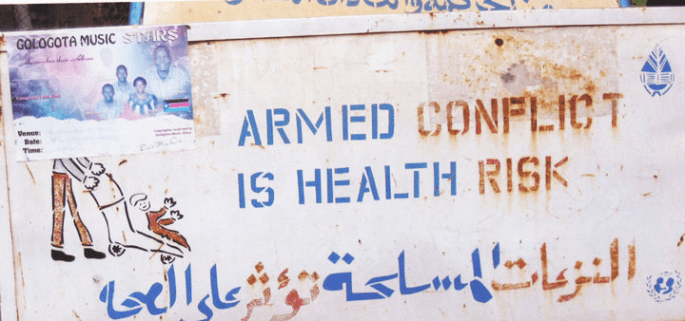
Global Health in Conflict: A Weightier Commitment

It is important for early-career professionals interested in pursuing a career in global health to be aware of the realities of working internationally. Although stories of setting up vaccination clinics or fighting Ebola may stir up feelings of excitement, being a part of the action may require additional education and training in conflict resolution and institution building. This is especially true when it comes to conflict-affected areas and fragile states that are the most in need of health care/public health services as a result of the local health system infrastructure being weakened. A different kind of public health professional, one that is willing to risk their life and invest in the indigenous health system, is required in our world today.

I currently work as an epidemiologist at a regional health department in Texas. We serve two main roles for the 30 counties we cover. One of our roles is to function as a local health department and deliver a diverse range of services to 23 counties. The other main role is to serve as an extension of the state health department and provide surveillance/investigation guidance for the reportable conditions that health care providers, schools, and community members are mandated to report. This relationship is seen especially when we work with the 7 counties in our region that have their own local health departments. Before beginning this job, I actually worked at one of these local health departments and was on the receiving end of the interaction described above.

For most of my life, I’ve been interested in pursuing a career in global health or humanitarian work. When I was younger, I thought the only way I could pursue this dream was by being a physician (especially if I wanted to be able to support myself financially). I also believed this to be a great way to help communities that were dying from preventable illnesses. My introduction to public health helped me see that there were many other ways to help achieve the goal of combating deaths due to preventable illnesses. I focused in on epidemiology as a way to combine my science/laboratory background with my desire to serve and entered into an MPH program after completing my B.S. in Biology. Most of my MPH program was spent working hard to obtain tangible experiences in public health practice and deciding which skills would be most necessary for me to have before entering into the workforce. While pursuing my MPH from 2014-2015, some of the hot topics in public health were Ebola, antimicrobial resistance, bioterrorism, anti-vaccination movements, hospital-acquired infections, opioid abuse, tuberculosis trends related to travel, maternal and child health gaps, and continued efforts to end polio and AIDS, to name a few. Towards the end of my program, I began to hear more about the dangers of humanitarian work and global health as stories involving health care and humanitarian workers being targeted in conflict-affected areas/fragile states were highlighted in various media outlets. I also knew of at least one faculty member at the university I attended whose global health team was attacked shortly after the individual returned to the US (after working in the field for a number of years).

When I entered into the public health workforce in 2016, Zika was just becoming a hot topic in public health circles in the U.S. But there were other things for me to learn at my local health department. I received an introduction to the Immunization team and programs such as Texas Vaccines for Children which enable young people in Texas to receive affordable immunization coverage (there is an adult vaccine program too). I also received an introduction to the statewide ImmTrac system that stores vaccine records and learned about some of its strengths and challenges. Ultimately, I was able to see the importance of public health collaborating with healthcare providers, schools, and community members to ensure that a community has adequate herd immunity or, in the case of outbreaks, can deliver effective interventions in response to infectious disease threats. Something else I learned about was the role of immunization clinics or point of dispensing units (PODS) during natural disasters, such as floods, and other public health emergencies.

I’ve shared some of my experience working at the local level because it gave me a tangible picture of how public health functions in stable environments or areas that are not weakened by natural disasters. In conflict-affected areas or fragile states, public health efforts may be fragmented at best. For example, in August 2015 Nigeria was removed from the World Health Organization’s list of countries with endemic Wild Polio Virus (WPV). This was the result of global efforts aimed at eradicating polio through targeted immunization campaigns. Nigeria went two years without WPV cases before, in August 2016, two cases were reported in Borno-a conflict-affected state. Two additional cases were reported in September 2016. The cases were from inaccessible areas of the state with limited security and indicated that prolonged transmission had gone undetected as a result of armed conflict. Although the number of areas held by insurgents, and therefore without access to vaccines, eventually decreased, the conflict in Borno prevented timely vaccination campaigns and posed a risk to Nigeria as a whole. Specifically, migration between Internally Displaced People (IDPs) camps and refugee communities resulted in a higher potential for WPV cases to be reported in states not directly tied to the conflict. A similar trend was noticed with the Ebola outbreak that occurred in West Africa from 2014-2015. The disease posed an increased risk in fragile states and areas affected by conflict. For example, prior civil wars in Liberia and Sierra Leone severely weakened the countries’ infrastructure in the 1990s. The conflicts also affected surrounding countries and resulted in millions of displaced people. In some of instances, countries had the resources needed to respond to public health emergencies caused by conflict. However, groups of people or areas deemed to be inaccessible as a result of conflict continued to undermine the effectiveness of immunization clinics and infectious disease response efforts.

A comparative analysis conducted by Bourdeaux et al. in 2015 assessed the effect of conflict on health systems in Haiti, Kosovo, Afghanistan and Libya.  Health systems were defined as, “the organized network of institutions, resources and people that deliver health care to populations” and was based on the World Health Organization’s (WHO) Framework for Action (2007). The framework highlights financing, leadership/governance, information, medical products/vaccines/technologies, health workforce, and service delivery as essential components of effective health systems. When this organized network is destroyed as a result of armed conflict, high levels of morbidity and mortality occur and can have negative effects that persist even after the conflict is over. The analysis found that the building blocks most affected by conflict and security forces were “governance, information systems and indigenous health delivery organizations.”  In order to address these gaps, a suggestion provided by the authors is to deploy Health Security Teams comprised of individuals with training in public health and institution building to conflict-affected areas and fragile states. The teams would support indigenous health systems instead of creating parallel or temporary systems, and not be involved in serving military interests. Additionally, these teams would know how to guide security forces as they engage with health systems in diverse political climates.

At this point in time in my career, most of my work is done in an office on a phone or computer. When I started my journey in public health, I pictured something different. I still have the long-term goal to work internationally (or financially support myself while volunteering internationally). However, I am sobered by the fact that if I want to serve those who are truly in need (especially as it relates to conflicted-affected areas and fragile states) I will have to be at peace with laying my life on the line. I will also have to be prepared to navigate the challenges presented above. This includes learning as much as I can about conflict resolution and negotiating to protect health systems. In general, I feel that public health has much to do in terms of educating and re-assuring those we serve (both domestically and internationally). As a result, part of my journey in public health will include developing skills as a connector of people and someone that can see both sides of an issue. I think that all public health professionals interested in working in a global health or humanitarian worker capacity should consider this. At the same time, immigrants or refugees that have left their homes due to conflict or in search of better opportunities can also develop the skills needed to resolve conflict and rebuild institutions. The success of the suggested Health Security Teams could depend on this.


Photo: Diane Budd, M.D.

conflict