At this point, I think we can all agree that the American healthcare system has been discussed, dissected, criticized, and compared to just about every other healthcare system on the planet, almost ad nauseum. However, with the first major set of changes from the ACA set to take effect at the beginning of next year (just three and a half months from now), it’s never a bad idea to revisit these issues to reminded of our healthcare inferiority and thus be inspired to make our system better. Or something.
The following infographic has been created and circulated by George Washington University’s online MPH program. It was created with data from the WHO’s World Health Statistics 2013 report and compares American economic, health, and healthcare statistics with a handful of other countries. It’s a large image with a lot of information and can take a bit of time to digest. We have seen several of the metrics before (like here and here), and I am not quite sure why certain countries were selected (seeing Mongolia and Ghana in the array left me scratching my head a bit) – personally, I feel like it is more useful to compare America to countries with a similar population or economic size, or level or development. Nonetheless, it provides additional perspective.
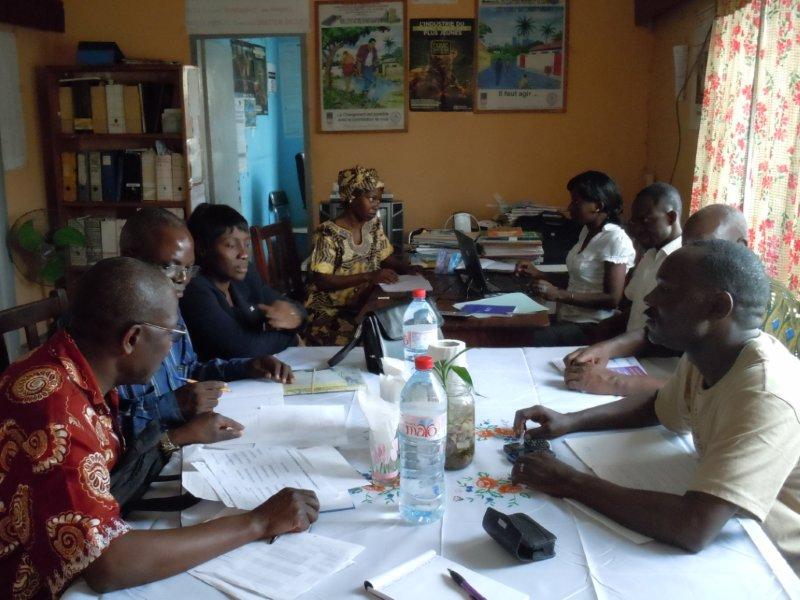
For 25 years the Canadian Public Health Association, with support from the American Public Health Association, has been facilitating ongoing processes to establish and/or strengthen Public Health Associations in developing countries. In November 2011, SOPHA has organized a mission to evaluate its program through field visits to three countries currently receiving assistance and through the results of a questionnaire answered in 5 other country partner Associations. Omar Khan and I were part of this evaluation process through field visits to Nicaragua, Mozambique and Congo Brazzaville. I accompanied Drs Henri Delatour and Deo Sekimpi to the Congo. It was inspiring to see how enthusiastic the members of the local Public Health Association – L’Association Congolese Pour La Santé Publique et Communautaire (ACSPC) – were. In the midst of poverty they devoted a lot of their own time to establish their association and to conduct ongoing activities that established the credibility of their organization with the community and government.
We huddle to discuss Public Health Association business. Photo credit: Paul Freeman.
The SOPHA program has resulted in both individual and group capacity strengthening and knowledge sharing. Formal training was given in key aspects of strategic planning and project planning, implementation, monitoring and evaluation. SOPHA support of participation in international conferences and networking improved the profile of the organization and led to learning through sharing. In 2008 and 2010 ACSPC organized scientific conferences where different stakeholders participated. ACSPC members have built both personal and institutional capacity by attended many international meetings. ACSPC also collaborated with municipal and national health authorities, thus contributing to strengthening the health system at those levels. The projects contributed to public health capacity building across many health programs, such as sanitation, immunization, road safety, TB control, HIV/AIDS control and malaria control.
They appreciate what can be achieved through association. Photo credit: Paul Freeman.
Institutional capacities were adequately strengthened and they are sufficient to ensure sustainability in the short term, but better fund raising activities are needed for the mid to long term. The ACSPC staff were trained on results based management (RBM) tools which were applied in the development of project plans. New knowledge was applied in financial management to prepare annual, midterm and final financial reports to CPHA, and strategic planning was used to prepare the strategic plan 2012-2016. Funding is not sufficient; the association is using the skills and tools acquired with the SOPHA program to look for other donors and prepare projects.
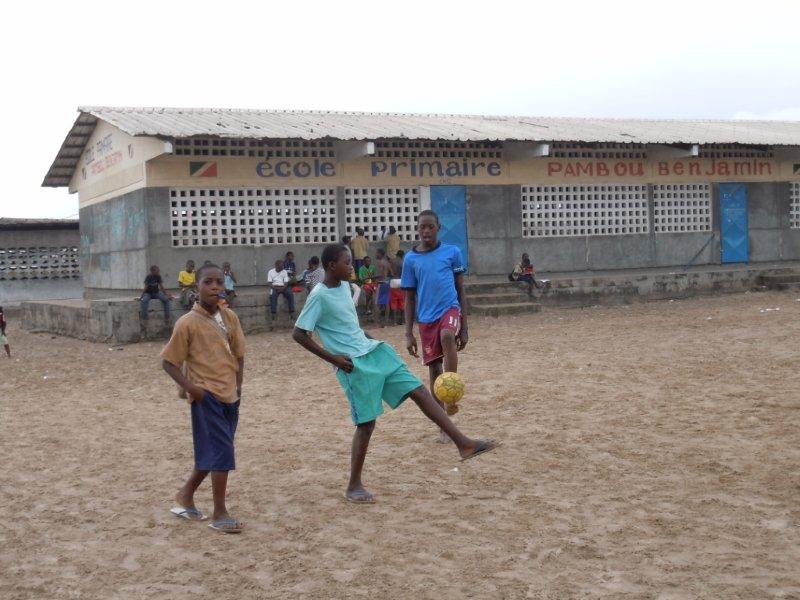
Supplying latrines and clean water to schools, a typical project. Photo credit: Paul Freeman
There were several key lessons learned. SOPHA capacity building contributes to increase the confidence and the credibility of the association. Advocacy needs to be undertaken to increase the involvement of other health professionals (doctors, nurses) and government officials in the association and develop their interest for public health issues. The main challenge and issue for project implementation was that the multi-disciplinary and multi-sectoral dimension of public health is not yet understood by many stakeholders and decision makers and, partly as a consequence of this, there are few doctors, nurses, or government (Ministry of Health and local health authority) members in ACSPC.
We talked for hours, often by gaslight in small rooms – their offices – in just adequate private housing, that we reached through dirt streets awash with water from recent rain. It was heartening to see what had been achieved and how these pioneer members, with only a few trained health professionals amongst their numbers, had established and barely kept afloat, their own Public Health Associations. Perhaps we could establish links with them for solidarity and to support their growing skill and knowledge base.
Paul Freeman is a physician with advanced training in tropical disease control and general public health, health personnel education, and health program management and evaluation. He has over two and a half decades of experience in capacity building and the design, planning, implementation, monitoring and evaluation of primary health care, child survival and malaria control programs in developing countries and for deprived rural indigenous populations in developed countries. He is a Clinical Assistant Professor at the University of Washington School of Global Health and the Chair-Elect of the International Health Section.
Please join us for our next bi-monthly conference call! The IH Section is hosting its topic-focused conference call for the month of October. The call will be held on Tuesday, October 18, from 12:30 to 1:30 p.m. EST. This call will be hosted by section members Kaja Abbas and Chad Swanson, who have just formed a new working group on health systems strengthening and will be discussing current developments in that area.
TOPIC: System Science for Health Systems Strengthening DATE AND TIME: Tuesday, October 18, from 12:30 p.m. to 1:30 p.m. EST PHONE NUMBER: (712) 432-1001 (please note that this is not a toll-free number) PASSCODE: 477461343#
You are welcome to submit comments and questions for the speakers; however, we ask that you submit them in advance, as callers cannot pose questions to the speakers directly. This will allow us to keep things organized. Please e-mail questions for the speakers to kaja.abbas@gmail.com or swancitos@gmail.com by Friday, October 14 at 8 p.m. EST.
The purpose of this message is to invite you to join a new working group within the international section of the American Public Health Association (APHA): ‘Systems Sciences for Health Systems Strengthening.’ Please forward this invite to any and all interested parties. We hope that you will advertise this group widely on the various listservs and newsletters that you manage.
As most of you know better than we do, the importance of health systems strengthening is increasingly recognized. However, health systems are incredibly complex, and there does not seem to be a consensus on the way forward. The so-called systems sciences provide unique approaches and methods to consider unintended consequences, delayed effects, and high-leverage points to strengthen health systems. You can learn more about the need for this working group, and our objectives and plans on this Google document.
We are very excited about the potential that this group will have in providing opportunities for collaboration, networking and advocacy at the interface of research, policy and practice of strengthening health systems in developed and developing countries. We hope that you will consider joining us; you don’t need to be a member of the APHA. If you are interested in the group, please join this Linkedin Group.
Best Regards,
Chad Swanson, DO, MPH
Brigham Young University
Working Group Chair
Kaja Abbas, PhD
University of Rochester
Working Group Co-Chair




 IH CONNECT