APHA Signs on to Letter to WHO Executive Board on Protection of Health Care Workers

The following message is from Peter Freeman, chair of the IH Section’s Advocacy and Policy Committee.


Since October 2011, members of the IH Advocacy & Policy Committee have been participating on a coalition, organized through IntraHealth International, whose aim is to bring global focus onto the protection of health care workers, patients and systems in areas and times of conflict.

In mid January 2012, the Executive Board of the World Health Organization (WHO) is scheduled to meet; members of this coalition will be in attendance. To move the coalition’s agenda forward, a letter is being presented to the WHO Executive Board asking to put a resolution before the WHO Assembly that would call for:
*the development and implementation of a plan to collect and report data concerning attacks on health facilities, workers and patients or other violations of medical neutrality where conflicts are taking place;
*make this data publicly available on the WHO website
*regularly update said data
The coalition has asked for agencies who have stake in the protection of global health care infrastructures to sign onto this letter.

It is greatly exciting to report that on January 13, 2012, APHA agreed to become a signatory of this letter! The Advocacy & Policy Committee is encouraged to see a growing receptiveness and response by APHA staff to give the association a voice on the global health platform and we look forward to many more advocacy victories!

Peter F Freeman, MPH
Chair, APHA-IH Advocacy/Policy Committee
pffreeman@gmail.com

Content of the letter signed on by APHA:

Dear Members of the WHO Executive Board:

We write to urge that you support action at the Executive Board to bring WHO’s expertise to the pressing problem of attacks on health care, including health care workers, during situations of conflict. The report released by the International Committee of the Red Cross last August – Health Care in Danger – concluded that, “in terms of number of people affected, violence, both real and threatened, against health-care workers, facilities and beneficiaries is one of the biggest, most complex, and yet most under-recognized humanitarian issues today.” As Director-General Margaret Chan recognized in her address to the World Health Assembly last May, the problem needs the urgent attention of the global health community. WHO is uniquely positioned to address a key need identified by the ICRC and many others, which is sound and reliable data on the magnitude and dynamics of violence against health care and health workers.

WHO’s expertise in developing an evidence base for global health policy, in health systems development and in humanitarian coordination creates an opportunity for leadership at the global level. The WHO can develop and implement methods for systematic collection of data on attacks on health facilities, workers, and transport and patients in conflict areas. This should be done in cooperation with other relevant UN agencies, intergovernmental and nongovernmental organizations.

We ask that the Executive Board adopt a resolution for consideration by the World Health Assembly that requests the Director-General to develop and implement a plan for WHO to collect and report data on attacks on health facilities, workers and patients where conflicts are taking place or other violations of medical neutrality. The data should be publicly available and periodically updated on the WHO web site.

The signatories to this letter are familiar with the tragic consequences of violence on health care. There are roles for many entities, including health workers themselves, governments, professional associations, non-governmental organizations and other UN agencies. All must do their part to increase protection. WHO’s role is limited but essential, as it is in the best position to lead the data collection process.

We therefore urge you to support action at the Executive Board to enhance protection of health in situations of conflict.
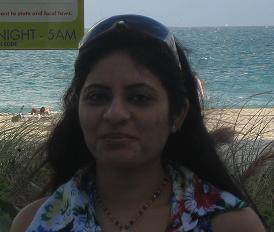
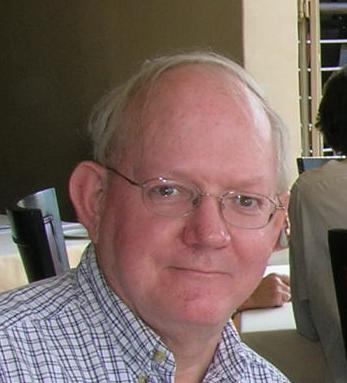
Please welcome our Weekly News Editor, Dr. Vani Nanda!

Fellow IH Section members and blog readers, please help me welcome our Weekly News Editor, Dr. Vani Nanda. You may have noticed the slightly different format of the weekly news round-ups since she has taken over. Vani has taken over this function and has been working behind the scenes since early December, and now I am happy to formally introduce her as part of the IH Blog team. You can read more about her below.


I am a dentist from India and am currently pursuing Masters in Public Health (Community Health Track) from West Chester University of Pennsylvania. Apart from having three years of clinical experience in dentistry, I also have one and a half years’ teaching experience in India. I have experience in grant writing and have received grant and award for one of the studies I did in MPH program. I am a full time graduate assistant and an international student representative of MPH Advisory Student Board of West Chester University. During my MPH study, I have received many awards, including Women Grant for academic year 2011-2012.

I have presented many national and international papers related to my research in the field of public health (some of my works highlight health disparities across the nations). I have a keen interest in field of Global Public Health and want to work in future in this field to remove public health disparities across nations.

Motivating and Retaining Community Health Workers: The 2011 Annual CBPHC-WG workshop

By: Dr. Paul Freeman

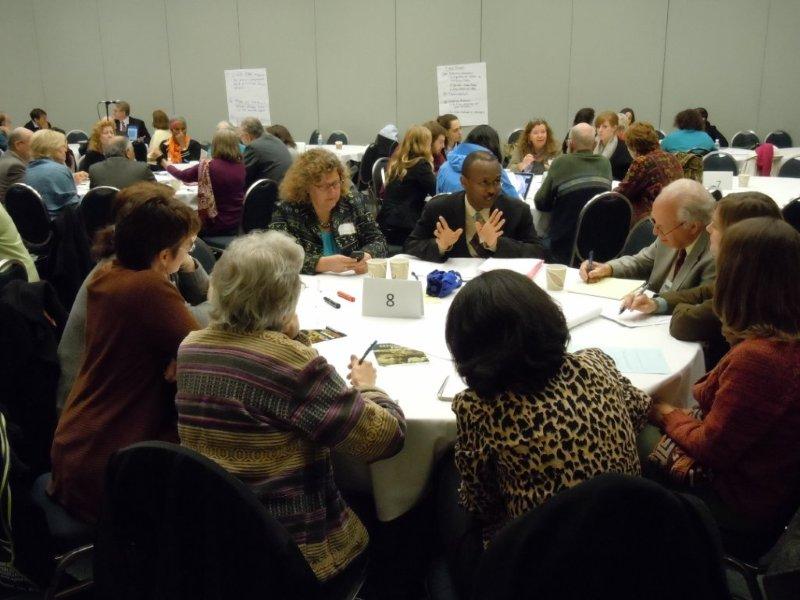
Prior to the recent APHA Annual Meeting, the CBPHC-WG held a day long workshop focusing on Community Health Workers. There were over 110 attendees including presenters and organizers. This was the largest workshop our group has held in the 13 years we have been conducting these workshops. It was a great feeling to see APHA functioning at its best in providing a venue where those from MCHIP, CORE group, academics, members of other NGOs, not-for-profit and for-profit organizations and consultants could share their views in an open, mutually respectful environment and learn from each other. This year JSI personnel, under the leadership of Mary Carnell, worked in partnership with Working Group members in all stages of workshop planning and implementation. The work of Agnes Guyon (who lead the workshop), Sandee Minovi and Kimberley Farnham, all from JSI, and our own Sandy Hoar, Vina Hulamm, Melissa Freeman, Laura and David Paragon, Tonio Martinez and Larry Casazza were outstanding.

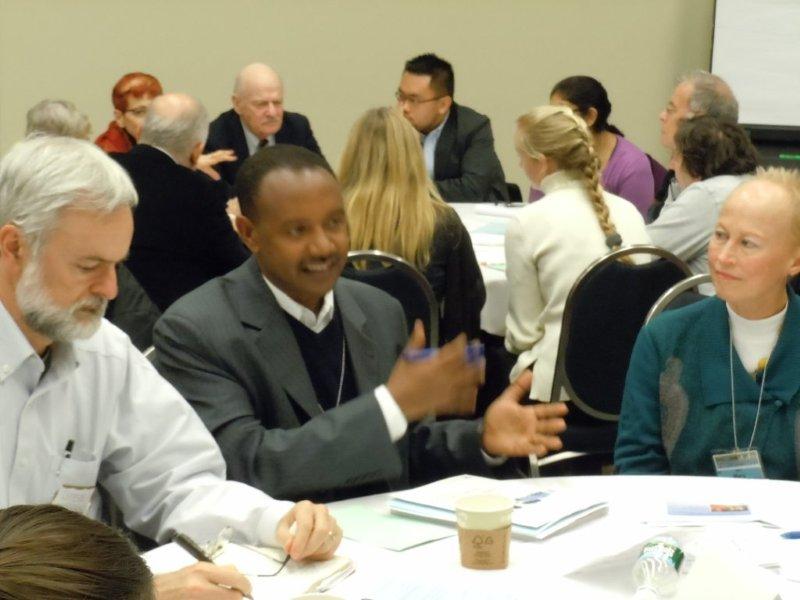
Leban Tsuma MCHIP leading. Photo credit: Paul Freeman.

Our norms were: use of an evidence-based approach, the right for all participants to be heard and for their viewpoints to be respected. At this time, renewed attention is being given to the role of CHWs with recognition becoming more widespread now that the Millennium Development Goals, especially those for women and children, cannot be met without community involvement.  The 8 large group presentations and 16 small group discussion sessions covered well a wide range of perspectives on CHW motivation, retention and performance. I am sure some participants were being exposed to different points of view from their own for the first time.

Samuel Yalew, Urban Health Extension Project/JSI (Ethiopia) leading. Photo credit: Paul Freeman.

I would especially like to highlight the area of internal motivation of CHWs. Through Pink’s book “Drive” many of us are becoming acquainted with the “modern” approach to the importance of autonomy, mastery and purpose in motivation. Yet several NGO presentations, such as those by Tom Davis of Care Groups and Connie Gates of Jamkhed, demonstrated that these elements have already been addressed by NGOs for decades as appropriate to local circumstances.

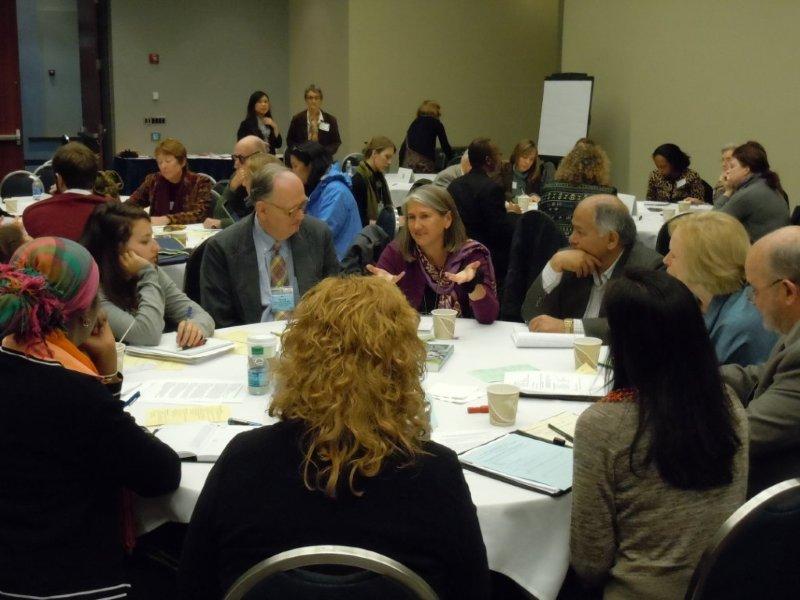
Sarah Shannon from Hesperian facilitating. Photo credit: Paul Freeman

Melissa and I will prepare a report of the workshop to be disseminated early next year. There were many lessons to learn from conducting this workshop that should remain with the International Health Section for years to come. One of the key lessons was that with enough goodwill and cooperation from individual members – things work best with at least 8 volunteers for such an event – memorable events can be implemented by the Section. With enough “hands” each contributing a relatively small amount, things go much more smoothly than if all sit back waiting for a few to do all the work.

Paul Freeman is a physician with advanced training in tropical disease control and general public health, health personnel education, and health program management and evaluation. He has over two and a half decades of experience in capacity building and the design, planning, implementation, monitoring and evaluation of primary health care, child survival and malaria control programs in developing countries and for deprived rural indigenous populations in developed countries. He is a Clinical Assistant Professor at the University of Washington School of Global Health and the Chair-Elect of the International Health Section.

Putting Students to Work Writing APHA Policy Papers

By: Dr. Amy Hagopian 

University of Washington faculty members in the Department of Global Health have found opportunities to do double duty as teachers and APHA activists.  For two years, faculty have assigned students to write APHA position papers on important policy areas, while at the same time offering valuable learning opportunities for students.  In the last couple of years, students have written four policy papers approved by APHA’s Governing Council:

  1. Transporting nuclear waste (20107)
  2. Cleaning up the Hanford nuclear reservation (20105)
  3. Improving housing for farmworkers (adopted in 2011, not yet given a number)
  4. Creating citizenship opportunities for undocumented workers in the U.S. (number pending, adopted in 2011).

Students have also written two additional policy proposals for submission in 2012:

  1. Reducing non-point pollution run-off into coastal waters
  2. Modernizing the Clean Water Act to improve its ability to address modern point-source water pollution hazards

Now two UW faculty members, inspired by the “Occupy” movement and the brief statement of support for it adopted by the governing council at the annual meeting in DC this year, have invited two students to work on a new policy.  Faculty members Stephen Bezruchka and Amy Hagopian will work with UW graduate students Valerie Pacino and Nathan Furukawa to write a position paper on the health hazards of income inequality, but within and between nations.

Authors of the position paper are inspired by populist movements, including the ones that preceded Occupy protests–especially the Arab Spring actions in Tunisia, Egypt, Libya, and beyond.  These efforts used narratives on income inequality, wealth inequality and social inequality to spur direct action.

We invite International Health section members with ideas about how to contribute to these position statements, or who can refer us to literature citations, to be in touch. Please contact Dr. Amy Hagopian (hagopian [dot] amy [at] gmail [dot] com) for more information.

Seeking a News Editor for the IH Blog!

Attention IH Section members and blog readers!  The Communications Committee is currently seeking a volunteer to compile and organize the global health news round-ups that have been featured on the IH blog this year.  The round-ups have been typically been done on a weekly basis, but the News Editor would be free to provide updates in a different format, on continue using the current one.  Check out the DAWNS digest, Humanosphere, APHA’s Public Health Newswire, or the Healthy Dose for ideas on how other blogs summarize relevant news.

While this is a volunteer position, it only takes a few hours to pull together news relevant news stories for the week, and the work can be done from anywhere in the world with a reliable internet connection. 

 There are several great reasons to get involved with the IH blog:

  • YOU WILL BE VISIBLE.  The IH Blog gets around 1,200 hits per month, with traffic from all over the world (and the news updates are a huge driver of this traffic!).  Actively contributing to the blog for the IH section, which has over 1,500 members and is a loud voice for international health in a professional society with over 50,000 professionals, is a great way to put your name out there.
  • YOU WILL BE NOTICED.  Despite the fact that the world population just hit seven billion, it is a small world – the global health community even more so.  I have been referenced and/or approached by journalists, portfolio managers from PR firms, and the New York Times because of my involvement with this blog.
  • YOU WILL NETWORK.  You always hear about the importance of networking in building a career.  Ever feel awkward about striking up conversations because you need something?  A better – way to network is by offering your services – you will be much appreciated and remembered for a whole lot longer.
  • YOU WILL LEARN. Not only will you contribute to the field and get noticed for your contributions, you will learn so much by being exposed to the disussion: news, politics, analysis, industry trends and problems. 
  • YOU CAN PUT IT ON YOUR RESUME.  Enough said! 

If you are interested in this position, please contact Jessica Keralis, the IH Communications Committee Chair, at jmkeralis [at] gmail [dot] com for details.